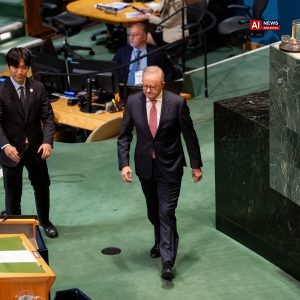
 Trump presents bronze bald eagle to Xi at White House ceremony.
  Top Saudi Cleric Calls Fight Against Houthis a Religious Duty
  Andhra to sell super-fine rice at ₹50 a kg, onions at ₹35, and pay MSP to move farmers off paddy
  OpenAI agents hack Australian Health website.
  Once Sentenced to Death, Mary Jane Veloso Receives Pardon in the Philippines
 Trump Administration Announces New Tariffs on 60 Economies India Secures Lower 10% Rate Amid Forced Labour Reforms
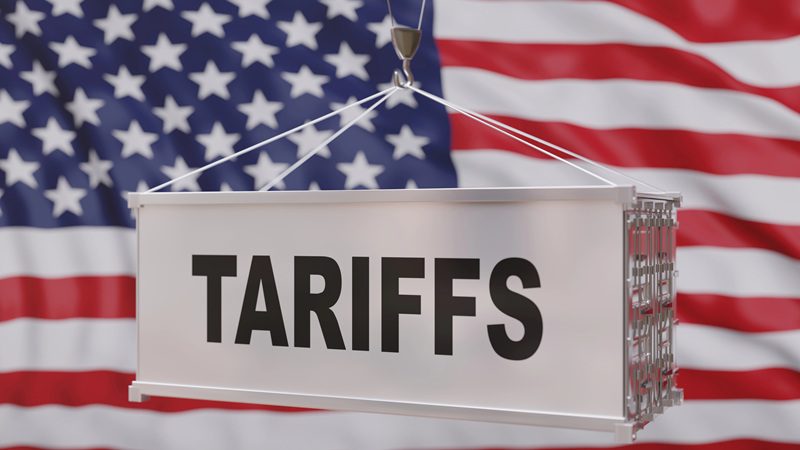
US imposes tariffs - AI News Breaking
trump administration announces tariffs:
The United States has unveiled fresh tariffs ranging from 10% to 12.5% on imports from 60 economies under a new trade initiative targeting forced labour practices in global supply chains. India has received a comparatively lower 10% tariff rate after introducing measures aimed at restricting imports linked to forced labour.
The move marks another major shift in President Donald Trump’s trade agenda and is expected to affect nearly 99.4% of U.S. imports while reshaping global trade relationships.
Key Highlights:
- U.S. imposes new tariffs of 10% to 12.5% on imports from 60 economies.
- India receives a lower 10% tariff rate after implementing forced labour-related reforms.
- The tariffs cover approximately 99.4% of U.S. imports and take effect on July 24.
- The measures are part of President Trump’s effort to reshape global trade policy under Section 301.
The United States on Thursday announced a sweeping new tariff framework that will impose additional duties of between 10% and 12.5% on goods imported from 60 major trading partners. The tariffs, which take effect on July 24, are being introduced under Section 301 of the Trade Act of 1974 and are aimed at countries that Washington says have failed to adequately prohibit imports produced using forced labour.
The announcement is one of the most significant developments in U.S. trade policy this year and comes just as temporary 10% global tariffs imposed earlier by the Trump administration were due to expire. The new measures are designed to survive legal challenges after previous tariff actions were struck down by the U.S. Supreme Court earlier in 2026.
Under the revised framework, countries are divided into different categories based on their efforts to ban goods produced through forced labour. Nations that have enacted or committed to implementing forced labour import prohibitions are subject to a 10% tariff, while countries deemed non-compliant face the higher 12.5% rate.
India has emerged among the countries receiving favorable treatment, with Washington assigning it the lower 10% tariff band. According to the Office of the U.S. Trade Representative (USTR), New Delhi recently introduced measures to prohibit imports linked to forced labour, helping it avoid the steeper tariff rate.
Other economies receiving the 10% tariff include Canada, Mexico, Bangladesh, Indonesia, Malaysia, Pakistan, Sri Lanka, the United Kingdom, Jordan, Cambodia, and Trinidad and Tobago. Meanwhile, economies that have not implemented similar measures will face tariffs of 12.5%.
The Trump administration has framed the policy as a human rights initiative intended to eliminate forced labour from global supply chains. In its official statement, the USTR said the United States remains the only country with a comprehensive and effectively enforced ban on imports made using forced labour and is encouraging trading partners to adopt similar standards.
“This action applies to the top 60 U.S. trade partners covering 99.4% of U.S. imports,” the USTR stated, adding that the tariffs are intended to create a more level playing field for American workers and businesses.
The tariffs will apply to most imported goods from affected countries, though several categories have been exempted. Exemptions include oil and gas products, fertilizers, certain food items, informational materials, national security-related imports, and products already subject to separate Section 232 tariffs.
For India, the decision could be viewed as a relative win amid ongoing trade negotiations with Washington. Earlier proposals had suggested India might face the higher 12.5% tariff bracket, prompting concerns among exporters and policymakers in New Delhi. However, recent policy changes appear to have convinced U.S. officials to lower the rate.
Trade experts note that India’s lower tariff rate could help maintain the competitiveness of several export sectors, including pharmaceuticals, engineering goods, textiles, and information technology-related products. Although a 10% tariff still represents an additional cost for exporters, it is considerably less punitive than the higher rate imposed on many competitors.
The broader implications for global trade are significant. Major economies including China, Brazil, Australia, South Korea, Japan, Saudi Arabia, Russia, and South Africa are among those covered by the new tariff regime. The move is expected to trigger diplomatic discussions and could potentially lead to retaliatory measures from affected countries.
Critics have questioned whether the tariffs are primarily motivated by concerns about forced labour or represent another effort by the Trump administration to reshape global trade dynamics. Some economists warn that higher import costs may ultimately be passed on to American consumers, contributing to inflationary pressures.
Supporters of the policy, however, argue that it creates incentives for governments worldwide to strengthen labour protections and improve transparency across supply chains. They point to India’s recent reforms as evidence that tariff pressure can encourage policy changes among trading partners.
The timing of the announcement is particularly noteworthy as it coincides with a broader effort by the White House to rebuild its trade agenda after several legal setbacks. By relying on Section 301 investigations rather than emergency powers, the administration believes the new tariffs will be more resilient if challenged in court.
Businesses across the world are now assessing the impact of the tariffs on supply chains, pricing strategies, and future investment decisions. Industries with heavy exposure to U.S. markets are expected to face increased pressure to diversify production and ensure compliance with labour standards.
For India, the development underscores the growing importance of labour compliance in international trade. It also highlights the strategic significance of India-U.S. economic ties at a time when both countries are seeking deeper cooperation in manufacturing, technology, and critical supply chains.
While the immediate impact on Indian exports is expected to be manageable, policymakers and businesses will closely monitor future U.S. trade actions. The Trump administration has indicated that countries demonstrating stronger enforcement of forced labour prohibitions could receive favorable treatment in subsequent reviews.
The latest tariff announcement demonstrates how trade policy is increasingly being used as a tool to influence global labour standards and geopolitical relationships. India’s inclusion in the lower tariff category reflects its growing strategic importance to Washington and highlights how regulatory reforms can directly affect market access. Going forward, businesses worldwide may need to treat labour compliance not merely as a legal obligation but as a critical factor in maintaining competitiveness in international trade.