Europe warns of Russia’s hybrid attacks but struggles to counter them
  Former chief election commissioner calls SIR scheme illegal.
  A Corruption Scandal Is Reshaping Brazil’s Presidential Election
  US citizen injured in Illinois after ICE agents mistook him for fugitive, tried to arrest him
  At 10 years old, Smithsonian’s Black museum is undaunted amid pressure from Trump administration
 Anahat Singh Creates History, Becomes First Indian to Win World Junior Squash Championship
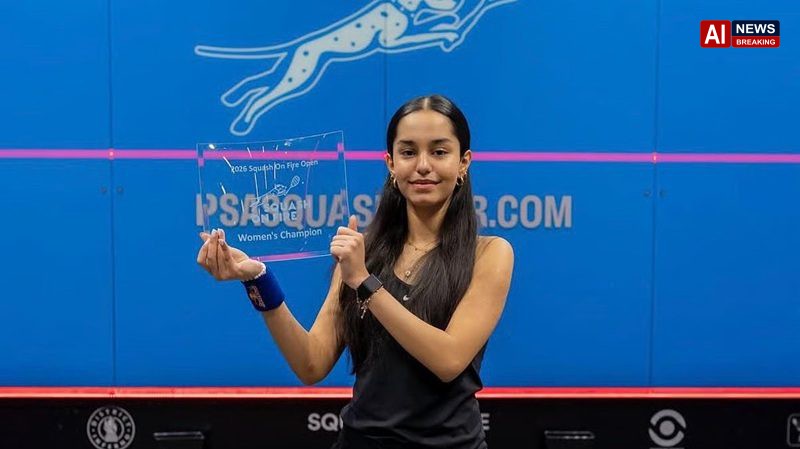
Anahat Singh Creates History, Becomes First Indian to Win World Junior Squash Championship - AI News Breaking
Indian squash sensation Anahat Singh has etched her name in the history books by becoming the first Indian ever to win the World Junior Squash Championship. The 18-year-old ended Egypt’s dominance in the sport with a remarkable victory, marking a watershed moment for Indian squash.
ndian squash has achieved a historic milestone after teenage prodigy Anahat Singh became the country’s first-ever World Junior Squash Champion. The young star defeated Egypt’s top contender in the final to claim the prestigious title, ending years of Egyptian supremacy at the junior level and ushering in a new era for Indian squash.
At just 18 years old, Anahat’s triumph represents one of the greatest achievements in Indian racquet sports and cements her status as one of the nation’s brightest sporting talents.
The victory has sparked celebrations across the country, with fans, athletes, and political leaders hailing the teenager for her extraordinary accomplishment on the global stage.
A Historic First for India
No Indian player—male or female—had previously won the World Junior Squash Championship since the tournament’s inception.
Anahat’s victory is therefore more than an individual achievement; it is a landmark moment for Indian sports.
Her title-winning run saw her overcome some of the world’s best junior players, showcasing exceptional composure, technical brilliance, and mental resilience throughout the tournament.
The win also places her alongside the sport’s elite, with many observers predicting a seamless transition to the senior circuit in the coming years.
Ending Egypt’s Dominance
For more than a decade, Egypt has been the undisputed powerhouse of world squash, producing numerous world champions across both junior and senior categories.
Anahat’s victory has ended Egypt’s remarkable hold over the World Junior Championship, making her achievement even more significant.
Egyptian players have long dominated international squash due to:
- Strong grassroots programs.
- Extensive junior development pathways.
- World-class coaching infrastructure.
- A rich history of producing champions.
By overcoming an Egyptian opponent in the final, Anahat demonstrated that India is increasingly capable of competing with the sport’s traditional superpowers.
The Rise of Anahat Singh
Anahat Singh’s rise has been nothing short of extraordinary.
Over the past few years, she has established herself as one of India’s most promising young athletes through consistent performances at national and international competitions.
Her growing list of achievements includes:
- Multiple junior international titles.
- Strong performances at the Asian level.
- Participation in major multi-sport events.
- Rapid ascent in world junior rankings.
Known for her aggressive playing style, excellent court coverage, and tactical intelligence, Anahat has been viewed as a future star of Indian squash for several years.
Her World Junior Championship victory now validates those expectations.
A New Chapter for Indian Squash
India has enjoyed considerable success in squash over the years through legends such as:
- Saurav Ghosal
- Dipika Pallikal
- Joshna Chinappa
- Harinder Pal Sandhu
However, a World Junior Championship title had remained elusive until now.
Anahat’s achievement is expected to inspire a new generation of young players and could significantly boost interest in squash across India.
Sports administrators believe the victory may encourage:
- Increased grassroots participation.
- Greater investment in squash academies.
- Enhanced support for junior athletes.
- Improved international exposure programs.
The title could ultimately prove to be a turning point for the sport’s development in the country.
Praise Pours In
Following her historic triumph, congratulatory messages poured in from across the sporting community.
Fans took to social media to celebrate the achievement, with many describing Anahat as the future of Indian squash.
Sports personalities and public figures praised her determination, discipline, and ability to perform under pressure on one of the sport’s biggest stages.
The victory is also being viewed as another example of India’s growing strength in individual sports beyond cricket, with athletes increasingly excelling across disciplines such as badminton, athletics, chess, shooting, and now squash.
What Makes Her Victory Special?
Several factors make Anahat Singh’s title particularly remarkable:
- She is India’s first World Junior Squash Champion.
- She ended Egypt’s dominance at the event.
- She achieved the feat at just 18 years of age.
- The title enhances India’s global standing in squash.
- It could accelerate her transition to the senior professional circuit.
Many experts believe her success is only the beginning of what could become a distinguished international career.
Looking Ahead
With the World Junior Championship now added to her resume, attention will inevitably turn toward Anahat’s future ambitions.
Potential milestones include:
- Breaking into the senior world’s top rankings.
- Competing at the Commonwealth Games.
- Representing India at the Olympics if squash remains on the program.
- Challenging for major professional titles.
- Becoming India’s first senior world champion.
Given her current trajectory, few would bet against her achieving many of those goals.
For Indian sports fans, Anahat Singh’s triumph offers a glimpse into an exciting future—one in which India could emerge as a major force in global squash.
Insight: Anahat Singh’s World Junior Championship victory highlights the growing depth of India’s sporting ecosystem. Success in traditionally niche sports increasingly reflects investments in coaching, infrastructure, and athlete development. While the title itself is historic, its broader significance may lie in its ability to inspire participation and elevate squash’s profile nationwide. If supported effectively, Anahat’s achievement could become the catalyst for India’s emergence as a global powerhouse in the sport over the next decade.