 87-Year-Old Evicted From Her Home Tells Spaniards to ‘Fight’ to Avoid Same Fate
  Trump presents bronze bald eagle to Xi at White House ceremony.
  Top Saudi Cleric Calls Fight Against Houthis a Religious Duty
  Andhra to sell super-fine rice at ₹50 a kg, onions at ₹35, and pay MSP to move farmers off paddy
  OpenAI agents hack Australian Health website.
 Trump halts Iran escalation plans
** The US has halted plans for a major military escalation against Iran, with President Trump citing concerns over potential repercussions and dwindling air defense munitions in the Middle East. The move comes after a US drone was shot down by Iranian forces, heightening tensions between the two nations. Despite this, the US administration remains committed to taking measures to protect American interests and prevent Iran from acquiring a nuclear arsenal.
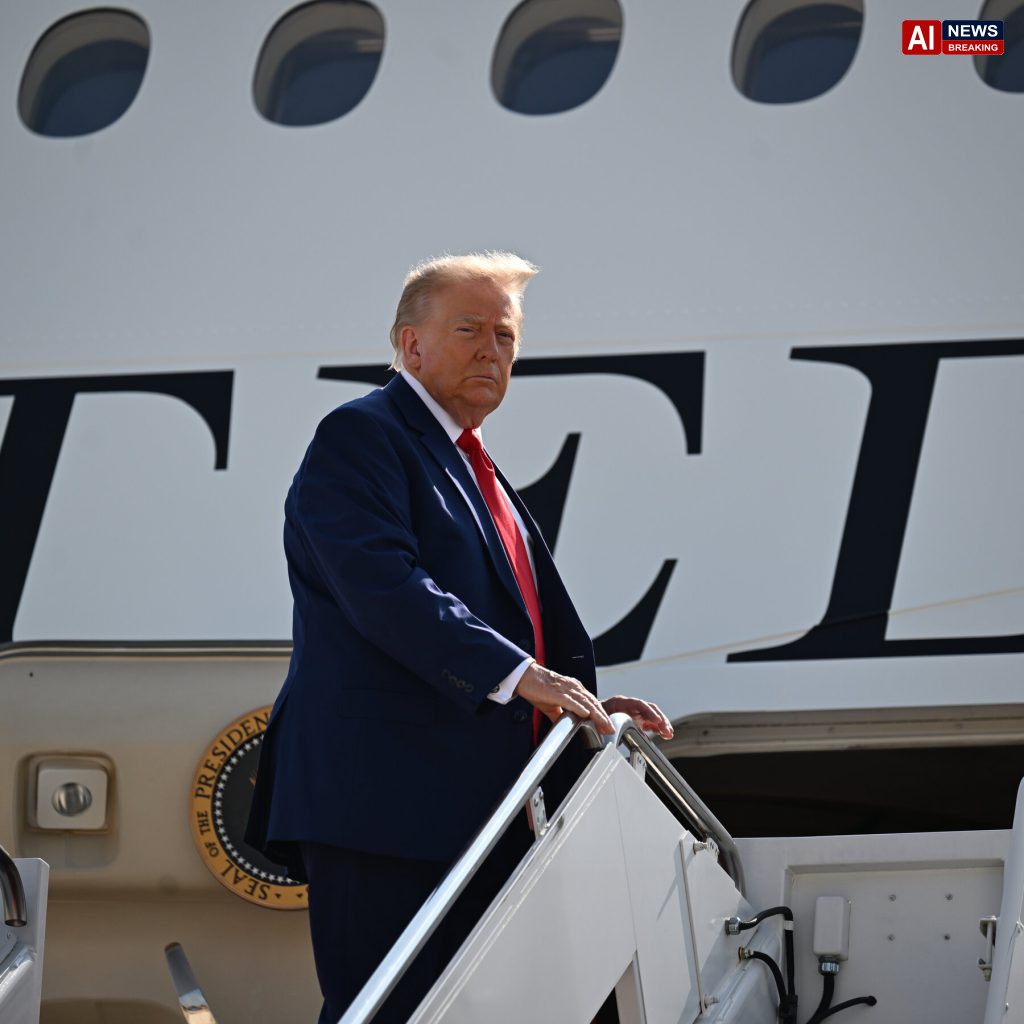
Trump Holds Off on Major War Escalation Against Iran as Advisers Raise Concerns - AI News Breaking
Trump Holds Off on Major War Escalation Against Iran as Advisers Raise Concerns US President Donald Trump has put plans for a major escalation of military action against Iran on hold, just a day after a US drone was shot down by Iranian forces. The move comes after high-level White House advisers expressed concerns over the potential repercussions of such a move. According to sources, the decision was made after a lengthy and dramatic meeting at the White House, with many senior officials arguing that a full-scale war with Iran could be catastrophic..
The US government has been locked in a tense standoff with Tehran over the country’s nuclear program, which has led to a series of provocative incidents in the region. The shoot-down of the US drone, which was said to be engaged in reconnaissance over Iranian airspace, has heightened tensions to unprecedented levels. However, the US military had reportedly considered launching a major counterattack against Iranian targets, but was ultimately held back..
Sources close to the White House have revealed that the concerns over a potential war with Iran centered on the dwindling stockpile of air defense munitions in the Middle East. Analysts are warning that expanded hostilities could dangerously drain the limited supply, leaving regional allies such as Saudi Arabia and the UAE vulnerable to Iranian aggression. This view was echoed by several top Pentagon officials, who were said to have voiced their concerns over the potential long-term implications of such a conflict..
Additionally, there were also worries that a full-scale war could lead to further destabilization of the Middle East, potentially spilling into neighboring countries such as Iraq and Syria. This is particularly worrying, given the still-unstable security situation in both countries, which have been plagued by years of sectarian violence and extremist attacks. As one senior official noted, A conflict with Iran would have far-reaching consequences, including spillover into other regions and countries..
Despite these concerns, the US administration has made clear that it will not back down in its pursuit of what it sees as a rogue state. In a statement to the press, Press ary Sarah Sanders said, The President remains committed to taking all necessary measures to protect American interests and prevent Iran from acquiring a nuclear arsenal. However, the tone of this statement suggests that the President is prepared to take a more cautious approach, at least for the time being..
The US-Iran standoff has sent shockwaves around the world, with many governments struggling to grasp the implications of a potentially escalating war. In London, Downing Street officials issued a statement urging caution and calling for dialogue between the two sides. Similarly, European Union officials issued a similar statement, warning against further escalation of tensions..
Back at the White House, President Trump was reportedly torn between those urging caution and those pushing for a more aggressive response. Sources revealed that the President is understood to have asked for a comprehensive review of US military capabilities in the region, including the deployment of additional troops. However, it remains unclear whether such an escalation is feasible, given the current military climate..
According to some sources, the key factor holding back the President from launching a full-scale attack was the concerns of his own military commanders. Top generals, including Joint Chiefs Chairman Mark Milley, are said to have expressed their own doubts over the strategic implications of such a move. As one source noted, They are extremely concerned about the consequences of going to war with Iran, and the implications this would have for the entire region..
The concerns over the supply of air defense munitions are of particular concern for regional allies. Saudi Arabia, which has been at the forefront of the US-led coalition fighting against Iran-backed Houthi rebels in Yemen, is seen as the most vulnerable country in the region. Its limited air defense capabilities make it a prime target for Iranian aggression, should tensions escalate..
In a separate development, Iran has announced plans to develop a new generation of advanced long-range missiles. The move has been denounced by Washington, with senior officials warning that such a development would further destabilize the region. While this move is seen as a direct challenge to US influence, some analysts believe that Iran may be using this as a bargaining chip in any future talks..
Critics of the US administration have taken a more nuanced approach, arguing that the focus should be on diplomatic engagement rather than military action. As one foreign policy analyst noted, The US has been trying to strangle Iran for years, with little success. Perhaps it’s time to try a different approach..
This view has been echoed by several European governments, which are urging the US and Iran to engage in meaningful talks. The decision to hold off on escalating military action has been hailed as a victory by many in the anti-war movement. As one prominent activist noted, This is a moment of huge relief for the entire planet..
We were on the brink of disaster, and it seems like sanity has finally prevailed. However, the ongoing standoff between the US and Iran remains fraught with tension, and it remains uncertain how events will unfold in the coming days and weeks. In a statement to the BBC, a senior Iranian government official described the US stance as a recipe for conflict, adding that the Iranian people will not be intimidated..
However, the same official also signaled that Iran may be willing to engage in talks, provided that the US drops its demands for a complete surrender of Tehran’s nuclear program. This proposal has yet to be taken seriously by the US administration, and it remains unclear whether a deal can be reached that satisfies both sides. The ongoing US-Iran standoff is a stark reminder of the complex and volatile nature of the Middle East..
As tensions continue to simmer, it is now more crucial than ever that the international community comes together to find a peaceful resolution to this conflict. Only time will tell whether the White House can find a way to defuse this potentially explosive situation, or whether the region will succumb to a full-blown war..
Updated: July 26, 2026
The US President has put plans to escalate military action against Iran on hold after top White House advisers raised concerns over potential repercussions. A full-scale war with Iran could be catastrophic, and the dwindling supply of air defense munitions in the region has become a major concern.