Europe warns of Russia’s hybrid attacks but struggles to counter them
  Former chief election commissioner calls SIR scheme illegal.
  A Corruption Scandal Is Reshaping Brazil’s Presidential Election
  US citizen injured in Illinois after ICE agents mistook him for fugitive, tried to arrest him
  At 10 years old, Smithsonian’s Black museum is undaunted amid pressure from Trump administration
 US Senate Bill Proposes 3-Year Suspension of H-1B Visas and $100,000 Fee, Raising Concerns for Indian Professionals
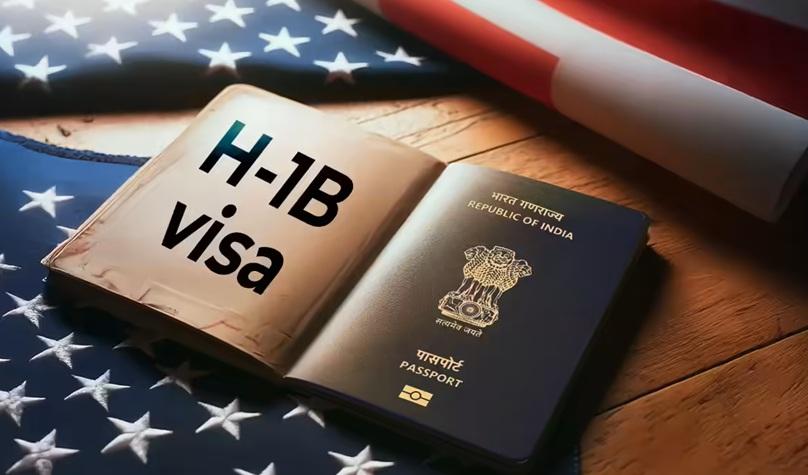
senate bill proposes 3year:
A new bill introduced in the U.S. Senate proposes a three-year pause on issuing H-1B visas and seeks to impose a mandatory $100,000 fee on employers hiring foreign workers under the program. The proposal, if enacted, could have major implications for Indian IT professionals, technology companies, and the broader U.S. labor market.
News Summary
- Senator Josh Hawley introduced a bill proposing a three-year pause on new H-1B visas.
- The legislation would impose a $100,000 fee on employers sponsoring H-1B workers.
- Indian professionals could be among the most affected if the proposal becomes law.
- The technology industry is expected to oppose significant restrictions on skilled immigration.
- The bill is still in its early stages and has not been enacted.
A proposed bill in the United States Senate has reignited debate over immigration and skilled foreign labor by seeking a temporary three-year suspension of the H-1B visa program and introducing a steep $100,000 fee for employers sponsoring H-1B workers.
The legislation, introduced by Republican Senator Josh Hawley of Missouri, aims to significantly reshape the U.S. approach to high-skilled immigration, particularly in the technology sector, where H-1B visas have long played a critical role.
If passed, the bill would represent one of the most significant changes to the H-1B program since its creation in 1990 and could have far-reaching consequences for companies and workers across the globe.
What Does the Bill Propose?
The proposed legislation includes two major provisions:
- A three-year moratorium on issuing new H-1B visas.
- A permanent employer fee of $100,000 per H-1B visa sponsorship once the program resumes.
Supporters of the bill argue that it is intended to prioritize American workers and encourage companies to invest more heavily in domestic hiring and workforce development.
Senator Hawley has stated that American graduates and employees should not face competition from lower-cost foreign labor, particularly in industries experiencing layoffs and economic uncertainty.
Why Is the H-1B Program Important?
The H-1B visa program allows U.S. employers to hire foreign professionals in specialized occupations requiring technical expertise.
Industries that rely heavily on H-1B workers include:
- Information technology.
- Artificial intelligence.
- Engineering.
- Healthcare.
- Financial services.
- Academic research.
Indian professionals constitute the overwhelming majority of H-1B recipients, with Indian nationals consistently accounting for more than 70% of approved H-1B visas in recent years.
Major technology companies including Microsoft, Google, Amazon, Meta, and numerous consulting firms have traditionally relied on the program to address talent shortages.
Potential Impact on Indian Professionals
The proposed legislation has generated significant concern among Indian students, software engineers, and professionals seeking employment opportunities in the United States.
If enacted, the bill could result in:
- Reduced opportunities for Indian tech workers.
- Increased hiring costs for U.S. employers.
- Delays in career planning for international graduates.
- Greater competition for existing visa slots.
- Increased interest in alternative immigration destinations such as Canada, the United Kingdom, and Australia.
Immigration experts caution, however, that the proposal remains in its early legislative stages and faces several hurdles before becoming law.
Technology Industry Likely to Push Back
The U.S. technology industry has historically opposed measures that significantly restrict high-skilled immigration.
Industry groups argue that H-1B workers:
- Fill critical skill shortages.
- Support innovation and economic growth.
- Contribute to the U.S. tax base.
- Help maintain America’s technological competitiveness.
Technology executives have repeatedly emphasized that access to global talent remains essential, particularly in rapidly evolving fields such as artificial intelligence, semiconductor design, and cybersecurity.
A $100,000 sponsorship fee could dramatically alter employer calculations regarding international hiring, especially for smaller firms and startups.
Political Context Behind the Proposal
Immigration has remained a central issue in U.S. politics for several election cycles.
Supporters of stricter immigration policies argue that American workers should receive priority in hiring decisions, particularly during periods of economic uncertainty and corporate restructuring.
The H-1B program has frequently been criticized by some lawmakers who contend that it can be used to replace domestic workers with lower-cost foreign employees.
Conversely, business groups and many economists argue that skilled immigration contributes positively to economic growth and strengthens the country’s position as a global innovation hub.
The proposed bill reflects the ongoing tension between these competing perspectives.
Can the Bill Become Law?
While the announcement has attracted considerable attention, legislative experts note that introducing a bill is only the first step in a lengthy process.
For the proposal to become law, it would need to:
- Pass the Senate.
- Pass the House of Representatives.
- Be signed by the President.
Given the potential economic implications and anticipated opposition from industry stakeholders, many analysts believe the legislation could face substantial challenges during the legislative process.
Historically, major reforms to the H-1B program have encountered intense debate and have often resulted in compromise measures rather than complete overhauls.
What Should H-1B Applicants Do?
Immigration attorneys advise current and prospective H-1B applicants not to panic.
At present:
- The H-1B program remains operational.
- Existing visa holders are unaffected.
- No changes have been implemented.
- The bill remains a legislative proposal.
Applicants are encouraged to continue monitoring official announcements from U.S. immigration authorities and consult legal professionals regarding their specific circumstances.
For many international students and professionals, the situation serves as a reminder of the importance of maintaining flexible career and immigration plans.
Broader Implications
The debate surrounding the H-1B program extends beyond immigration policy. It touches upon broader questions concerning globalization, labor markets, technological innovation, and economic competitiveness.
The United States has long benefited from attracting highly skilled talent from around the world. At the same time, policymakers continue to grapple with concerns about ensuring opportunities for domestic workers.
How lawmakers ultimately balance these competing priorities could shape the future of America’s workforce for years to come.
The proposed H-1B legislation highlights the increasingly complex intersection of immigration, economics, and national competitiveness. While policymakers seek to protect domestic employment opportunities, industries dependent on specialized talent continue to emphasize the benefits of global workforce mobility. Regardless of the bill’s ultimate fate, the debate underscores a broader trend: countries are becoming more strategic about balancing immigration policy with labor market needs in an era defined by technological transformation and geopolitical competition.