Former chief election commissioner calls SIR scheme illegal.
  A Corruption Scandal Is Reshaping Brazil’s Presidential Election
  US citizen injured in Illinois after ICE agents mistook him for fugitive, tried to arrest him
  At 10 years old, Smithsonian’s Black museum is undaunted amid pressure from Trump administration
  Beleaguered at Home, a Bellicose Netanyahu Heads to the U.N.
 Karnataka High Court Strikes Down Health Security National Security Cess Act
** In a significant verdict, the Karnataka High Court has struck down the Health Security National Security Cess Act 2025, citing lack of justification for imposing cess on pan masala and violation of fiscal federalism principles, dealing a blow to the Centre’s efforts to generate additional revenue for health and defense sectors.
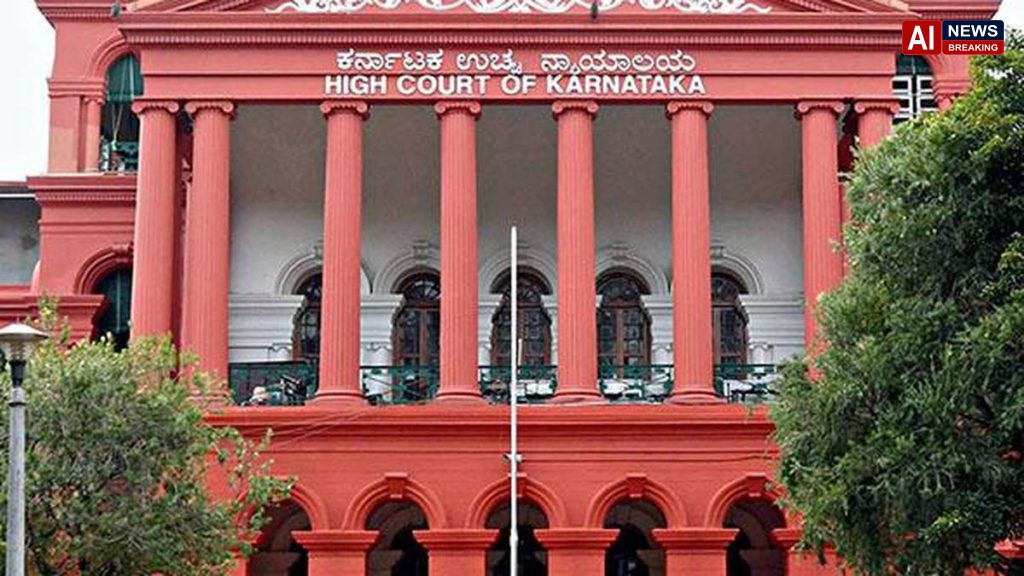
Karnataka High Court Strikes Down Health Security National Security Cess Act - AI News Breaking
Karnataka High Court Strikes Down Health Security National Security Cess Act, 2025 In a significant move, the Karnataka High Court has delivered a verdict striking down the Health Security National Security Cess Act, 2025, effectively rendering the law null and void. The court ruling states that the Centre failed to provide adequate justification for the imposition of cess on pan masala, thereby violating the principles of fiscal federalism. The court further emphasized that the cess cannot be levied on the assumed production capacity of machines..
According to sources, the Health Security National Security Cess Act, 2025, was introduced by the Centre with the intention of generating additional revenue to augment health and defense sectors. However, the court has now deemed the law as unconstitutional, arguing that the Centre failed to follow the stipulated procedures and guidelines. The judgment has been met with widespread reactions from various quarters, with some parties welcoming the decision as a victory for fiscal responsibility..
While the government has maintained that the cess was levied with the noble intention of funding critical public services, the court has ruled that the imposition of cess on a specific product like pan masala is discriminatory. The court has also pointed out that the Centre failed to provide a proper basis for calculating the cess and its revenue implications. As a consequence, the Centre will now have to rework on the law to ensure that it conforms to the constitution and the principles of fiscal federalism..
The Karnataka High Court’s verdict has significant implications for the government’s fiscal policies. The court’s observation that the Centre cannot levy cess on the assumed production capacity of machines has far-reaching consequences for various sectors, including the manufacturing and services sectors. The court has emphasized that the Centre must follow the stipulated procedures and guidelines while imposing cess on a specific product or sector..
The verdict has also sparked intense debate among lawmakers and economists, with some arguing that the court’s decision will undermine the Centre’s efforts to generate additional revenue. However, others have welcomed the decision, arguing that it is essential to uphold the principles of fiscal federalism and ensure that the Centre does not abuse its powers to impose cess arbitrarily. The court’s verdict has now set the stage for a renewed debate on the Centre’s fiscal policies and the need for greater transparency and accountability..
The Karnataka High Court’s verdict has come at a time when the government is facing mounting pressure from various quarters to rethink its fiscal policies. The court’s ruling has now strengthened the government’s position, forcing it to revise its plans to generate additional revenue through the imposition of cess. The Centre is now expected to rework on the law, taking into account the court’s observations and the principles of fiscal federalism..
As the Centre deliberates on the way forward, the court’s verdict has raised several questions on the legitimacy of the Centre’s fiscal policies. The court’s observation that the Centre cannot levy cess on the assumed production capacity of machines has significant implications for various sectors, including the manufacturing and services sectors. The court’s verdict has now set the stage for a renewed debate on the Centre’s fiscal policies and the need for greater transparency and accountability..
The impact of the Karnataka High Court’s verdict is also being witnessed in various industries, including the pan masala sector. The court’s ruling has now raised concerns among industry stakeholders, who are worried about the potential loss of revenue due to the Centre’s inability to levy cess. However, others have welcomed the decision, arguing that it is essential to uphold the principles of fiscal federalism and ensure that the Centre does not abuse its powers to impose cess arbitrarily..
The Centre’s failure to provide adequate justification for the imposition of cess on pan masala has now sparked a renewed debate on the need for greater transparency and accountability in its fiscal policies. The court’s observation that the Centre failed to provide a proper basis for calculating the cess and its revenue implications has raised several questions on the legitimacy of the Centre’s fiscal policies. The Centre is now expected to rework on the law, taking into account the court’s observations and the principles of fiscal federalism..
In a separate development, the Centre has announced that it will appeal against the Karnataka High Court’s verdict, arguing that the law was passed with the intention of generating additional revenue for critical public services. However, the Centre has not provided any explanation for its failure to provide adequate justification for the imposition of cess on pan masala. As the Centre deliberates on the way forward, the court’s verdict has now raised several questions on the legitimacy of the Centre’s fiscal policies..
As the dust settles, the Karnataka High Court’s verdict has now significant implications for the Centre’s fiscal policies and its relationship with various states. The court’s observation that the Centre cannot levy cess on the assumed production capacity of machines has far-reaching consequences for various sectors, including the manufacturing and services sectors. The Centre is now expected to rework on the law, taking into account the court’s observations and the principles of fiscal federalism..
In conclusion, the Karnataka High Court’s verdict striking down the Health Security National Security Cess Act, 2025, has significant implications for the Centre’s fiscal policies and its relationship with various states. The court’s observation that the Centre failed to provide adequate justification for the imposition of cess on pan masala and its failure to follow the stipulated procedures and guidelines has now raised several questions on the legitimacy of the Centre’s fiscal policies. The Centre is now expected to rework on the law, taking into account the court’s observations and the principles of fiscal federalism..
As the Centre deliberates on the way forward, the court’s verdict has now sparked a renewed debate on the need for greater transparency and accountability in its fiscal policies. The court’s observation that the Centre’s failure to provide adequate justification for the imposition of cess on pan masala violates the principles of fiscal federalism has now significant implications for the Centre’s fiscal policies. The Centre is now expected to revisit its plans to generate additional revenue through the imposition of cess.
Updated: July 27, 2026
The Karnataka High Court’s landmark verdict striking down the Health Security National Security Cess Act, 2025, sends a strong signal that the Centre must prioritize transparency and accountability in its fiscal policies. This ruling marks a crucial shift in the balance of power between the Centre and the states, potentially limiting the Centre’s ability to impose arbitrary cesses and demands greater fiscal responsibility from the government.