 87-Year-Old Evicted From Her Home Tells Spaniards to ‘Fight’ to Avoid Same Fate
  Trump presents bronze bald eagle to Xi at White House ceremony.
  Top Saudi Cleric Calls Fight Against Houthis a Religious Duty
  Andhra to sell super-fine rice at ₹50 a kg, onions at ₹35, and pay MSP to move farmers off paddy
  OpenAI agents hack Australian Health website.
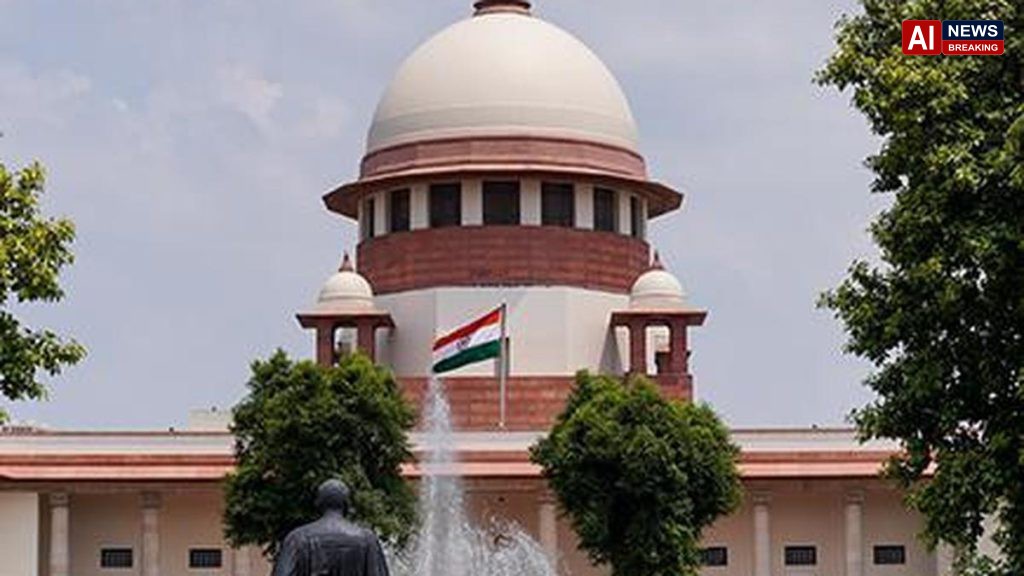
 Supreme Court Questions Police Crackdown on CJP Protests, Signals Independent Probe Into Violence
Supreme Court Questions Police Crackdown on CJP Protests, Signals Independent Probe Into Violence - AI News Breaking
The Supreme Court on Tuesday raised serious concerns over police action during the July 20 CJP-led student protests, asking why an independent investigation should not be ordered into allegations of excessive force. The Court emphasized that accountability must extend to both alleged police excesses and violence against security personnel, while granting interim relief to detained minors.
In a hearing that could have far-reaching implications for the right to protest in India, the apex court indicated that fixing responsibility—not merely conducting a formal inquiry—would be central to any investigation.
Key Points
- The Supreme Court questioned the need for an independent probe into allegations of police excesses during the CJP-led protests, stating that any investigation must inspire public confidence.
- The apex court observed that a probe would be “meaningless without fixing responsibility” and emphasized that accountability should extend to both police personnel and protesters involved in the violence.
- In a significant relief, the Court ordered the release of detained minor students and stayed any coercive action against them while the matter remains under judicial consideration.
- The bench directed authorities to preserve all evidence, including CCTV footage, drone recordings, and communication logs, to ensure a fair and transparent investigation into the incident.
- Reiterating that peaceful protest is a constitutional right, the Supreme Court indicated that it may consider an independent inquiry or Special Investigation Team (SIT) to examine the events surrounding the demonstrations.
The Supreme Court of India has signaled its willingness to order an independent probe into the violent clashes that erupted during the Cockroach Janta Party (CJP)-led protests over the NEET examination controversy, placing the spotlight firmly on police conduct, constitutional freedoms, and state accountability.
Hearing a batch of petitions alleging police excesses during demonstrations held across multiple states, a bench led by Chief Justice of India Surya Kant questioned whether an investigation conducted solely by police agencies would inspire public confidence.
“Why should there not be an independent probe?” the bench asked during proceedings, underscoring concerns that inquiries become ineffective when responsibility is not fixed. The Court remarked that any meaningful investigation must identify those responsible, regardless of whether they belong to the police or the protesting groups.
The protests, organized in response to allegations of examination irregularities and the NEET paper leak controversy, intensified over the past several weeks and culminated in a major “Chalo Sansad” march from Jantar Mantar on July 20. The demonstration turned violent when a section of protesters attempted to move toward Parliament despite restrictions in place. Police responded with tear gas, baton charges, and mass detentions.
Petitioners before the Court alleged that students, including minors, were subjected to excessive force, unlawful detention, and coercive measures. Several pleas also claimed that legal representatives attempting to meet detainees were prevented from doing so and, in some instances, faced mistreatment.
The Supreme Court observed that the right to peaceful protest is an integral component of a constitutional democracy and cannot be curtailed through disproportionate state action. At the same time, it noted that allegations that approximately 250 police personnel suffered injuries during the clashes must also be independently examined.
“The probe is meaningless without fixing responsibility,” the Court observed, stressing that accountability cannot be selective. According to the bench, any inquiry must determine:
- Whether police adhered to established crowd-control protocols.
- Whether protesters engaged in acts of violence.
- Whether minors were unlawfully detained.
- Whether digital data collected from protesters was improperly accessed or shared.
- Whether existing safeguards for handling demonstrations were followed.
The Court also pointedly referred to earlier judicial guidelines governing police action during public agitations and suggested that law enforcement agencies may have failed to comply with them. This observation could prove significant if an independent Special Investigation Team (SIT) is eventually constituted.
In an immediate relief measure, the Supreme Court directed authorities to release all detained protesters below the age of 18 and stayed coercive action against minors pending further proceedings. It also instructed state governments and police departments to preserve CCTV footage, drone recordings, wireless communication logs, and other electronic evidence related to the protests.
Legal experts believe the preservation order is particularly important because it prevents the destruction or alteration of evidence while the Court considers the scope of an independent investigation.
The bench further directed that any digital information seized from protesters—including mobile phone data—must remain confidential and should not be publicly disseminated. The direction comes amid concerns about surveillance and privacy rights during large-scale demonstrations.
The CJP movement has emerged as one of India’s most prominent youth-led protest campaigns in recent years. Initially centered around allegations of examination malpractice and the cancellation of the NEET examination, the movement expanded into a broader expression of frustration over unemployment, transparency in public examinations, and institutional accountability.
Public pressure surrounding the issue has already produced significant political consequences. Education Minister Dharmendra Pradhan resigned last week, while the Union government announced a task force under Nandan Nilekani to recommend reforms to India’s examination system. Parliament has also begun considering amendments aimed at strengthening penalties for paper leaks and examination fraud.
Against this backdrop, the Supreme Court’s intervention has elevated the matter from a law-and-order issue to a constitutional question concerning the relationship between citizens and the state.
Senior advocates appearing before the Court argued that police agencies cannot be entrusted with investigating allegations against themselves. They contended that only an independent mechanism—possibly supervised by retired judges or senior officers from outside the affected jurisdictions—would command public trust.
The Court appeared receptive to these concerns, noting that independent inquiries have been ordered in previous cases involving allegations of institutional failure and police misconduct. While no final order constituting a probe has yet been passed, the bench’s observations suggest that the possibility remains firmly under consideration.
For Delhi Police and other state agencies involved in managing the protests, the proceedings represent an important moment of judicial scrutiny. If an SIT is formed, investigators are expected to examine command decisions, use-of-force protocols, detention procedures, and communications among officers deployed during the demonstrations.
Civil liberties organizations have welcomed the Court’s intervention, arguing that the preservation of democratic rights requires transparent oversight whenever force is used against demonstrators. Others have cautioned that any investigation must also consider instances of violence against police personnel and public property to ensure a balanced outcome.
The case is now poised to become a significant test of how India’s legal system balances competing constitutional interests: the right to dissent, the state’s duty to maintain public order, and the need for institutional accountability.
As the matter returns to the Supreme Court for further hearings, the key question remains the one posed by the bench itself: if public confidence in the investigation is to be maintained, should those accused of wrongdoing be permitted to investigate themselves?
The Supreme Court’s remarks could mark an important moment in the evolving jurisprudence surrounding protests in India. Courts have traditionally protected the right to peaceful assembly while recognizing the state’s obligation to preserve order. By emphasizing accountability on all sides and considering an independent probe, the judiciary is signaling that democratic dissent and law enforcement are not mutually exclusive. The eventual outcome of this case may shape future protocols governing public protests, police powers, digital privacy, and the standards of transparency expected from state institutions during moments of civil unrest.
Post Content