Europe warns of Russia’s hybrid attacks but struggles to counter them
  Former chief election commissioner calls SIR scheme illegal.
  A Corruption Scandal Is Reshaping Brazil’s Presidential Election
  US citizen injured in Illinois after ICE agents mistook him for fugitive, tried to arrest him
  At 10 years old, Smithsonian’s Black museum is undaunted amid pressure from Trump administration
 Panel yet to submit report on SC status for Dalit converts.
** The commission examining SC status for Dalit converts has yet to submit its report, prompting concerns over equality and discrimination, as the government and SC associations weigh in on the contentious issue, with critics arguing that denying SC status based on faith choices would be unconstitutional.
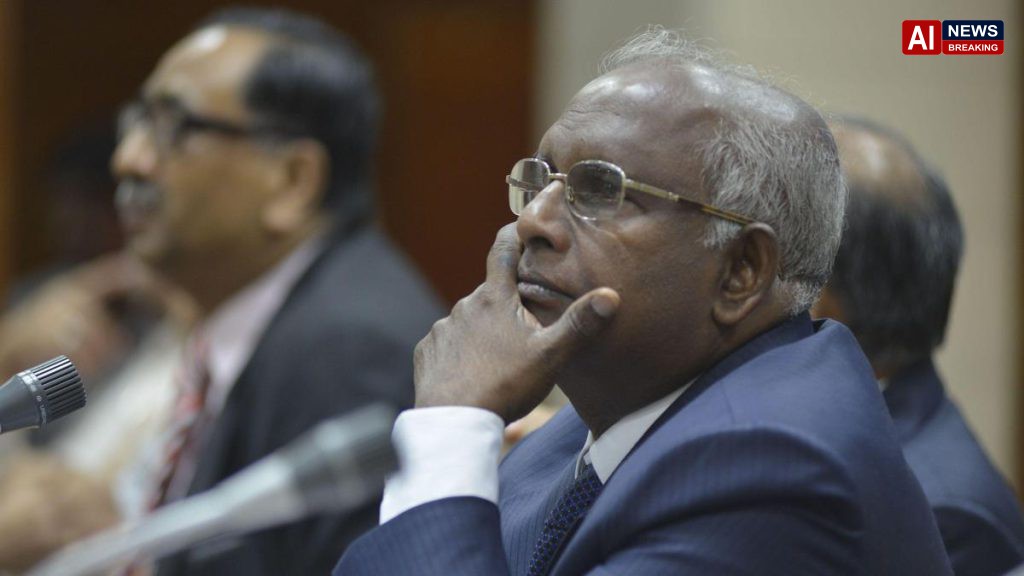
Panel yet to submit report on SC status for Dalit converts. - AI News Breaking
panel submit report status:
Panel examining SC status for Dalit converts yet to submit report A commission led by retired Supreme Court Chief Justice K.G. Balakrishnan is still to submit its report on the Scheduled Caste (SC) status for Dalit converts to Islam. The deadline for the panel to submit its report was June 10, however, the exact submission date remains unclear as yet..
The committee was initially set up to examine and make recommendations on amendments to the Scheduled Castes and Scheduled Tribes (Prevention of Atrocities) Act of 1989 as well as the SC status for those Dalits converting to non-Hindu faiths. The government, along with some Scheduled Caste associations, has indicated that it does not entirely support granting SC status to those individuals converting to Islam or Christianity. This stance suggests that a consensus may be difficult to obtain, potentially hampering the panel’s ability to reach a conclusive report..
Critics argue that such a stance may undermine the fundamental principle of equality under the law by discriminating against citizens based solely on their faith choices. The commission has been deliberating on the matter for over a year now. The debate surrounding SC status for Dalit converts has been a contentious issue for years..
It centres around the question of who should be granted SC benefits and under what circumstances. The existing law does not explicitly deny SC status to those converting to other faiths. However, some government departments and SC associations have indicated that the benefit should extend only to those who adhere to their ancestral Hindu faith..
This dichotomy highlights the intricate nature of the challenge facing the Justice Balakrishnan-led commission. In a recent development, several Dalit rights organisations have expressed their dissatisfaction with the ongoing delay in receiving the panel’s report. They argue that the continuous uncertainty is causing undue distress among those seeking SC benefits, particularly among those who were previously denied benefits or faced difficulties when applying..
Advocates of Dalits have urged the government to address these concerns effectively. Critics point to existing precedents where SC benefits have been extended to individuals who converted to non-Hindu faiths. They contend that such cases demonstrate the flexibility and potential for amendment of the existing law..
Advocates also point to international human rights standards and constitutional guarantees, arguing that denying SC status based on faith choices would be unconstitutional. Government officials, however, maintain that the present law is clear in limiting SC benefits to those belonging to the Scheduled Castes and that a change in status should not be granted solely based on individual choices. While acknowledging the panel’s efforts, officials indicate that any decision taken will need to align with existing laws and avoid potential challenges to the Constitution..
Scheduled Caste associations too have made their opinions known, citing practical challenges and potential consequences of granting SC status to Dalits converting to non-Hindu faiths. These concerns underscore the complexity of the issue, where different groups often hold varying perspectives. Balakrishnan has reassured that the commission remains committed to submitting a comprehensive report, despite the initial June 10 deadline..
This suggests that the panel may require additional time to deliberate on the matter at hand, although the exact submission date has yet to be confirmed. Some have questioned the utility and scope of the commission, suggesting that it may have been unnecessary in the context of the existing SC law. Others have queried how a panel comprising members from different backgrounds, including lawyers, activists, and members of the SC community, could possibly resolve the contentious issue within a single report..
Advocates for Dalit rights have repeatedly urged the panel to take a more nuanced approach in addressing the matter. They argue that the report should reflect the diversity of perspectives within the community and be grounded in evidence-based research. Dalit rights activists argue that the delay in receiving the report has caused undue stress and uncertainty among thousands of individuals who are still awaiting SC benefits..
They contend that any further delay may exacerbate existing hardships and inequality among the Dalit community. While officials have assured that the government will consider the panel’s recommendations, the prospects of a consensus remain uncertain. Any potential disagreements between the government and SC associations may further delay the report’s submission and create additional uncertainty..
It is still early days for the report’s submission, though it is expected that it could take several more weeks or even months before it is finally presented to the public..
Updated: July 28, 2026