Europe warns of Russia’s hybrid attacks but struggles to counter them
  Former chief election commissioner calls SIR scheme illegal.
  A Corruption Scandal Is Reshaping Brazil’s Presidential Election
  US citizen injured in Illinois after ICE agents mistook him for fugitive, tried to arrest him
  At 10 years old, Smithsonian’s Black museum is undaunted amid pressure from Trump administration
 Iran Threatens Prolonged War as Donald Trump Claims Tehran Is Near Defeat
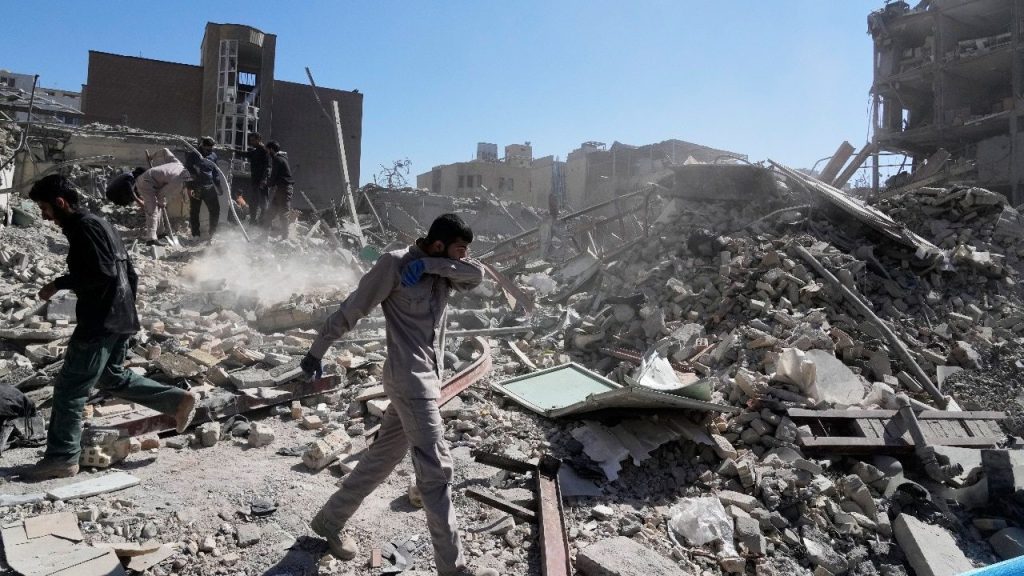
iran threatens prolonged donald:
Escalating Tensions in the Middle East
The ongoing conflict between the United States, Israel, and Iran has entered a new phase of uncertainty as Tehran warns that the war could become a long and costly confrontation, even while U.S. President Donald Trump insists that Iran is already close to defeat.
The sharp exchange of statements highlights the growing divide between Washington’s assessment of the war and Tehran’s determination to continue resisting military pressure. As military strikes continue and tensions rise around the strategically critical Strait of Hormuz, global markets and governments are bracing for further instability.
Trump Says Iran Is “Near the End of the Line”
President Donald Trump recently told reporters that Iran is “pretty much at the end of the line,” claiming that U.S. and allied forces have inflicted extensive damage on the country’s military infrastructure. According to Trump, Iran’s naval and air capabilities have been severely degraded and its missile supplies are rapidly dwindling. (NST Online)
The U.S. president said American forces have already destroyed many major targets across the country and that there is “practically nothing left to target” in Iran, suggesting the war could end soon if Washington decides to stop the campaign. (Business Today)
Trump also warned that if the United States chose to escalate further, it could disable Iran’s electricity grid within hours, which would make rebuilding the country extremely difficult.
However, he indicated that Washington is trying to avoid completely devastating the country’s infrastructure.
“We could hit sections of Tehran that would make it almost impossible for them to rebuild,” Trump said, while stressing that the U.S. does not want to destroy Iran’s long-term recovery prospects. (Dawn)
Iran Warns of a Long War of Attrition
Despite Trump’s confidence, Iranian officials have delivered a starkly different message.
Senior commanders from the Islamic Revolutionary Guard Corps warned that Iran is prepared for a prolonged “war of attrition” against the United States and Israel.
IRGC adviser Ali Fadavi said Washington and Tel Aviv should prepare for a long and exhausting conflict rather than expecting a quick victory.
According to Fadavi, Iran’s strategy aims to gradually increase economic, military, and political pressure on its adversaries.
He warned that a drawn-out war could damage the American economy, disrupt global trade, and weaken military capabilities on all sides.
“The United States and Israel must consider the possibility of a long-term war that could severely damage their economies and gradually erode their military power,” he said. (Business Today)
Strait of Hormuz Crisis Raises Global Alarm
One of the most worrying developments in the conflict is the situation around the Strait of Hormuz, through which roughly 20 percent of the world’s oil supply passes.
Iranian retaliatory actions, including drone attacks, missile strikes, and possible naval mines, have already disrupted shipping in the region. (CNA)
The threat to global energy supplies has triggered emergency responses from governments and energy agencies around the world.
To stabilize markets, the United States has announced plans to release millions of barrels of oil from its strategic reserves in an attempt to prevent a global energy shock. (NST Online)
Energy analysts warn that prolonged disruption in the Persian Gulf could lead to one of the biggest oil supply shocks since the 1970s.
Conflicting Assessments of the War
While President Trump has repeatedly said the war could end soon, intelligence assessments suggest the situation may be more complicated.
According to U.S. intelligence sources, the Iranian government remains stable and is not at immediate risk of collapse, despite intense airstrikes and military pressure. (Reuters)
The country’s leadership structure has remained intact, with power largely consolidated around the new Supreme Leader Mojtaba Khamenei and the Revolutionary Guard.
This suggests that even if Iran’s military infrastructure has suffered heavy damage, its political system and command structure remain capable of sustaining the conflict.
Rising Economic and Global Consequences
The war is already sending shockwaves across global markets.
Oil prices have surged sharply due to fears that shipping routes in the Persian Gulf could be disrupted for an extended period. Analysts warn that the conflict could evolve into one of the most severe energy crises in decades.
The International Energy Agency has warned that the current conflict may produce the largest oil supply shock in modern history if attacks continue to target energy infrastructure and maritime routes.
Financial markets worldwide have also reacted with volatility, with energy stocks rising and transportation and manufacturing sectors facing new cost pressures.
Diplomatic Efforts Struggle to Gain Momentum
Despite rising international concern, diplomatic efforts to halt the fighting have struggled to gain traction.
Iran has reportedly rejected several ceasefire proposals and insists that any negotiations must include compensation for damage caused by U.S. and Israeli strikes as well as guarantees against future attacks.
Meanwhile, Washington has maintained that its military campaign aims to neutralize Iran’s ability to threaten regional stability.
The absence of a clear diplomatic pathway raises fears that the conflict could escalate further before meaningful negotiations begin.
Uncertain Endgame
The war has reached a critical moment where both sides are projecting confidence but preparing for a longer struggle.
President Trump continues to signal that the United States has already achieved many of its objectives and that the war could end soon.
Iran, however, insists that it is ready to sustain the fight for as long as necessary, framing the conflict as a broader resistance against foreign intervention.
The coming weeks may determine whether the confrontation moves toward a negotiated settlement or evolves into a prolonged regional conflict with far-reaching global consequences.