Europe warns of Russia’s hybrid attacks but struggles to counter them
  Former chief election commissioner calls SIR scheme illegal.
  A Corruption Scandal Is Reshaping Brazil’s Presidential Election
  US citizen injured in Illinois after ICE agents mistook him for fugitive, tried to arrest him
  At 10 years old, Smithsonian’s Black museum is undaunted amid pressure from Trump administration
 China expands cattle herds.
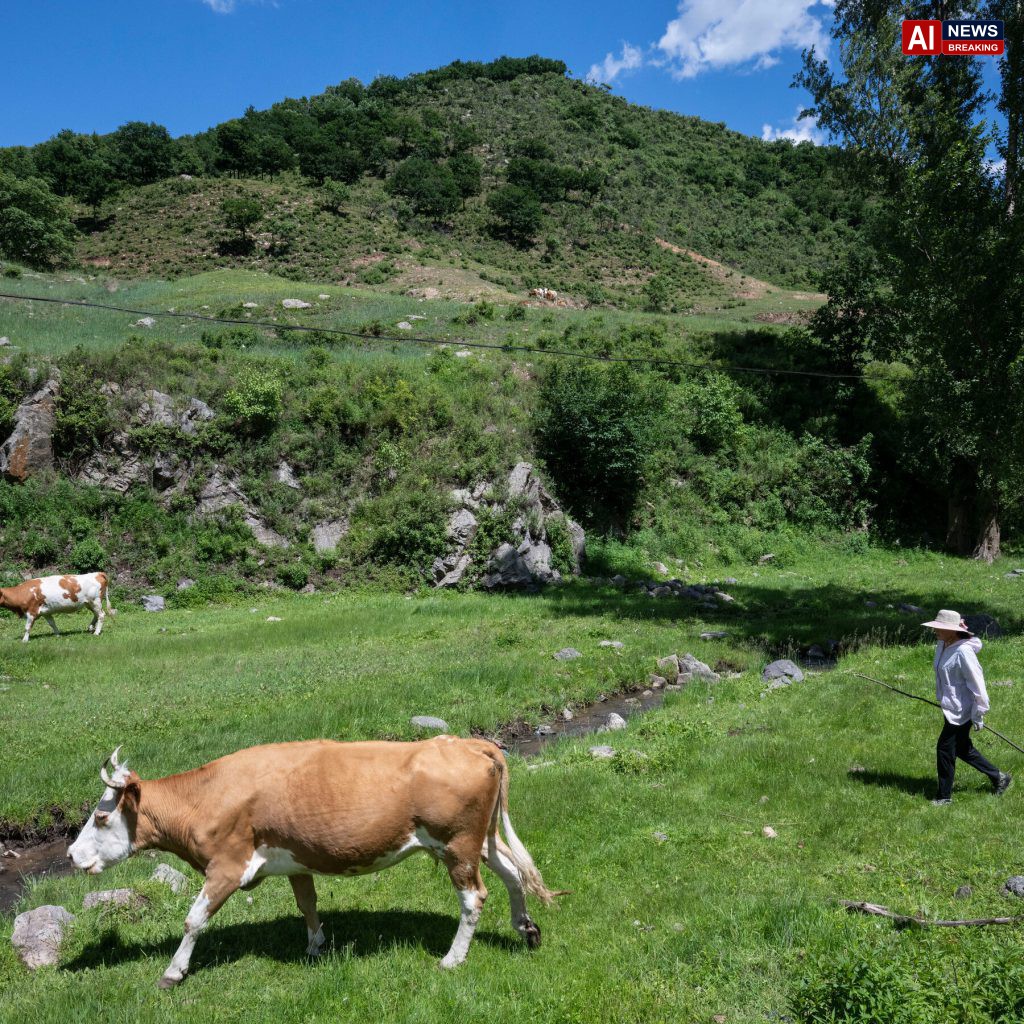
China expands cattle herds. - AI News Breaking
China’s cattle industry is undergoing a significant transformation, driven in part by the effects of climate change and tariffs. As increased rain makes grasslands and cornfields possible in areas that once were deserts, the world’s largest beef importer is becoming more self-reliant by expanding domestic herds. This shift is expected to have far-reaching implications for the global beef market, as China’s reduced reliance on imports could impact the economies of major beef-exporting countries..
The changing climate is altering the landscape of China’s agricultural sector, enabling farmers to cultivate crops and raise livestock in areas that were previously unsuitable. The increased rainfall is particularly beneficial for cattle farming, as it allows for the growth of more nutritious grass and crops, leading to healthier and more productive herds. As a result, Chinese cattle farmers are now able to raise more cattle, reducing the country’s reliance on imported beef..
The effects of climate change on China’s cattle industry are being further amplified by the country’s trade policies, particularly the imposition of tariffs on imported beef. These tariffs, which were introduced as part of a broader trade dispute with major beef-exporting countries, have made imported beef more expensive and less competitive in the Chinese market. This has created an opportunity for domestic cattle farmers to expand their operations and meet the growing demand for beef in China..
China’s growing middle class is driving up demand for beef, with many consumers seeking higher-quality and more sustainable products. The expansion of domestic cattle herds is helping to meet this demand, with many farmers adopting more modern and efficient farming practices. These practices include the use of advanced technology, such as drones and satellite imaging, to monitor and manage cattle grazing and crop cultivation..
The growth of China’s cattle industry is also being driven by government support, with authorities investing in infrastructure and providing subsidies to farmers. This support is helping to improve the productivity and competitiveness of domestic cattle farming, enabling farmers to produce high-quality beef at a lower cost. As a result, Chinese beef is becoming increasingly popular, both domestically and internationally, with many countries seeking to import high-quality beef from China..
The expansion of China’s cattle industry is expected to have significant implications for the global beef market. As the world’s largest beef importer, China’s reduced reliance on imports could impact the economies of major beef-exporting countries, such as Australia, Brazil, and the United States. These countries may need to find alternative markets for their beef, or risk seeing a decline in exports and revenue..
Despite the challenges, many beef-exporting countries are seeking to maintain their market share in China, by offering high-quality and competitive products. Some countries are also seeking to negotiate trade agreements with China, to reduce tariffs and other barriers to trade. However, the growth of China’s domestic cattle industry is likely to continue, driven by the country’s large and growing market, and its increasing self-reliance in beef production..
The impact of climate change on China’s cattle industry is also being felt in other parts of the world, as changing weather patterns and increased rainfall alter the global agricultural landscape. Many countries are seeing changes in their climate, leading to new opportunities and challenges for farmers and cattle producers. As the global cattle industry continues to evolve, it is likely that China will play an increasingly important role, as a major producer and consumer of beef..
The growth of China’s cattle industry is also having significant environmental implications, as the expansion of domestic herds leads to increased greenhouse gas emissions and land use. However, many Chinese cattle farmers are seeking to adopt more sustainable practices, such as rotational grazing and manure management, to reduce their environmental impact. The Chinese government is also investing in research and development, to improve the sustainability and efficiency of the cattle industry..
As China’s cattle industry continues to grow and evolve, it is likely that the country will become an increasingly important player in the global beef market. The combination of climate change, tariffs, and government support is driving the expansion of domestic cattle herds, and reducing the country’s reliance on imported beef. While this shift may present challenges for some beef-exporting countries, it also creates opportunities for China to become a major producer and exporter of high-quality beef..
The long-term implications of China’s growing cattle industry are still uncertain, but it is clear that the country will play an increasingly important role in the global beef market. As the world’s largest beef importer becomes more self-reliant, it is likely that the global cattle industry will undergo significant changes, driven by China’s growing demand for high-quality and sustainable beef. The impact of climate change, tariffs, and government support will continue to shape the industry, as China seeks to balance its economic, environmental, and social goals..
China’s cattle industry is expected to continue its rapid growth, driven by the country’s large and growing market, and its increasing self-reliance in beef production. The expansion of domestic cattle herds will likely lead to increased competition for beef-exporting countries, but it also creates opportunities for China to become a major producer and exporter of high-quality beef. As the global cattle industry continues to evolve, it is likely that China will play an increasingly important role, shaping the future of the industry and the global beef market..
The future of China’s cattle industry will depend on a range of factors, including the continued effects of climate change, government support, and trade policies. As the industry continues to grow and evolve, it is likely that China will become an increasingly important player in the global beef market, with significant implications for beef-exporting countries and the environment. The impact of China’s growing cattle industry will be felt for years to come, as the country seeks to balance its economic, environmental, and social goals, and become a major producer and consumer of high-quality beef..
Updated: July 30, 2026
Insight: The rise of China’s domestic cattle industry not only underscores the country’s shifting economic landscape but also highlights the complex interplay between climate change, trade policies, and food security. As China’s cattle industry continues to expand, it will be fascinating to see how the country navigates the delicate balance between meeting its growing demand for beef and mitigating the environmental impact of its agricultural sector.