Europe warns of Russia’s hybrid attacks but struggles to counter them
  Former chief election commissioner calls SIR scheme illegal.
  A Corruption Scandal Is Reshaping Brazil’s Presidential Election
  US citizen injured in Illinois after ICE agents mistook him for fugitive, tried to arrest him
  At 10 years old, Smithsonian’s Black museum is undaunted amid pressure from Trump administration
 US-Iran War latest: Trump Signals Deal Within 48 Hours as Hormuz Shipping Corridor Nears Breakthrough
** The US-Iran conflict has entered a potentially decisive diplomatic phase, with President Trump signaling that a deal could be reached within 48 hours and Iran and Oman nearing an agreement on a shipping route through the Strait of Hormuz, a vital waterway for global energy exports.
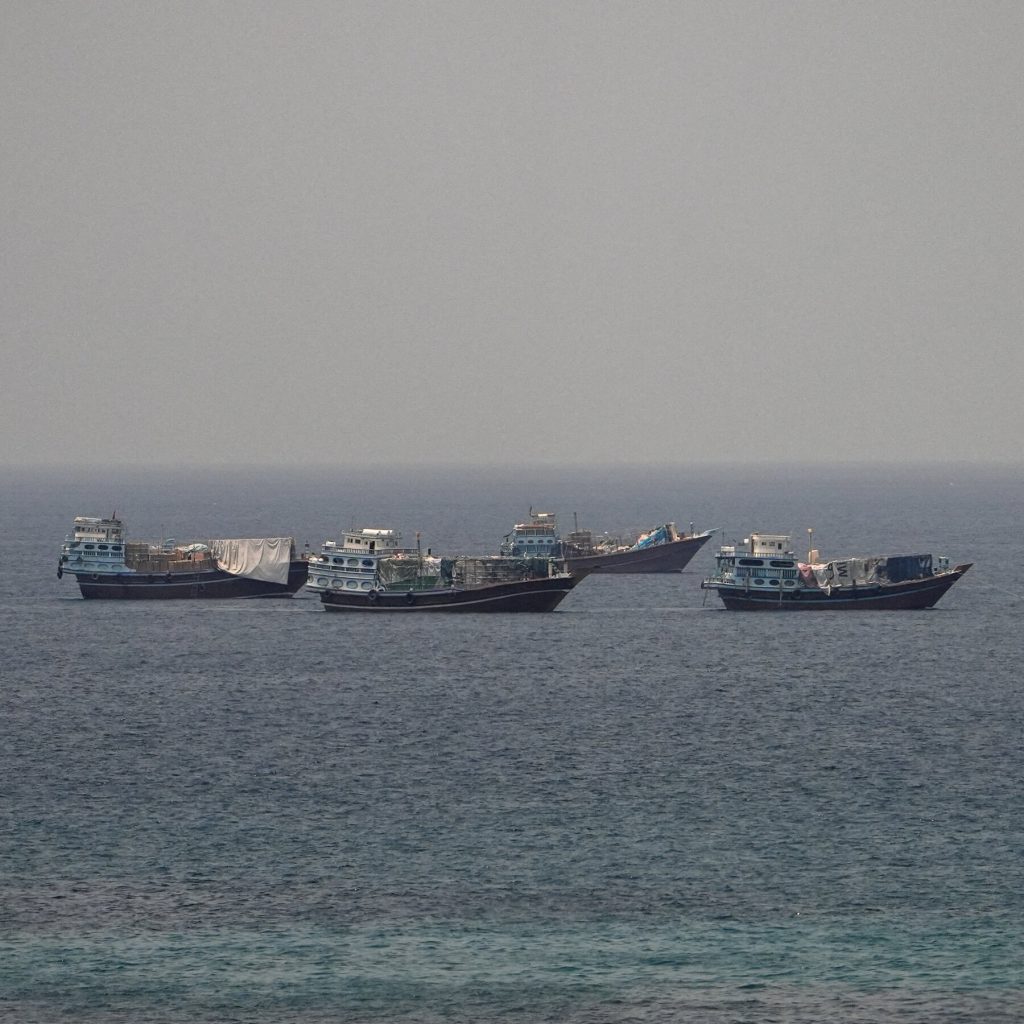
Iran FM visits Oman for talks - AI News Breaking
usiran trump signals deal:
The five-month-old US-Iran conflict has entered a potentially decisive diplomatic phase, with US President Donald Trump signalling that Washington and Tehran could reach an agreement within 48 hours while Iran and Oman move closer to a separate understanding aimed at restoring shipping through the strategically vital Strait of Hormuz.
The developments represent one of the most significant shifts in the conflict since the latest escalation began. After months of military confrontation, threats, blockades and disruption to commercial shipping, diplomacy is once again taking centre stage.
But the apparent progress remains fragile.
Iran and Oman have reported that they are close to finalising the geographical arrangements for a shipping route through the Strait of Hormuz. Iran has described the discussions as a bilateral understanding with Oman, while the United States has been pushing for the waterway to reopen without granting Tehran exclusive control or allowing Iran to impose transit charges.
That disagreement could determine whether the emerging arrangement becomes a genuine reopening of the waterway or merely a temporary corridor.
At the same time, Washington and Tehran remain divided over the broader terms of a potential settlement, including Iran’s nuclear programme, the US naval blockade and the future of sanctions.
The diplomatic opening is therefore significant, but it is far from a completed peace agreement.
Trump says a deal could come within 48 hours
Trump has repeatedly signalled that he would prefer a negotiated settlement to a prolonged military confrontation.
Speaking to reporters on August 5, the US president said negotiations were “moving along very nicely” and indicated that the situation could become clearer within 48 hours. His comments came as diplomatic contacts continued between Washington and Tehran.
Trump subsequently said he would rather reach a deal with Iran than continue military action.
His message reflects a strategic calculation that military pressure may have created an opportunity for negotiations.
At the same time, Trump has maintained that Iran must not be allowed to acquire a nuclear weapon.
That condition remains central to the American position.
The president has also claimed that Iran approached the United States after Washington prepared for a major military operation. Tehran has disputed aspects of the US narrative surrounding the negotiations, highlighting the continuing gap between the two sides even as diplomatic contacts remain active.
The conflicting public statements illustrate the difficulty of negotiating while military pressure remains in place.
Iran and Oman move closer on Strait of Hormuz
The most immediate diplomatic development concerns the Strait of Hormuz.
Iran’s Foreign Ministry said Tehran and Muscat had reached agreement on the geographical characteristics of a proposed shipping route through the waterway.
The proposed arrangement is intended to create a defined corridor for commercial vessels while addressing Iran’s position as a coastal state.
Iranian officials have described the negotiations as bilateral and have insisted that they are separate from direct US-Iran negotiations.
That distinction matters.
The United States has imposed a naval blockade on Iranian ports and has sought to influence the conditions under which commercial vessels can move through the region.
Iran, meanwhile, has insisted that any shipping arrangement must respect its role in the waterway.
According to reporting on the emerging proposal, ships could enter the Persian Gulf through a route under Iranian control and exit through a route associated with Oman. The arrangement could also involve Iran testing the corridor with its own tankers before allowing wider commercial traffic.
The proposal is therefore less straightforward than a simple declaration that Hormuz has reopened.
Why the Strait of Hormuz matters
The Strait of Hormuz is one of the world’s most strategically important maritime chokepoints.
It connects the Persian Gulf with the Gulf of Oman and the wider Arabian Sea. Major energy exporters including Saudi Arabia, Iraq, Kuwait, the United Arab Emirates and Qatar depend on maritime routes through the broader Gulf region to reach international markets.
Any sustained disruption has consequences far beyond Iran and its neighbours.
Oil prices respond rapidly to changes in perceived supply risk because traders must price in the possibility that cargoes could be delayed, rerouted or blocked.
The current crisis has demonstrated that geopolitical developments in the Gulf can quickly translate into higher fuel costs, inflationary pressure and uncertainty for energy-importing economies.
The importance of Hormuz is one reason why Washington has placed such emphasis on reopening the waterway.
Oil markets respond to diplomatic optimism
The latest diplomatic developments have already influenced energy markets.
Brent crude fell to around $79 per barrel on August 6, while West Texas Intermediate also declined as traders reacted to signs that negotiations could eventually restore shipping through the Strait of Hormuz.
The movement demonstrates how closely oil markets are tracking the diplomatic process.
When traders believe the waterway could reopen, the risk premium embedded in crude prices falls.
When military escalation appears more likely, the opposite happens.
Earlier in the conflict, renewed attacks and the US blockade pushed oil prices significantly higher. Reuters reported in July that Brent had risen sharply after Washington reinstated its naval blockade and fighting intensified around the waterway.
The current decline therefore reflects not just expectations about supply but also a change in the perceived probability of a diplomatic settlement.
However, markets are not treating the situation as resolved.
The proposed Hormuz arrangement remains subject to political and military conditions that could change rapidly.
The biggest obstacle: who controls the corridor?
Control of the Strait of Hormuz remains one of the most difficult issues.
Iran considers itself a major coastal power in the region and has repeatedly rejected proposals that it believes would undermine its authority.
The United States, meanwhile, does not want a reopening arrangement that effectively gives Tehran unilateral control over one of the world’s most important energy routes.
This creates a fundamental contradiction.
Iran wants an arrangement that recognises its role as a coastal state.
Washington wants predictable and unrestricted commercial navigation.
Oman is attempting to bridge those positions.
The proposed route may therefore represent a compromise in which Iranian and Omani control or coordination are combined.
Whether the United States accepts such an arrangement will depend on the final terms.
The question of transit fees
Another potentially contentious issue concerns fees.
Reports indicate that Iran may seek payment from vessels using the proposed corridor, while Washington has opposed the idea of Iran charging fees for passage.
The issue may appear secondary compared with the broader war, but it has major strategic implications.
If Iran can establish a recognised mechanism for collecting fees from international shipping, it would reinforce its economic and political leverage over the waterway.
For Washington, that could amount to accepting a new form of Iranian control over a critical international trade route.
For Tehran, however, a service fee could be presented as compensation for navigation arrangements and maritime security rather than as a political toll.
The disagreement could become one of the final obstacles to a broader agreement.
The US naval blockade remains another obstacle
Iran has also warned that the American naval blockade continues to threaten maritime security.
Iranian officials have argued that even an understanding with Oman cannot guarantee safe passage while US military restrictions remain in place.
This creates another circular problem.
The United States wants the Strait of Hormuz reopened.
Iran wants the US blockade lifted.
Washington wants assurances that reopening the waterway will not strengthen Iranian military or economic leverage.
Tehran wants assurances that reopening will not occur under American pressure.
The diplomatic challenge is to find a sequence in which both sides can make concessions without appearing to surrender.
Iran’s warning to Gulf states
The diplomatic progress has occurred alongside renewed threats of regional escalation.
Iran has reportedly warned Gulf states that a renewed US attack on Iranian territory could trigger retaliation against energy infrastructure and other regional targets.
The message was reportedly conveyed through high-level diplomatic channels to countries including Saudi Arabia and Qatar.
Iranian Foreign Minister Abbas Araqchi urged regional governments to encourage Washington to avoid further military action and return to negotiations.
The warning reflects Tehran’s strategy of expanding the potential cost of renewed American attacks.
Iran cannot match the United States militarily in conventional terms, but it can threaten to widen the economic consequences of the conflict by targeting or disrupting regional energy infrastructure.
That possibility is particularly worrying for Gulf states.
Countries such as Saudi Arabia, Qatar and the United Arab Emirates have strong economic interests in preventing the conflict from spreading to their territory.
Gulf states push for diplomacy
The Gulf monarchies have increasingly emphasised diplomacy rather than another round of military escalation.
Saudi Arabia, Qatar and Oman have all played important roles in encouraging negotiations.
Their position is understandable.
A wider regional war could threaten oil production, export infrastructure, shipping, aviation, tourism and investment.
The Gulf economies have spent years diversifying away from dependence on hydrocarbons, but energy infrastructure remains critical to regional prosperity.
A prolonged conflict could therefore undermine economic transformation programmes across the Gulf.
For Saudi Arabia and the UAE in particular, regional stability is central to long-term economic planning.
That makes diplomatic pressure on Washington and Tehran increasingly important.
Trump faces a difficult calculation
For Trump, the emerging negotiations offer both an opportunity and a risk.
A successful agreement could allow the president to claim that military pressure forced Iran back to the negotiating table.
It could also bring down energy prices, reduce the risk of a broader Middle Eastern war and remove pressure on the global economy.
But an agreement that is perceived as too favourable to Iran could expose Trump to domestic political criticism.
The same problem applies to the Strait of Hormuz.
If Washington accepts an arrangement that gives Iran a major role in managing the waterway, critics could argue that the US military campaign failed to achieve its objectives.
If Washington rejects a workable arrangement, however, the administration could face criticism for prolonging a costly conflict and keeping global energy markets under pressure.
The president therefore has to balance military leverage, domestic politics and economic realities.
Iran also faces a difficult choice
Tehran has its own strategic dilemma.
The Iranian leadership can use the current situation to demonstrate that military resistance and control over Hormuz provide bargaining leverage.
But maintaining a prolonged confrontation carries significant economic costs.
Iran’s economy has already faced years of sanctions and international isolation.
The war has added further pressure.
Reopening the Strait could restore a degree of normality to regional commerce and potentially create space for wider economic negotiations.
But Tehran is unlikely to accept an arrangement that appears to surrender its strategic position.
The challenge for Iranian negotiators is therefore to convert control over the waterway into diplomatic leverage without turning that leverage into a long-term international confrontation.
Nuclear negotiations remain at the centre
The Strait of Hormuz issue cannot be separated completely from the nuclear dispute.
Trump has repeatedly stated that Iran cannot be permitted to obtain a nuclear weapon.
Washington therefore wants any broader agreement to address Iran’s nuclear capabilities.
Tehran, meanwhile, has historically argued that its nuclear programme has peaceful purposes and has resisted restrictions it views as an infringement on national sovereignty.
The nuclear issue is more difficult than the shipping dispute because it involves long-term questions of verification, sanctions relief and strategic security.
A temporary maritime arrangement may be achievable relatively quickly.
A comprehensive nuclear agreement would require much greater political commitment.
Why the nuclear issue could derail diplomacy
A major concern for Washington is that Tehran could use discussions over shipping and regional security to delay or redirect attention from its nuclear programme.
This concern has been raised by nuclear experts and Iran hawks who argue that the Trump administration must not allow negotiations over the Strait of Hormuz to replace the larger question of Iran’s nuclear capabilities.
The concern is particularly significant because a shipping agreement could provide immediate economic relief without resolving the underlying nuclear dispute.
From Washington’s perspective, that could produce an arrangement that stabilises commerce while leaving the central strategic problem unresolved.
For Tehran, however, separating issues may provide a way to secure immediate relief while postponing more difficult negotiations.
The sequencing of these issues could therefore become crucial.
The role of the IRGC
Iran’s Islamic Revolutionary Guard Corps remains a powerful actor in the country’s security structure.
Statements from senior Iranian security officials can influence perceptions of how much room the government has to compromise.
The IRGC’s position matters because any agreement that affects Iran’s military posture, maritime authority or nuclear strategy could face scrutiny from hardline factions.
The political leadership must therefore negotiate not only with Washington but also with domestic constituencies that may view concessions as unacceptable.
That makes Iran’s internal political dynamics an important factor in determining whether diplomacy succeeds.
Iran’s political leadership is divided
US Vice President JD Vance has described Iran’s leadership as fractured, arguing that different factions within the Iranian political system have conflicting views about whether the war should continue.
Vance said some elements wanted the conflict to end while others favoured continued confrontation.
Whether that assessment accurately reflects the full complexity of Iran’s political system is difficult to determine from public statements alone.
But the existence of competing political positions is clear.
Iranian lawmakers have publicly questioned the government’s handling of negotiations and demanded greater information about discussions with Washington.
That creates another obstacle for negotiators.
Even if diplomats reach an understanding, it must survive domestic political scrutiny on both sides.
Shipping security remains fragile
While diplomacy advances, the maritime security situation remains dangerous.
The UK Maritime Trade Operations agency reported that a tanker transiting the Strait of Hormuz heard two explosions near Kumzar, Oman.
The crew and vessel were reported safe, and no environmental damage was reported.
The incident demonstrates how fragile commercial navigation remains.
Even without confirmed damage, reports of explosions can cause shipping companies and insurers to reassess the risks of operating in the area.
The result can be higher insurance premiums, rerouting and delays.
For the global economy, a waterway is not truly “open” simply because a political agreement has been announced.
Commercial operators need confidence that vessels can travel safely and predictably.
The Red Sea creates another layer of risk
The Strait of Hormuz is not the only maritime chokepoint affected by the conflict.
The Red Sea and Gulf of Aden have also remained vulnerable because of attacks claimed by Yemen’s Houthi movement.
The Houthis have claimed attacks against Saudi-linked vessels and other shipping interests during the wider conflict.
Such claims are not always independently confirmed, but they add to uncertainty for commercial operators.
The combination of Hormuz instability and Red Sea insecurity creates a broader maritime problem.
Shipping companies may have to assess multiple potential threats simultaneously.
That can raise transportation costs even if oil production itself remains stable.
The India factor
India has a particularly strong interest in the outcome.
India is one of the world’s major energy importers and has extensive commercial and maritime links with the Gulf region.
Indian workers also form a large part of the workforce in several Gulf countries.
Any sustained disruption to shipping through Hormuz can therefore affect India through multiple channels.
Higher crude prices can increase India’s import bill.
More expensive shipping can raise the cost of imported goods.
Insurance and freight costs can affect exporters and importers.
A prolonged conflict can also complicate the movement of Indian citizens through the region.
The sinking of the Indian-flagged cargo vessel MSV Faize Noore Oliya off Yemen’s western coast on August 4 highlighted the risks facing Indian-linked shipping. All 14 crew members, including 13 Indians and one Yemeni national, were reportedly rescued safely.
For New Delhi, the reopening of regional maritime routes would therefore have significant economic and strategic value.
Oil prices and India’s economy
The connection between the Hormuz crisis and India is particularly visible through crude prices.
When oil rises sharply, India faces pressure on its import bill because the country imports a large proportion of its crude requirements.
Higher oil costs can contribute to inflation, increase pressure on the rupee and raise transportation expenses.
Conversely, a credible peace agreement and reopening of Hormuz could reduce the geopolitical risk premium embedded in crude prices.
The recent fall in Brent below $80 following signs of progress illustrates this effect.
However, India should not assume that prices will immediately return to pre-war levels.
Global inventories, refinery capacity, shipping insurance and long-term supply contracts will all influence the market.
The global economic stakes
The Iran conflict has become an economic issue as much as a geopolitical one.
Oil is the most visible component, but the effects extend to shipping, insurance, aviation, manufacturing and food prices.
Energy-intensive industries are particularly vulnerable to sustained increases in fuel costs.
Central banks also monitor energy prices because oil shocks can contribute to inflation.
If the conflict continues, governments could face a difficult policy combination of weaker growth and higher prices.
A diplomatic settlement would therefore be welcomed by financial markets even if it does not resolve every political disagreement.
Why the current moment is different
The latest diplomatic phase differs from previous attempts because both Washington and Tehran have stronger incentives to reduce immediate escalation.
For the United States, prolonged disruption to Hormuz threatens global energy markets and increases the economic cost of the war.
For Iran, continued confrontation risks further economic damage and regional isolation.
For Gulf states, the danger of attacks on energy infrastructure has become increasingly serious.
For global shipping companies, uncertainty is becoming expensive.
These overlapping pressures create a window for diplomacy.
The problem is that the issues on the negotiating table remain extremely difficult.
A possible roadmap to de-escalation
One possible path could involve a staged agreement.
The first stage could focus on commercial shipping.
Iran and Oman could establish a monitored corridor, while the United States could provide assurances against interference with vessels using the route.
A successful shipping arrangement could then create momentum for a broader ceasefire.
The second stage could address the US naval blockade and sanctions.
The third could reopen negotiations over Iran’s nuclear programme.
Such sequencing would allow both sides to claim incremental progress rather than demanding a comprehensive settlement immediately.
But it would require trust.
And trust is currently in short supply.
The danger of a failed deal
The biggest risk is that optimism over diplomacy could be followed by renewed military escalation.
If talks collapse, oil prices could rise rapidly.
Shipping companies could again avoid the region.
The United States could strengthen its blockade.
Iran could intensify its pressure on commercial shipping.
Gulf energy infrastructure could become a target.
Such a scenario would be considerably more damaging than the current uncertainty because markets would have already priced in expectations of de-escalation.
A failed agreement could therefore produce a sharp reversal in investor sentiment.
What the world is watching
Several indicators will determine whether the current diplomatic momentum survives.
First is the final agreement between Iran and Oman over the shipping corridor.
Second is whether Washington accepts the proposed mechanism.
Third is whether the US naval blockade is modified or lifted.
Fourth is whether Iran agrees to broader nuclear negotiations.
Fifth is whether regional armed groups reduce attacks.
And finally, domestic political actors in both Iran and the United States must accept the direction of negotiations.
Any one of these factors could derail the process.
Diplomacy has a narrow window
The current diplomatic opening should not be mistaken for the end of the conflict.
It is better understood as a narrow window in which both sides have recognised that continued escalation carries substantial costs.
Trump’s willingness to speak publicly about a negotiated agreement indicates that Washington is testing whether military pressure can be converted into diplomatic leverage.
Iran’s negotiations with Oman suggest that Tehran is also exploring a way to restore maritime commerce without abandoning its strategic claims.
The question is whether those parallel efforts can be brought together.
Conclusion
The US-Iran conflict has reached a critical moment.
President Donald Trump says a deal could be reached within 48 hours, while Iran and Oman are reportedly close to an agreement on a shipping corridor through the Strait of Hormuz.
Oil markets have already responded to the possibility of de-escalation, with Brent crude falling below $80 as investors assessed the chances of renewed maritime traffic.
But major obstacles remain.
The United States does not want Iran to gain unrestricted control over the waterway. Iran rejects arrangements imposed through American military pressure. The question of transit fees remains unresolved, while the US naval blockade continues to complicate maritime security.
Beyond Hormuz lies the larger nuclear dispute.
Trump has made preventing Iran from acquiring a nuclear weapon a central condition of his policy. Iran, meanwhile, faces internal political divisions over negotiations and must balance diplomatic engagement with hardline opposition.
The conflict has also expanded beyond Iran’s borders, affecting Gulf states, Yemen, Lebanon and international shipping routes.
For the global economy, the most immediate concern is energy security.
For India, the stakes are particularly high because of its dependence on imported crude, extensive trade with Gulf countries and large expatriate population across the region.
A successful diplomatic settlement could lower oil prices, reduce shipping risks and provide a much-needed economic reprieve.
But a temporary shipping corridor is not the same as a comprehensive peace agreement.
The coming days will therefore be decisive.
If Washington and Tehran can convert the current diplomatic opening into a durable framework, the Strait of Hormuz could become a symbol of de-escalation rather than confrontation.
If negotiations fail, however, the same waterway could once again become the epicentre of a crisis capable of shaking global energy markets.
The most important development is not simply Trump’s claim that a US-Iran agreement could come within 48 hours; it is the emerging possibility of separating immediate maritime de-escalation from the much harder nuclear settlement. A workable Iran-Oman shipping corridor could provide the first practical mechanism for reducing economic pressure without requiring Washington and Tehran to resolve every dispute at once. But the arrangement will remain vulnerable as long as the US blockade, Iranian control claims, transit-fee dispute and nuclear question remain unresolved. From an economic perspective, the Strait of Hormuz is the critical variable: every credible sign of reopening reduces the geopolitical risk premium in oil, while every military escalation can quickly reverse that movement. For India and other energy-importing economies, the ideal outcome is therefore not merely a ceasefire but predictable, secure and sustained commercial navigation through the Gulf. The next test will be whether diplomatic optimism can survive the first difficult compromise.