 Sonam Wangchuk seeks Amit Shah’s resignation over Leh violence, fears might be killed in ‘encounter’ What we know
  ‘Fixed match’: CJP’s Dipke urges opposition to stop contesting ‘rigged’ elections amid CEC row
  US considers diesel export ban as India boosts shipments.
  In their words: From across the world, leaders call for action on climate change at the UN
  Europe warns of Russia’s hybrid attacks but struggles to counter them
 Iran War Day 14: US Refueling Plane Crash, Intensified Israel Strikes, Iranian Retaliation and Global Oil Fears Escalate Conflict
iran refueling plane crash:
The escalating conflict involving Iran, the United States, and Israel entered its 14th day on March 13, 2026, bringing with it a fresh wave of military strikes, retaliatory missile attacks, cyberwarfare operations, and growing global anxiety over energy supplies and regional stability.
What began as a coordinated military campaign against Iranian targets has now transformed into a multi-front war spanning air, sea, cyber space, and strategic economic infrastructure. The latest developments on Day 14 highlight how rapidly the conflict is intensifying, with both sides signaling that the confrontation may continue for the foreseeable future.
From the crash of a U.S. aerial refueling aircraft in Iraq to intensified Israeli airstrikes deep inside Iranian territory and warnings of global oil market disruptions, the war is reshaping geopolitics across the Middle East and beyond.
This comprehensive report examines the key events, military actions, political reactions, and global implications of Day 14 of the Iran war.
US Refueling Aircraft Crash in Iraq Sparks Rescue Operation
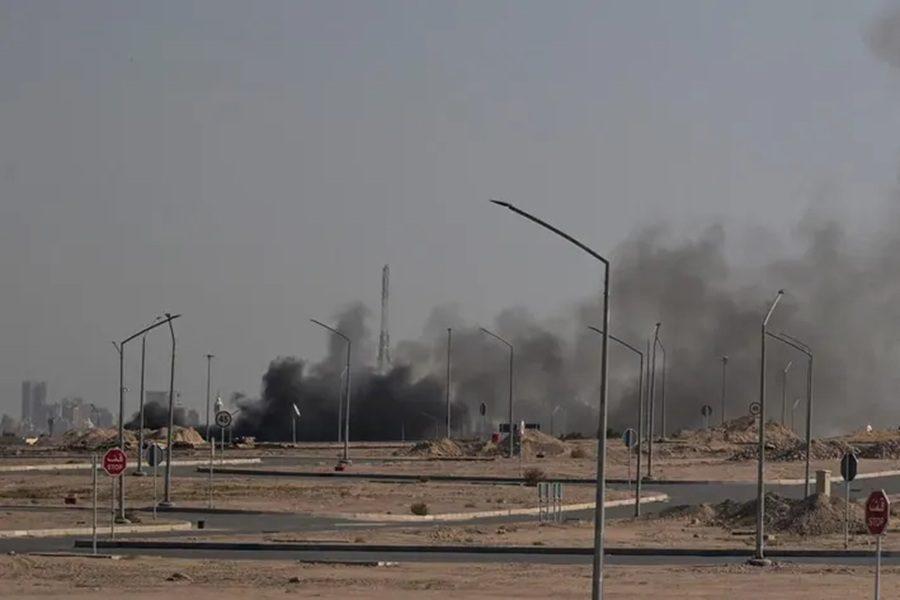
One of the most dramatic developments of Day 14 was the crash of a U.S. military aerial refueling aircraft in western Iraq during a mission linked to the ongoing conflict.
The aircraft involved was a Boeing KC‑135 Stratotanker, a critical component of U.S. airpower that enables fighter jets and bombers to refuel mid-air and extend their operational range.
According to officials from the United States Central Command, the tanker was operating alongside another KC-135 aircraft when the incident occurred.
Initial reports revealed:
- Two tanker aircraft were flying in the same operational zone.
- One aircraft crashed in western Iraq.
- The second aircraft landed safely at a nearby base.
- A rescue mission was immediately launched to locate the crew.
The U.S. military has not yet confirmed whether there were casualties among the crew members, but search and rescue teams were deployed quickly to the crash site.
Officials emphasized that early evidence did not suggest the aircraft had been hit by enemy fire. However, an Iran-aligned militia group in Iraq claimed responsibility for downing the plane, a claim that has not been verified by U.S. authorities.
The crash underscores the dangers of operating in increasingly crowded airspace over the Middle East, where multiple military forces are simultaneously conducting operations.
Why the KC-135 Stratotanker Is Vital to Modern Warfare
The KC-135 Stratotanker has been a backbone of U.S. aerial operations for decades. First introduced during the Cold War, the aircraft has played a crucial role in nearly every major American military campaign.
Its primary function is aerial refueling — transferring fuel mid-flight to combat aircraft, bombers, surveillance planes, and transport aircraft.
Key capabilities include:
- Extending fighter jet range across thousands of kilometers
- Enabling long-duration bombing missions
- Supporting surveillance and reconnaissance aircraft
- Allowing rapid deployment of forces across continents
Because aerial refueling aircraft are essential to sustaining air campaigns, any loss or disruption involving such aircraft can affect military operations across the region.
In the context of the Iran war, these tankers are particularly important as U.S. and Israeli aircraft conduct long-distance missions targeting Iranian infrastructure and military assets.
Intensified Israeli Airstrikes Across Iran
While the aircraft crash captured global attention, the core of the conflict continues to be Israel’s ongoing aerial bombardment of targets across Iran.
Over the past 24 hours, Israeli forces launched a new wave of airstrikes targeting multiple locations across the country.
Explosions were reported near the capital Tehran, as well as several other major urban and military centers.
Israeli officials say the strikes are aimed at:
- Military command centers
- Missile launch facilities
- Air defense installations
- Weapons manufacturing sites
- Logistics infrastructure supporting Iranian forces
The goal of these strikes, according to Israeli military sources, is to weaken Iran’s ability to conduct missile attacks against Israeli territory and regional allies.
Iranian authorities, however, claim that several civilian areas and infrastructure sites were also damaged during the bombing campaign.
The scale of the strikes suggests that Israel is attempting to significantly degrade Iran’s military capabilities before Tehran can launch additional large-scale retaliatory attacks.
Damage to Cultural and Historical Sites Raises Global Concern
Among the more controversial developments of the ongoing air campaign are reports that several historical and cultural sites in Iran have been damaged during bombing raids.
Iranian officials say some of the affected locations include areas near ancient heritage sites that date back centuries.
International observers and cultural preservation organizations have expressed concern over potential damage to historically significant landmarks.
While Israeli officials have not confirmed targeting cultural sites, they insist that all strikes are focused strictly on military infrastructure and strategic targets.
The controversy highlights the complex challenges of conducting air operations in densely populated areas with centuries of cultural heritage.
Iran Launches New Missile and Drone Attacks
Iran responded to the latest round of strikes with renewed missile and drone attacks directed toward Israeli territory and U.S. assets in the region.
Iranian military sources say multiple waves of missiles were launched overnight toward Israel.
Many of these projectiles were intercepted by Israel’s advanced air defense systems, including Iron Dome and Arrow missile defense system.
However, several missiles reportedly struck populated areas, causing property damage and injuries.
The Iranian government has warned that continued attacks on its territory will result in even stronger retaliation.
Military analysts say Iran appears to be attempting to overwhelm Israeli defenses by launching large numbers of missiles simultaneously.
Iranian Leadership Vows Revenge
Iranian leaders have taken a hardline stance as the war continues.
Officials in Tehran have vowed that the country will continue to retaliate against both the United States and Israel.
In recent statements, Iranian leaders described the attacks as acts of aggression that must be answered with force.
The rhetoric from Tehran indicates that Iran is preparing for a prolonged confrontation rather than a short-term military exchange.
Analysts warn that the war could escalate further if additional countries or regional militias become directly involved.
Cyberwar Becomes a Major Battlefield
Beyond conventional military operations, the Iran war is also unfolding in cyberspace.
Cybersecurity experts report a surge in attacks linked to Iranian hacker groups targeting American companies and infrastructure.
Some of the reported targets include:
- Healthcare companies
- Technology firms
- Government contractors
- Energy infrastructure systems
These cyberattacks are believed to be part of Iran’s broader strategy to retaliate against the United States without engaging directly in large-scale conventional warfare.
Experts say cyberwarfare allows Iran to inflict economic damage while avoiding the risks associated with direct military confrontation.
At the same time, U.S. cybersecurity agencies are working to defend critical infrastructure against potential disruptions.
Global Oil Markets React to War Fears
The conflict is having significant ripple effects across global energy markets.
Oil prices have surged as traders worry that the war could disrupt supply from the Middle East — a region that produces a large share of the world’s oil.
Particular concern surrounds the Strait of Hormuz, a narrow waterway through which roughly one-fifth of global oil shipments pass.
Iran has previously threatened to block or disrupt shipping through the strait if its territory continues to be attacked.
Recent incidents involving attacks on oil tankers and energy facilities have increased fears that a broader energy crisis could emerge.
Some analysts warn that if the Strait of Hormuz were closed even temporarily, oil prices could skyrocket.
Such a development would likely trigger inflation spikes and economic disruptions across many countries.
Impact on Global Economy
The Iran war is already affecting financial markets around the world.
Stock markets have experienced volatility as investors react to geopolitical uncertainty and rising energy costs.
Airlines, shipping companies, and manufacturing industries are particularly vulnerable to rising fuel prices.
Governments and central banks are closely monitoring the situation, aware that prolonged instability in the Middle East could slow global economic growth.
Energy-importing countries, including several in Asia and Europe, are especially concerned about the potential impact on their economies.
Humanitarian Impact and Civilian Casualties
The war is also taking a heavy toll on civilians.
Iranian authorities report that hundreds of people have been killed and thousands injured since the conflict began.
Hospitals and emergency services in several cities are struggling to cope with the influx of wounded civilians.
Infrastructure damage has disrupted electricity, water supply, and transportation in some areas.
Humanitarian organizations are calling for restraint from all parties and urging steps to protect civilians and critical infrastructure.
However, with the conflict continuing to escalate, the humanitarian situation could worsen significantly in the coming weeks.
Regional Tensions Continue to Rise
The war has heightened tensions across the broader Middle East.
Several Iran-aligned militias operating in neighboring countries have issued warnings that they may join the conflict.
U.S. military bases across the region have been placed on heightened alert amid concerns about potential missile or drone attacks.
Meanwhile, diplomatic efforts aimed at reducing tensions have so far failed to produce a breakthrough.
International organizations and several governments are urging both sides to pursue negotiations before the conflict spirals further out of control.
What Could Happen Next
Military analysts say several scenarios are possible in the coming days.
The conflict could escalate further if:
- Iran launches larger missile barrages
- Israel expands its air campaign deeper into Iranian territory
- Regional militias open new fronts against U.S. forces
- Shipping routes in the Persian Gulf are disrupted
Alternatively, international diplomatic pressure could eventually push the parties toward a ceasefire.
However, at the moment, both sides appear committed to continuing their military operations.