Europe warns of Russia’s hybrid attacks but struggles to counter them
  Former chief election commissioner calls SIR scheme illegal.
  A Corruption Scandal Is Reshaping Brazil’s Presidential Election
  US citizen injured in Illinois after ICE agents mistook him for fugitive, tried to arrest him
  At 10 years old, Smithsonian’s Black museum is undaunted amid pressure from Trump administration
 Afghanistan–Pakistan Conflict Explodes: Taliban Targets Pakistani Military Centres After Deadly Airstrikes, Raising Fears of Another War Near Iran
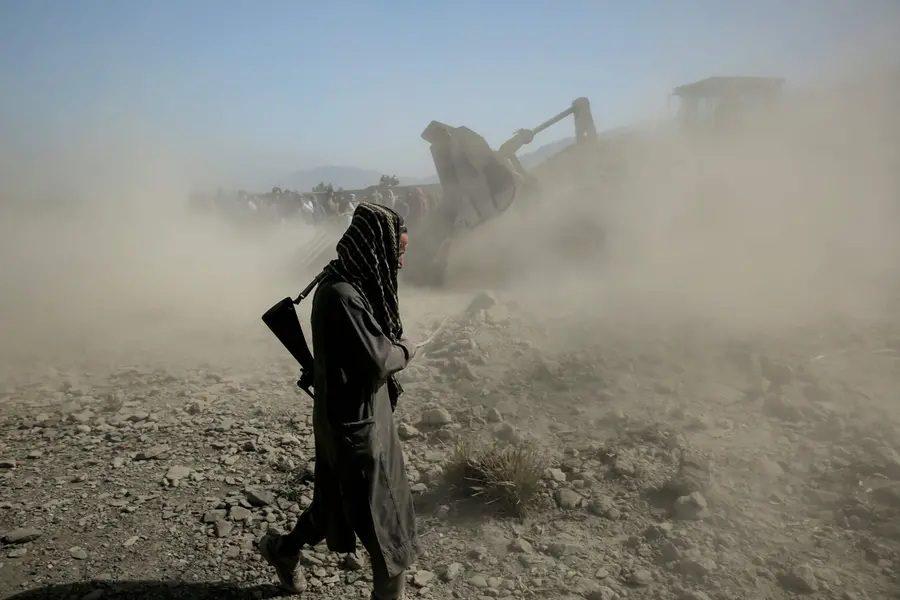
afghanistanpakistan conflict explodes taliban:
The already fragile geopolitical situation across Asia has taken a dramatic turn as tensions between Taliban-led Afghanistan and the government of Pakistan have escalated sharply following cross-border airstrikes and retaliatory drone attacks. The latest exchange of fire has raised serious concerns among global observers that another major conflict could erupt in the region, adding to the instability caused by the ongoing tensions involving **Iran and its adversaries.
The crisis began when Pakistan launched airstrikes on targets inside Afghanistan, claiming it was targeting militant hideouts linked to the Tehrik‑e‑Taliban Pakistan (TTP). In response, Afghan Taliban authorities ordered retaliatory strikes on Pakistani military facilities, marking one of the most serious confrontations between the two neighbours in recent years.
With both sides accusing each other of aggression, the situation threatens to spiral into a wider military confrontation that could destabilize a region already struggling with multiple security challenges.
Pakistan’s Airstrikes Inside Afghanistan Trigger Crisis
The escalation began when the Pakistani military conducted a series of airstrikes inside Afghan territory, targeting locations that Islamabad said were used by militant groups responsible for attacks on Pakistani soil.
According to Pakistani officials, the strikes were aimed at facilities used by the Tehrik‑e‑Taliban Pakistan, a militant organization that has carried out numerous attacks against Pakistani security forces and civilians over the past decade.
Pakistan has long accused the Taliban administration in Kabul of allowing TTP militants to operate from Afghan territory, an allegation the Afghan government strongly denies.
Officials in Islamabad argued that the airstrikes were necessary to neutralize militants who were planning attacks against Pakistani cities and military installations.
However, Afghan authorities strongly condemned the strikes, saying they violated the country’s sovereignty and resulted in civilian casualties.
Afghan officials claimed that several homes were destroyed and multiple civilians, including women and children, were killed in the attacks.
The Taliban government warned that it would not tolerate foreign military operations on Afghan soil and promised retaliation if Pakistan continued its airstrikes.
Taliban Launches Retaliatory Drone Strikes
Within hours of the Pakistani airstrikes, Taliban forces reportedly launched retaliatory attacks targeting Pakistani military infrastructure.
According to Afghan officials, the strikes focused on military installations in the Kohat region, which hosts several Pakistani military facilities.
The Taliban administration claimed the operation involved drones and other aerial capabilities aimed at strategic military targets.
Afghan authorities described the strike as a defensive response to Pakistani aggression and said it was intended to send a clear message that Afghanistan would defend its territorial integrity.
Pakistan has acknowledged that there were security incidents in the region but has disputed the scale of damage claimed by Afghan officials.
Military sources in Islamabad said that while some facilities were targeted, the Pakistani armed forces quickly neutralized the threat and prevented major damage.
Despite the conflicting accounts, the exchange of airstrikes has significantly raised tensions between the two countries.
A Long-Running Conflict Reignites
The current crisis is the latest chapter in a long history of tensions between Pakistan and Afghanistan.
Relations between the two countries have been strained for decades, largely due to disputes over border security, militant groups and the status of the Durand Line, which separates the two nations.
Pakistan considers the Durand Line to be the official international border, but many Afghan leaders have historically refused to recognize it.
This disagreement has contributed to recurring clashes along the frontier, where militants frequently move between the two countries.
The situation has become even more complicated since the Taliban returned to power in Afghanistan in 2021.
While Pakistan initially welcomed the Taliban’s return, relations between the two governments have deteriorated over the issue of militant groups operating along the border.
Islamabad accuses Kabul of failing to control militants linked to the Tehrik‑e‑Taliban Pakistan, which seeks to overthrow the Pakistani government.
The Taliban administration, on the other hand, insists that it does not allow foreign militants to use Afghan territory to launch attacks against neighbouring countries.
Rising Violence Along the Border
Over the past year, violence along the Afghanistan-Pakistan border has increased significantly.
Pakistani security forces have reported multiple attacks on military bases, checkpoints and police stations allegedly carried out by TTP fighters.
In response, Pakistan has stepped up cross-border operations targeting militant hideouts inside Afghanistan.
These operations have repeatedly angered the Taliban government, which views them as violations of Afghan sovereignty.
Border skirmishes have also become more frequent, with both sides exchanging fire along several sections of the frontier.
The latest airstrikes and retaliatory attacks represent one of the most serious escalations so far.
Strategic Military Targets in Pakistan
Afghan officials claim that Taliban forces have struck several key Pakistani military installations in recent weeks.
Among the reported targets are facilities near Rawalpindi, which is home to the headquarters of the Pakistani military.
Another reported target was the Nur Khan Airbase, a major air force base that plays an important role in Pakistan’s defense infrastructure.
Taliban officials also said they targeted installations in the Kohat area, where the Pakistani army maintains several operational facilities.
Pakistan has not confirmed all of these claims but has acknowledged that tensions along the border have intensified.
Security analysts believe the strikes indicate that the Taliban may be expanding its military capabilities, particularly in the use of drones.
Civilian Casualties Raise Humanitarian Concerns
One of the most worrying aspects of the escalating conflict is the growing number of civilian casualties.
Afghan authorities say several civilians were killed when Pakistani aircraft struck residential areas during the airstrikes.
Local officials reported that homes and infrastructure were destroyed in multiple locations.
Humanitarian organizations have warned that continued fighting could lead to large-scale displacement in border regions that are already struggling with poverty and instability.
Residents in several Afghan provinces near the Pakistani border have reportedly fled their homes due to fears of further airstrikes.
Aid agencies say the situation could quickly turn into a humanitarian crisis if the violence continues.
International Community Calls for Restraint
The escalating conflict has drawn concern from the international community.
Several countries and organizations have urged both Pakistan and Afghanistan to exercise restraint and avoid actions that could trigger a wider war.
Diplomatic sources say regional powers are quietly working to prevent the situation from spiraling out of control.
Some analysts believe **China may attempt to mediate between the two countries because of its strategic interests in regional stability and economic projects in Pakistan.
Other countries in the region are also watching the situation closely.
The conflict comes at a particularly sensitive time, as tensions in the Middle East involving **Iran have already heightened fears of broader instability.
If fighting between Pakistan and Afghanistan intensifies, it could create a second major conflict zone in Asia.
Why the Conflict Matters for the Region
The Afghanistan-Pakistan confrontation has implications far beyond the two countries involved.
Pakistan is a nuclear-armed state and plays a key role in regional security.
Any prolonged conflict along its western border could destabilize the broader South Asian region.
Afghanistan, meanwhile, remains politically fragile and economically isolated following decades of war.
Another large-scale military conflict could further worsen the country’s humanitarian and economic crisis.
The conflict also risks creating space for extremist groups to expand their influence.
Militant organizations often take advantage of political instability and military conflict to recruit fighters and carry out attacks.
Growing Risk of a Wider War
Security experts warn that the cycle of attack and retaliation between Pakistan and the Taliban government could quickly spiral into a wider conflict.
Both sides have powerful military capabilities, and the use of airstrikes and drones indicates that the confrontation has already moved beyond minor border skirmishes.
If the fighting continues to escalate, there is a risk that the conflict could draw in other regional players.
Given the proximity of the conflict to **Iran and Central Asia, any major war in the area could have significant geopolitical consequences.