 Pentagon directive bans troops from using nonpublic info to bet in prediction markets
  Plaintiffs in Trump arch project seek injunction to stop administration from beginning work Nov. 5
  Trump says he ‘heard something about’ Justice Department probe into longtime ally Corey Lewandowski
  Trump administration stopped sharing evidence in Good and Pretti killings, Minnesota officials say
 Iran President Pezeshkian Greets PM Modi on Independence Day, Calls India Ties a ‘Valuable Asset’
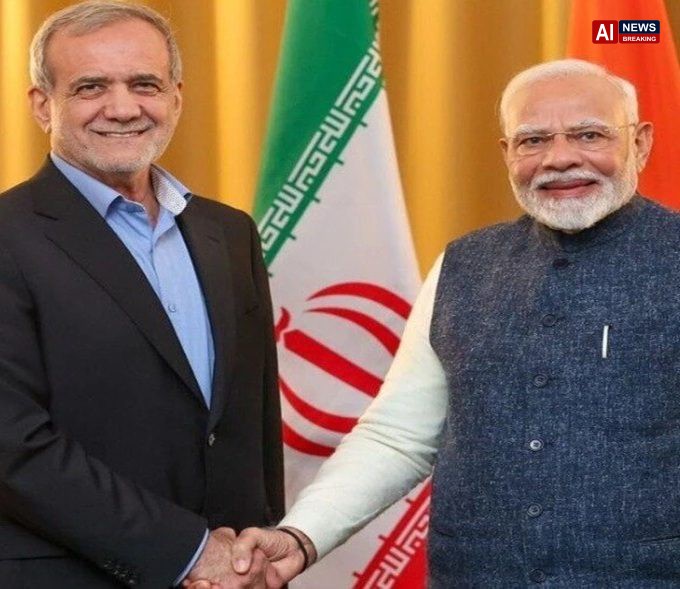
Iran President Pezeshkian Greets PM Modi on Independence Day, Calls India Ties a 'Valuable Asset' - AI News Breaking
Iranian President Masoud Pezeshkian extended Independence Day greetings to Prime Minister Narendra Modi and the people of India on August 15, reaffirming Tehran’s commitment to strengthening bilateral relations. He described India and Iran’s deep historical, cultural and civilisational connections as a “valuable asset” for expanding cooperation.
Iran’s Pezeshkian Reaffirms Commitment to Stronger India Ties on I-Day
Iranian President Masoud Pezeshkian has conveyed warm Independence Day greetings to Prime Minister Narendra Modi and the people of India, using the occasion to underline Tehran’s interest in taking India-Iran relations to a deeper level.
In a message marking India’s Independence Day on August 15, Pezeshkian highlighted the long-standing historical, cultural and civilisational relationship between the two countries. He described these connections as a “valuable asset” that could help India and Iran build a stronger future based on shared interests.
Pezeshkian also stressed Iran’s readiness to take what he described as more effective steps towards strengthening comprehensive relations with India. The Iranian president said the two countries could use their existing capacities and build on mutual trust and respect to advance common interests.
Historical ties at the centre of Pezeshkian’s message
The Iranian president’s message placed particular emphasis on the civilisational links connecting India and Iran.
India and Iran have maintained contacts for centuries through trade, language, culture, literature and people-to-people exchanges. India’s Ministry of External Affairs describes the relationship as being rooted in a “millennia-long history” and notes that contemporary bilateral ties encompass political engagement, commerce, connectivity, culture and people-to-people relations.
The modern diplomatic relationship has also developed through several important milestones. India and Iran signed a friendship treaty in 1950, while later initiatives—including the Tehran Declaration in 2001 and the New Delhi Declaration in 2003—helped strengthen bilateral cooperation. Prime Minister Narendra Modi’s 2016 visit to Iran further expanded cooperation, including through the trilateral connectivity agreement involving India, Iran and Afghanistan.
Pezeshkian’s latest message therefore comes against a much broader backdrop than a routine diplomatic greeting. By specifically identifying historical and cultural ties as an asset, Tehran is signalling that it sees those longstanding connections as a foundation for expanding practical cooperation.
Chabahar remains an important pillar
Connectivity is among the areas where India and Iran have developed concrete strategic cooperation.
The Chabahar Port project has been particularly important to New Delhi because the Iranian port provides India with an alternative route towards Afghanistan and Central Asia, reducing dependence on routes through Pakistan.
India and Iran signed a long-term contract in May 2024 concerning the equipping and operation of the Shahid-Behesti terminal at Chabahar Port. India’s Ministry of External Affairs has identified connectivity cooperation as an important component of the bilateral relationship.
This makes Iran an important partner in India’s broader effort to develop alternative trade corridors linking the Indian subcontinent with Central Asia and beyond.
For Tehran, closer economic engagement with India also offers an opportunity to strengthen trade and investment links at a time when Iran faces considerable external economic pressure.
Modi-Pezeshkian engagement
The latest message also follows continued political engagement between Modi and Pezeshkian.
The two leaders met on the sidelines of the BRICS Summit in Kazan, Russia, in October 2024, in their first meeting after Pezeshkian became Iran’s president. According to India’s Ministry of External Affairs, the discussions focused on ways to further strengthen bilateral relations.
Their governments have continued to maintain communication amid developments in West Asia.
In March 2026, Modi spoke with Pezeshkian about regional developments and bilateral cooperation. The Indian prime minister also stressed the importance of regional stability and maritime security.
That diplomatic engagement has assumed greater importance as geopolitical tensions in West Asia have affected energy supplies, shipping routes and regional security.
India’s balancing act in West Asia
India’s relationship with Iran exists within a complicated geopolitical environment.
New Delhi maintains important strategic relationships with the United States, Israel, Gulf countries and other major powers while simultaneously maintaining its longstanding engagement with Tehran.
Iran is important to India because of its geographical position, energy significance and connectivity potential. At the same time, India must carefully manage its relations with Washington and other partners because of the sanctions and geopolitical disputes surrounding Iran.
The latest Pezeshkian message can therefore be viewed as part of Tehran’s effort to reinforce its relationship with a major Asian power without framing the relationship exclusively through the lens of current geopolitical tensions.
For India, maintaining communication with Iran provides strategic flexibility. It allows New Delhi to preserve access to important regional connectivity projects while keeping diplomatic channels open during periods of instability.
Energy and maritime security
Energy security has become an especially important dimension of India’s West Asia policy.
The Middle East remains central to global energy markets, and disruptions affecting shipping lanes can have direct consequences for India, one of the world’s major energy-consuming economies.
India’s strategic interests therefore extend beyond bilateral trade with Iran. Stability around critical maritime routes is directly connected to India’s energy security, commercial shipping and economic growth.
Modi has recently emphasised energy security as a major national priority, particularly amid disruptions associated with the wider West Asian crisis.
This makes continued dialogue with Tehran significant even when India and Iran may not share identical positions on every regional issue.
Tehran seeks broader cooperation
Pezeshkian’s message went beyond ceremonial greetings.
The Iranian president said Tehran was prepared to strengthen relations across multiple areas and make more effective use of existing bilateral capacities. Iranian media also reported that Pezeshkian wants to expand cooperation with India in all fields.
The language suggests that Iran wants to translate historical goodwill into broader practical engagement.
Potential areas include trade, transportation, connectivity, culture, education, investment and regional cooperation. The exact pace of progress, however, will depend on geopolitical circumstances, sanctions-related constraints and the broader security situation in West Asia.
Why the message matters for India
The significance of Pezeshkian’s message lies partly in its timing.
India celebrated its 80th Independence Day on August 15, with messages of congratulations arriving from leaders around the world. Iran’s decision to place historical and civilisational ties at the heart of its message reflects the importance Tehran attaches to its relationship with New Delhi.
For India, such diplomatic engagement reinforces its ability to maintain relationships across competing geopolitical blocs.
New Delhi has increasingly emphasised an independent and interest-driven foreign policy. Its approach involves maintaining strategic partnerships with multiple countries while avoiding unnecessary dependence on any single geopolitical camp.
India’s relationship with Iran fits into that wider diplomatic strategy.
The road ahead
The challenge for both countries will be converting diplomatic statements into measurable economic and strategic cooperation.
Chabahar remains a key test. Greater utilisation of the port and stronger connectivity with Central Asian markets could provide tangible economic benefits to both countries.
Trade expansion will also require navigating financial and sanctions-related obstacles. Businesses and financial institutions must consider the international restrictions surrounding Iran, which can complicate otherwise commercially viable transactions.
Nevertheless, the fundamental strategic logic behind India-Iran engagement remains intact.
India needs diversified connectivity routes into Central Asia and Europe. Iran offers geographical access that few other countries can provide. Iran, meanwhile, sees India as a major Asian economy and an important potential partner for trade, investment and regional connectivity.
Pezeshkian’s Independence Day message reinforces that shared interest.
Insight: President Masoud Pezeshkian’s Independence Day message to Prime Minister Narendra Modi is more than a diplomatic courtesy; it highlights the strategic resilience of India-Iran relations amid a rapidly changing West Asian geopolitical environment. By calling historical, cultural and civilisational ties a “valuable asset,” Tehran is emphasising the long-term foundation of the relationship, while its call for deeper cooperation reflects Iran’s interest in India as an important economic and strategic partner. For New Delhi, maintaining constructive ties with Tehran can provide valuable connectivity options through Chabahar, preserve diplomatic flexibility in West Asia and support India’s broader strategy of engaging multiple power centres simultaneously. The real measure of this renewed diplomatic emphasis, however, will be whether both sides can translate political goodwill into stronger trade, connectivity, investment and regional cooperation while navigating sanctions and geopolitical pressures.