 Indian engineering student dies in U.S. internship.
  Andhra CM alerts officials about the cyclone in Bay of Bengal
  Trump at South Florida rally revives the idea of military intervention in Cuba after Iran
 Pakistan protests US envoy’s Kashmir remarks, strains ties
**
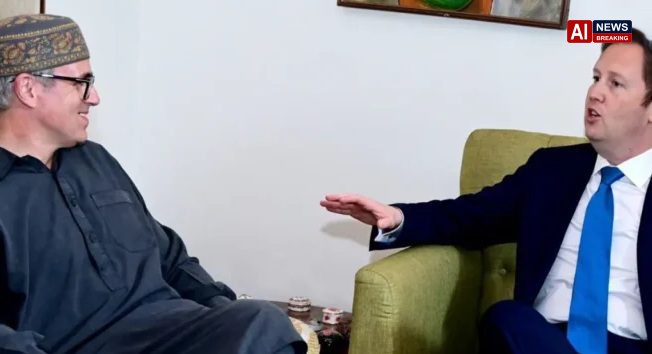
Pakistan protests US envoy's Kashmir remarks, strains ties - AI News Breaking
pakistan protests envoys kashmir:
The diplomatic relations between Pakistan and the United States have encountered a notable strain following controversial comments made by Sergio Gor, a prominent figure in American political circles, regarding the disputed region of Kashmir. His recent public remarks, which critics argue downplay the sovereignty concerns of nations bordering the region, have triggered an immediate and sharp response from Islamabad. The Pakistani government has issued a formal protest, characterizing the statements as not only inaccurate but also deeply offensive to the principles of international law..
This incident has reignited longstanding tensions regarding external interference in South Asian geopolitical dynamics, particularly concerning one of the world’s most volatile flashpoints.At the heart of the controversy is the assertion that Gor’s comments disregarded the historical context and legal frameworks governing the Kashmir conflict. Pakistan’s Ministry of Foreign Affairs released a statement condemning the remarks as a departure from the objective stance expected of international observers. The ministry emphasized that Kashmir remains a bilateral issue between India and Pakistan, a position consistently upheld by numerous UN resolutions..
By seemingly dismissing these complexities, Gor’s statements are viewed by Islamabad as an attempt to legitimize unilateral actions that violate established international norms. This perception has led to calls for a reevaluation of diplomatic engagement protocols between the two nations.The core of Pakistan’s objection lies in the alleged contradiction of Gor’s views with the United States’ stated commitment to the UN Charter and international law. Islamabad argued that any commentary that appears to endorse or normalize territorial changes achieved through force is fundamentally at odds with the foundational principles of the post-World War II international order..
The Pakistani stance is that sovereignty and territorial integrity are inviolable rights that must be respected by all member states and influential global actors. By allowing such rhetoric to circulate without immediate correction, critics suggest that the US administration may be undermining its own credibility as a champion of multilateralism.Furthermore, the timing of these remarks has added to the sensitivity of the situation. They emerged during a period of heightened diplomatic activity in South Asia, where both India and Pakistan are seeking to balance their respective strategic interests with great powers..
For Pakistan, the issue of Kashmir is not merely a territorial dispute but a matter of national identity and historical justice. Therefore, any external commentary that appears to marginalize Pakistan’s perspective is interpreted as a slight against its national dignity. The government’s response was swift and unequivocal, signaling that it would not tolerate perceived dismissals of its core foreign policy priorities.In response to the diplomatic friction, there have been reports suggesting a comprehensive review of the US travel advisory for Pakistan..
While the specific details of the review remain classified, sources indicate that the State Department is assessing whether current security guidelines adequately reflect the evolving political climate. This potential update to travel advisories is significant because such classifications directly impact tourism, business investment, and casual diplomatic exchanges. A change in advisory status could signal a broader shift in how the US perceives the stability and safety of the region for its citizens.The review of the travel advisory is not necessarily a direct punitive measure against Pakistan but rather a reflection of the broader strategic recalibration underway in Washington..
Analysts suggest that the US is attempting to gauge the long-term stability of South Asia in light of changing alliances and internal political developments within Pakistan. The advisory process involves consulting with local experts, embassies, and security agencies to ensure that recommendations are based on current realities. However, the coincidence of this review with the diplomatic row over Gor’s comments has led to speculation that the two issues may be interconnected in the broader policy dialogue.Sergio Gor’s background as a former US Ambassador to Kazakhstan adds another layer of complexity to the incident..
As a seasoned diplomat, he is expected to possess a nuanced understanding of sovereign sensitivities and the importance of diplomatic language. His comments, therefore, carry weight not just as personal opinions but as reflections of broader American strategic thinking. Critics argue that if a former ambassador can make such remarks without significant pushback, it may indicate a shift in the US approach to South Asia, one that prioritizes strategic partnerships over strict adherence to international legal principles.The reaction from other international bodies and neighboring countries has been largely subdued but indicates growing concern..
Several Muslim-majority nations and members of the UN have expressed sympathy with Pakistan’s position, reiterating the need for dialogue and respect for international law. However, no major power has explicitly condemned Gor’s statements, suggesting a divide in how the global community prioritizes regional disputes versus bilateral relations. This silence is often interpreted by Islamabad as tacit acceptance of the status quo, further fueling its sense of isolation on the international stage.Domestically, the incident has galvanized political discourse in Pakistan, with opposition parties and civil society groups demanding a stronger stance from the government..
Nationalist rhetoric has surged, with many citizens viewing the US comments as an affront to their sovereignty. The government faces the challenge of managing public sentiment while maintaining essential diplomatic and economic ties with Washington. This delicate balancing act requires careful communication strategies to explain foreign policy positions without escalating tensions into a broader crisis that could harm national interests.The potential implications for future US-Pakistan cooperation are significant..
Both nations have historically oscillated between periods of close collaboration and strained relations, often depending on immediate security concerns such as counterterrorism and regional stability. This incident threatens to complicate ongoing negotiations on trade, security assistance, and regional connectivity projects. If the diplomatic rift widens, it could hinder efforts to address shared challenges, including climate change, humanitarian aid, and counter-narratives to extremism..
The US must consider that its strategic interests in South Asia are interdependent with Pakistan’s sense of fairness and respect.Moreover, the incident highlights the broader tension between unilateral action and multilateral consensus in international relations. Gor’s remarks serve as a case study in how individual voices within powerful nations can influence global perceptions and diplomatic outcomes. For smaller nations like Pakistan, navigating this landscape requires resilience and a firm commitment to international law as a protective framework..
The response to this incident will likely set a precedent for how similar controversies are handled in the future, potentially influencing diplomatic protocols and the tone of public discourse.As the situation develops, observers are waiting to see if the US government will issue an official clarification or apology regarding Gor’s statements. Such a move could help de-escalate tensions and reassure Pakistan of the US commitment to principled diplomacy. Conversely, a lack of response could be interpreted as endorsement, further straining relations..
The outcome of this diplomatic episode will be closely watched by regional and global powers alike, as it underscores the delicate nature of international diplomacy and the enduring significance of historical disputes like Kashmir. The coming weeks will be crucial in determining whether this incident leads to a constructive dialogue or a prolonged period of diplomatic chill between two nations with complex, intertwined histories. Ultimately, the resolution will depend on the willingness of both sides to engage in respectful and principled discourse, adhering to the international frameworks that have governed global relations for decades.In.
Updated: August 20, 2026
Pakistan has lodged a formal protest over former ambassador Sergio Gor’s remarks on Kashmir, citing violations of international law and sovereignty.
The diplomatic row coincides with a US review of its travel advisory for Pakistan, raising concerns about future strategic ties and regional stability.
Insight: This flare-up reveals how diplomatic rhetoric can instantly commodify history, turning sovereignty into a bargaining chip for strategic leverage. It signals a fragile US stance where moral consistency is secondary to regional realpolitik.