 Karnataka SIR: Teaching on the back burner
  Trump administration offers mixed messages on limits to Ukraine’s Starshield access
  US Treasury proposes a rule to crack down on high-tech investments in China, other adversaries
  Calley Means, a key MAHA advocate, resigns as a top RFK Jr. adviser
  Spotify Tightens Family Plan Controls with QR Code Verification
 Fadnavis Offers Grace Period for Marathi Language Rule Amid Protests
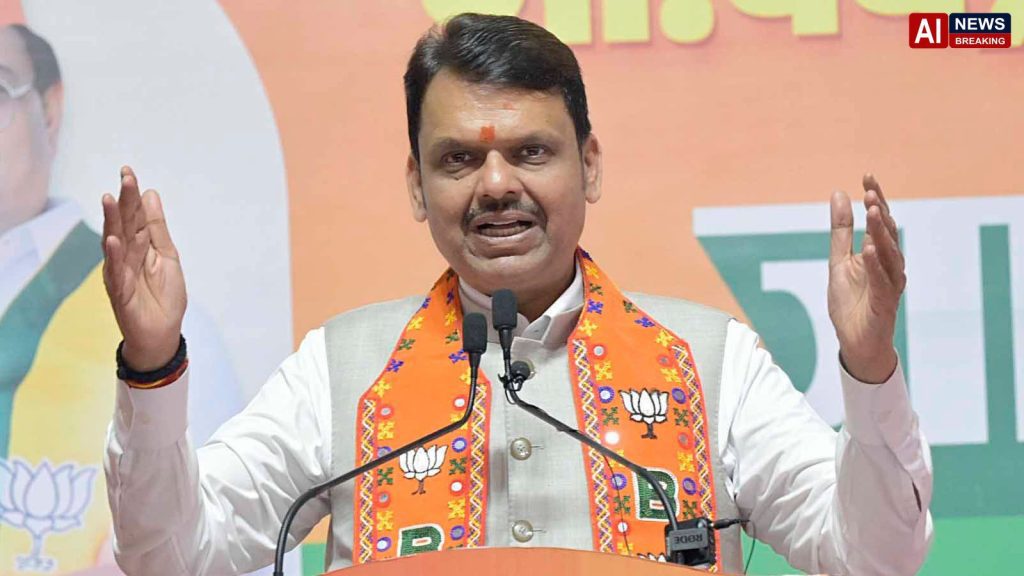
The bustling streets of Mumbai were recently the stage for a significant logistical and political confrontation as auto-rickshaw and taxi drivers staged a sustained protest against new language proficiency requirements. At the center of this developing narrative stood Maharashtra Chief Minister Devendra Fadnavis, who faced intense scrutiny and public demand for immediate policy reversal. The unrest, which disrupted traffic in major commercial hubs, stemmed from a recently announced directive mandating that all licensed drivers demonstrate a working knowledge of Marathi, the official state language..
This ruling, intended to ensure seamless communication between local residents and transportation providers, quickly escalated into a broader debate regarding linguistic identity, economic survival, and the integration of migrant workers in India’s financial capital.Fadnavis addressed the agitating drivers and the wider public through a series of televised statements and public appearances, attempting to calm the situation while defending the core intent of the Mahayuti government. His central argument rested on the premise that the policy was not designed to exclude or penalize any individual, but rather to enhance safety and convenience for the daily commuter. He emphasized that effective communication is a critical component of public transport services, arguing that misunderstandings due to language barriers could lead to navigational errors, fare disputes, or even safety hazards..
By framing the issue as a matter of public utility rather than ethnic preference, the Chief Minister sought to isolate the policy from accusations of regional discrimination that had been leveled by opposition parties and civil rights advocates.A key point of contention, and the focal point of Fadnavis’s remarks, was the timeline for compliance. Recognizing the logistical impossibility for thousands of drivers to instantly attain fluency, the Chief Minister stated that the government would provide a reasonable grace period. He specifically noted that those wishing to comply would be given enough time to learn the language, signaling a move toward educational support rather than immediate punitive enforcement..
This assurance was intended to mitigate the immediate economic threat faced by drivers, many of whom are immigrants from neighboring states such as Karnataka, Andhra Pradesh, and Bihar, for whom Marathi is not a native tongue. The promise of a structured learning window was presented as a pragmatic compromise, allowing the state to uphold its linguistic standards without causing mass unemployment or widespread destitution among a vital segment of the informal economy.However, the protest leaders were less than satisfied with these assurances, arguing that the very nature of the requirement was discriminatory and poorly conceived. They contended that English and Hindi, the lingua francas of Mumbai, should be sufficient for professional interaction in such a cosmopolitan city..
Drivers pointed out that their primary qualification should be their knowledge of the city’s complex route network and their ability to operate vehicles safely, not their literary or conversational proficiency in Marathi. They warned that enforcing this rule would disproportionately affect migrant families who have contributed to the city’s growth for decades, potentially forcing them out of the profession and into precarious informal labor markets. The tension highlighted the delicate balance between preserving regional cultural identity and maintaining the inclusive, multi-lingual character that defines metropolitan India.The political ramifications of the protest extended beyond the immediate street-level disruptions, igniting a fierce debate within the state assembly and the national media..
Opposition parties accused the Mahayuti alliance of exploiting linguistic sentiments for political gain, arguing that the policy was a distraction from more pressing issues such as unemployment, infrastructure decay, and cost of living crises. Critics argued that the government was using the controversy to rally its regionalist base ahead of upcoming local elections, thereby polarizing the electorate along linguistic lines. Conversely, supporters of the government argued that the policy was a necessary step to assert the dignity of the state language and ensure that services provided within Maharashtra’s borders respected the primary language of the host population..
This ideological clash underscored the broader national conversation about the role of state languages in an increasingly interconnected and mobile society.In response to the growing pressure, the state administration clarified the specific expectations regarding knowing enough Marathi. The criteria, it was revealed, were not intended to demand academic fluency or the ability to engage in complex philosophical debates. Instead, the requirement was focused on functional literacy, ensuring that drivers could understand basic directions, recognize place names written in the Marathi script, and communicate essential transactional details such as fares and destinations..
This clarification was crucial, as it limited the scope of the mandate to practical, everyday interactions. Nevertheless, for many drivers who spoke only Hindi or regional dialects from their home states, even this baseline requirement presented a significant hurdle, necessitating immediate and accessible training programs.The government announced plans to collaborate with educational institutions and non-governmental organizations to provide free or subsidized language training modules. These initiatives were designed to be flexible, recognizing that working drivers could not dedicate full days to classroom learning..
Online platforms, mobile applications, and weekend coaching centers were proposed as viable methods to help drivers acquire the necessary vocabulary and phrases. Fadnavis highlighted these resources in his address, urging drivers to view the learning process as an investment in their long-term professional stability. He argued that mastering even a basic level of Marathi would not only help them comply with the law but also foster better relationships with local customers, potentially leading to increased tips and regular patronage.Despite these offers, skepticism remained high among the driver community..
Many expressed concern that the administrative burden of proving their proficiency would be onerous and open to corruption. There were fears that officials might arbitrarily disqualify drivers who struggled with the exams, regardless of their actual ability to function on the road. Furthermore, the drivers worried about the potential loss of their commercial vehicle permits, which are often backed by significant loans and represent their primary source of livelihood..
The anxiety was compounded by rumors of rigorous testing procedures that could take months to complete, during which time drivers might face suspension of their licenses, leading to immediate financial ruin. These fears fueled the continued protests, as drivers demanded written guarantees that no license would be revoked during the transitional learning phase.The incident also brought to light the existing tension between state authorities and the auto-rickshaw unions, which have long been involved in disputes over fare structures, permit renewals, and competition from app-based cab services. The language mandate added a new layer of complexity to these ongoing grievances..
Union leaders argued that the government was using this opportunity to tighten control over the sector, potentially reducing the number of active permits and increasing state revenue through re-testing fees. While there was no official evidence to support these claims, the historical context of strained relations meant that any new regulation was viewed with deep suspicion. The protests thus became a catch-all grievance mechanism, where drivers voiced their discontent not just about language, but about the broader regulatory environment in which they operate.As the crisis unfolded, experts in linguistics and urban planning weighed in, suggesting that a rigid enforcement of a single language might be counterproductive in a city as diverse as Mumbai..
They argued that multilingualism.
Updated: August 24, 2026
This mandate risks weaponizing regional identity to secure a political base, effectively trading migrant livelihoods for vote mobilization under the guise of public safety.
The ensuing friction exposes the inherent contradiction in imposing static cultural preservation policies upon the fluid, economic necessities of a hyper-metropolitan center.