 Finnish puppy livestream boosts pet ownership and sales.
  Punjab CM alleges he was made to sit at Delhi airport, officials told him they were ‘under pressure from above’
  Jordanian police investigate church shooting killing
 India rejects UN body’s remarks as politically motivated
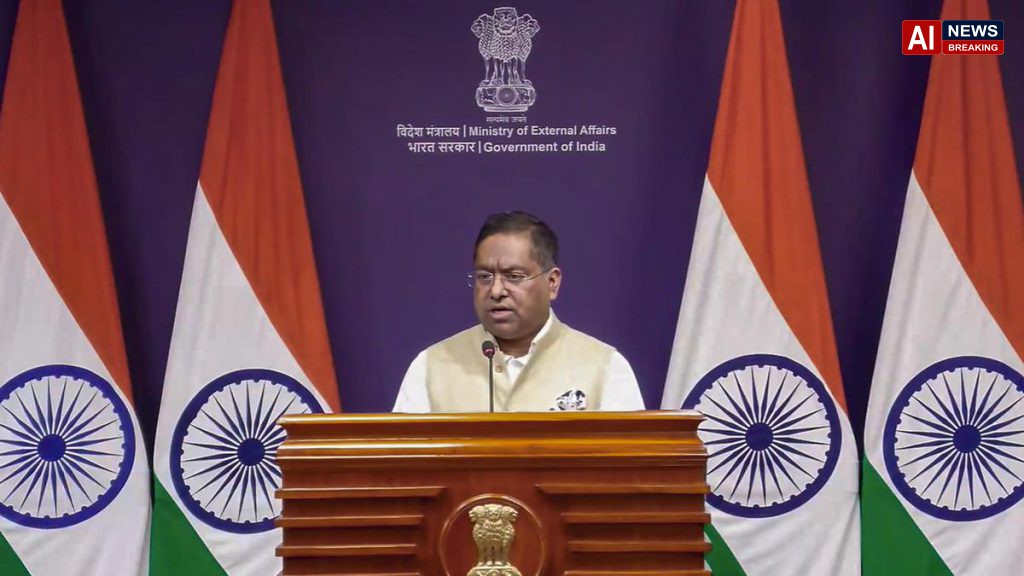
India rejects ‘politically motivated, highly malicious references’ in remarks by UNCERD - AI News Breaking
india rejects bodys remarks:
The Government of India has issued a forceful rejection of what it termed “politically motivated, highly malicious references” contained in recent remarks made by the United Nations Committee on the Elimination of Racial Discrimination. The Ministry of External Affairs, acting as the primary conduit for the nation’s diplomatic response, described the committee’s observations as not only inaccurate but as part of a coordinated effort to诋毁 India’s sovereign integrity. This sharp rebuke follows a period of intense diplomatic friction between New Delhi and various United Nations human rights bodies, reflecting a broader trend in which the Indian government has increasingly defended its domestic policies against international scrutiny..
The exchange underscores the deepening chasm between India’s self-image as a vibrant, constitutional democracy and the concerns raised by international observers regarding the treatment of specific minority communities within its borders.The controversy centers on remarks made by the UNCERD, a treaty body established to monitor the implementation of the International Convention on the Elimination of All Forms of Racial Discrimination. The committee expressed concern regarding reports alleging “large-scale violations” by law enforcement personnel against ethnic and ethno-religious populations. According to the committee’s findings, these allegations included instances of arbitrary detention, physically abusive interrogation methods, and systematic harassment targeting individuals based on their religious identity or ethnic origin..
The committee urged the Indian government to conduct independent, transparent investigations into these claims and to hold those responsible accountable, emphasizing the state’s obligation to protect all citizens from racial and religious discrimination.In its reply, the Ministry of External Affairs dismissed the committee’s concerns as lacking factual basis and driven by a specific political agenda aimed at undermining India’s standing in the global community. The statement asserted that the remarks were taken out of context and ignored the complex socio-political realities of a diverse nation such as India. New Delhi argued that the committee had failed to distinguish between legitimate law enforcement actions taken to maintain public order and uphold national security, and the purported misconduct alleged by various non-governmental organizations and activist groups..
The government emphasized that Indian laws provide robust protections for all citizens, regardless of their caste, creed, or community, and that any violations of these rights are dealt with swiftly through established judicial processes.The Ministry further elaborated that the allegations made by the committee were repetitive and mirror patterns seen in previous rounds of review, suggesting a lack of good faith in the dialogue. It pointed out that India has consistently engaged with the UNCERD in a spirit of cooperation, providing detailed reports and engaging in constructive dialogues to address areas of concern. However, the government stated that recent remarks crossed the line from constructive criticism to what it characterized as unjustified hostility..
The tone of the response was notably sharp, indicating a shift in India’s diplomatic posture towards multilateral human rights mechanisms. This shift is viewed by analysts as part of a broader strategy to push back against what the government perceives as Western-led attempts to impose external values and interfere in domestic affairs.The specific references to ethnic and ethno-religious populations likely allude to longstanding tensions involving communities such as Muslims, Christians, and tribal groups, who have periodically raised concerns about marginalization and state-sponsored discrimination. Human rights organizations have documented incidents of violence and legal challenges faced by these groups, particularly in regions where communal tensions have flared in recent years..
The UNCERD’s comments seemingly draw upon these documented incidents, urging the Indian state to address systemic issues that may facilitate discrimination by state actors. The committee’s recommendations included the need for comprehensive data collection on hate crimes and police conduct, as well as the implementation of sensitivity training for law enforcement officials to ensure they respect the rights of all citizens.India’s rejection of these recommendations highlights the fundamental disagreement between the state and international bodies on the nature of the problems at hand. While the committee views the issues as structural and requiring systemic reform, the Indian government frames them as isolated incidents that are being adequately addressed through existing legal frameworks..
The Ministry of External Affairs stressed that India has one of the most expansive constitutional protections for minority rights in the world, citing historical precedents and legal mechanisms designed to safeguard the interests of all communities. It argued that the committee’s failure to acknowledge these protections demonstrates a biased approach that overlooks India’s progress in human rights and social justice.The diplomatic spat also occurs against the backdrop of heightened global attention on India’s domestic policies, particularly those related to citizenship, secularism, and minority rights. Recent legislative changes and political rhetoric have drawn criticism from international partners and human rights advocates, who fear a erosion of the country’s secular democratic traditions..
The UNCERD’s remarks can be seen as part of this broader international discourse, adding to the pressure on the Indian government to justify its actions on the global stage. However, the government’s firm stance suggests that it is unwilling to alter its course, viewing such criticism as an affront to national sovereignty and a disregard for the will of the Indian people as expressed through democratic elections.Analysts suggest that this confrontation may have long-term implications for India’s engagement with the United Nations human rights system. Historically, India has been a constructive member of various UN bodies, contributing to the development of international human rights norms..
However, the increasing adversarial tone in recent years indicates a growing disillusionment with what New Delhi perceives as s in global human rights governance. By labeling the committee’s remarks as “politically motivated,” the government is effectively delegitimizing the authority of the UNCERD to critique its domestic policies. This move could lead to a reduction in cooperation with the committee, potentially limiting the flow of information and insight that allows the body to perform its mandate effectively.Furthermore, the response serves as a message to other international stakeholders and domestic political opponents alike..
By forcefully rejecting the committee’s findings, the government reinforces its narrative that critics of its policies are either ignorant of Indian realities or are acting with malicious intent. This narrative is being amplified through state media and official channels, shaping public opinion in favor of the government’s position. For the domestic audience, the response is likely to be received as a defense of national pride and sovereignty, resonating with a electorate that is increasingly sensitive to perceptions of external interference..
Internationally, however, it may strain relations with countries and organizations that prioritize human rights diplomatic engagement, potentially affecting broader cooperation on trade, security, and other strategic issues.The situation also raises important questions about the effectiveness of the UN human rights mechanism in addressing grievances in large, complex democracies like India. The UNCERD operates through a peer-review process that relies on dialogue and persuasion rather than enforcement power. When a major power such as India dismisses these recommendations as malicious, the committee’s ability to influence policy changes is significantly diminished..
This dynamic reflects a broader trend where emerging powers are challenging the traditional leadership of Western nations in setting the global human rights agenda, arguing for a more pluralistic approach that respects different cultural and political contexts.
Updated: August 26, 2026
By reframing rights critiques as sovereignty violations, New Delhi exposes the growing rift between universal standards and rising powers.
This diplomatic insularity risks isolating India while signaling a defiance of established global governance norms.