 Open to alliance with parties that agree with SAD’s ideology: Sukhbir Singh Badal
  Palestinian Gunmen Open Fire on Israelis in the West Bank, Officials Say
  Russians across
  Jagan to move Supreme Court again over ‘obstruction’ of YSRCP nominees in Andhra local body polls
  Pentagon directive bans troops from using nonpublic info to bet in prediction markets
 Hundreds missing, dozens dead after floods hit Nepal-China border villages
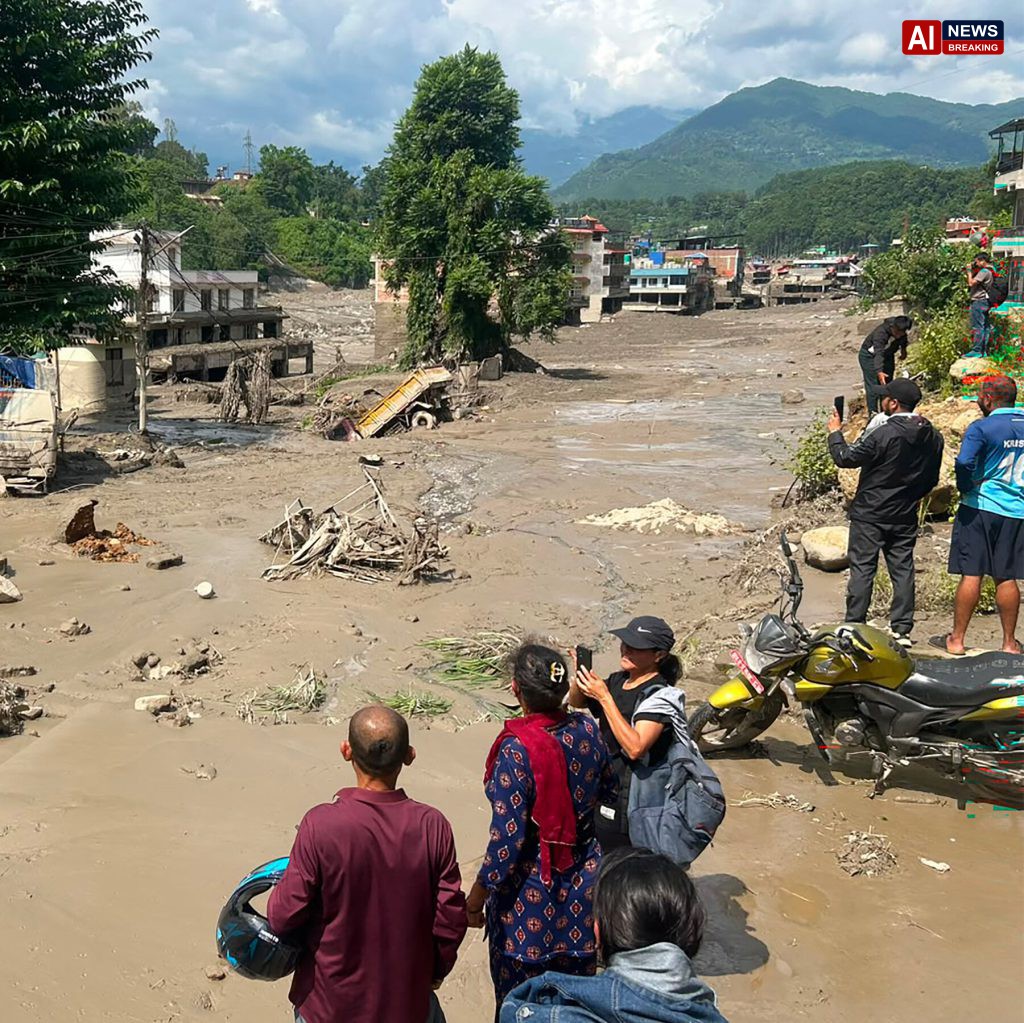
Hundreds missing, dozens dead after floods hit Nepal-China border villages - AI News Breaking
hundreds missing dozens dead:
Live Updates: Hundreds Missing as Deadly Floods Sweep Away Villages in NepalA catastrophic wall of water slammed into a remote Himalayan river valley straddling the border between Nepal and the Chinese territory of Tibet, triggering a humanitarian crisis that has left dozens confirmed dead and hundreds unaccounted for. Nepali authorities described the event as a sudden and overwhelming inundation that swept away entire village communities, border posts, and critical infrastructure without warning. The sheer force of the torrential flood, a phenomenon increasingly linked to the destabilization of glacial lakes in the high mountains, has severed vital supply routes and communication lines, complicating immediate rescue efforts in some of the most inaccessible terrain on the planet..
The disaster has drawn immediate international attention, not only because of the devastating loss of life but also due to the precarious nature of the border region, which is prone to geological instability and extreme weather anomalies.The official death toll remains fluid and is expected to rise significantly as rescue teams navigate through debris-choked riverbeds and mud-slicked slopes. Initial reports from local district administrators indicate that the number of fatalities has already surpassed thirty, with many more bodies trapped under collapsed structures or washed downstream into the turbulent waters of the Friendship Highway corridor. However, the most pressing concern for emergency coordinators is the high number of missing persons, which includes border security officials, port workers, porters, and foreign tourists who were in the area during the peak of the storm..
The list of the missing is a grim inventory of the daily life that characterizes this strategic trade route, highlighting the vulnerability of those who rely on these fragile mountain passages for their livelihoods and daily transit.The International Centre for Integrated Mountain Development, a key regional research body, has suggested that the flood was likely caused by the sudden outburst of a glacial lake or the collapse of a moraine dam, events that have become more frequent due to accelerating glacier melt in the Himalayas. These Glacial Lake Outburst Floods, or GLOFs, release massive volumes of water within minutes, creating a surge that can travel at speeds exceeding sixty kilometers per hour. The specific lake involved in this incident had been monitored by satellite imagery, but the rapidity of the dam failure left little time for evacuation..
Experts warn that as global temperatures rise, the ice dams holding back these high-altitude reservoirs are becoming increasingly unreliable, turning the majestic peaks into potential ticking time bombs for the communities nestled in their shadows.On the ground, the scene is one of profound devastation and confusion. Survivors who managed to escape to higher ground have described hearing a deafening roar, likened to the sound of a freight train, before a muddy, ice-choked wave engulfed the valley floor. Homes, shops, and vehicle maintenance garages that defined the settlement’s economic life were obliterated in seconds, leaving behind a landscape of twisted metal, splintered wood, and scattered personal belongings..
The destruction has not only claimed lives but has also erased the physical evidence of the community’s existence, making it difficult for families to confirm the fate of their loved ones. The psychological toll on the survivors is immense, as they grapple with the sudden loss of everything they owned in a region where rebuilding is exceptionally difficult due to the harsh climate and logistical challenges.Rescue operations have been severely hampered by the deteriorating weather conditions and the sheer scale of the damage. Helicopter missions, which are often the only viable means of reaching such isolated areas, have been grounded by heavy fog and low visibility that frequently accompany the post-monsoon season in the Himalayas..
Ground teams from the Nepal Army and the National Emergency Response Centre have been deployed to the nearest accessible roadheads, but they face a daunting task in traversing the washed-out trails and bridges. The lack of immediate access means that medical aid and food supplies are delayed for any survivors still trapped in the debris field, raising fears that the death toll will climb as hypothermia and injuries take their toll in the cold, damp environment.The border context adds a layer of diplomatic complexity to the crisis. The affected area lies along the Nepal-China border, a region that is jointly monitored and heavily reliant on cross-border trade and tourism..
Chinese authorities have confirmed that they are cooperating with their Nepali counterparts to conduct joint search and rescue operations, but the coordination is challenging given the sudden collapse of communication infrastructure on both sides of the border. Port workers, who are essential for the movement of goods and people between the two nations, were among those caught in the flood, disrupting a vital economic artery that connects the landlocked nation of Nepal to the global market. The incident underscores the shared vulnerability of transboundary regions, where natural disasters do not respect political boundaries and require seamless international cooperation to manage effectively.Foreign tourists, attracted by the unique cultural tapestry and rugged beauty of the Sherpa communities in the Khumbu region, were also among those swept away..
Travel agencies in Kathmandu and abroad are now urgently attempting to identify the nationalities of the missing visitors to notify their home countries and facilitate consular assistance. The presence of international citizens in the disaster zone has intensified media scrutiny and diplomatic inquiries, prompting calls for transparency regarding the safety protocols for tourists in high-risk mountain zones. This tragedy serves as a stark reminder of the dangers inherent in adventure tourism in the Himalayas, where the allure of the landscape often outweighs the awareness of its inherent risks.Local communities in neighboring villages have mobilized to assist in the rescue efforts, despite facing their own risks..
Volunteers have begun combing through the debris with minimal equipment, searching for survivors and recovering belongings for families who have rushed to the site. These grassroots efforts are crucial in the immediate aftermath, where official forces are still struggling to establish a foothold in the disaster zone. The solidarity displayed by the local population highlights the strong social bonds that exist in these remote communities, where neighbors often depend on one another for survival..
However, these volunteer efforts are limited by the lack of professional rescue gear and the dangerous condition of the terrain, which remains unstable and prone to further landslides.The economic implications of this disaster could be significant for the region. The border trade routes that were destroyed are essential for the import of fuel, food, and other essential goods into Nepal. With key bridges and roads washed away, supplies may be delayed for weeks, leading to potential shortages in local markets and increased prices for consumers..
The porters and traders who form the backbone of the local economy have lost their means of livelihood, and the long-term recovery of the community will depend heavily on international aid and government support. The destructive potential of such floods extends beyond human life, threatening the economic stability and social fabric of regions that are already marginalized and under-resourced.Looking ahead, experts are calling for a comprehensive review of early warning systems in glacial lake-prone areas. While satellite monitoring exists, it.
Updated: August 26, 2026