 Karnataka SIR: Teaching on the back burner
  Trump administration offers mixed messages on limits to Ukraine’s Starshield access
  US Treasury proposes a rule to crack down on high-tech investments in China, other adversaries
  Calley Means, a key MAHA advocate, resigns as a top RFK Jr. adviser
  Spotify Tightens Family Plan Controls with QR Code Verification
 Keralam government issues technical sanction for first phase of KSRTC bus terminal at Karikkamury in Kochi
**
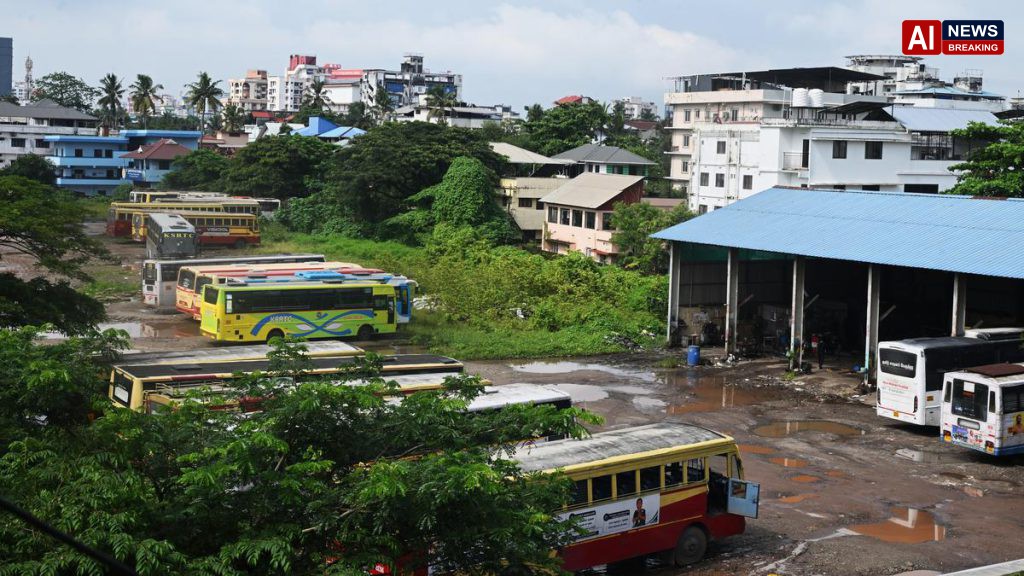
Keralam government issues technical sanction for first phase of KSRTC bus terminal at Karikkamury in Kochi - AI News Breaking
The Kerala government has granted technical sanction to the first phase of the Kerala State Road Transport Corporation’s (KSRTC) new bus terminal at Karikkamury in Kochi, marking a significant step in the state’s plan to expand public‑transport infrastructure. The decision, announced by the Public Works Department (PWD) on Monday, follows a detailed feasibility study and a series of stakeholder consultations that began last year. Officials said the sanction covers design, land acquisition and the initial civil works required to create a modern, multimodal hub that will ease congestion at existing terminals and improve connectivity across the region.The terminal, slated to be built on a 10.5‑hectare plot on the outskirts of the city, will feature a capacity for 250 buses, with dedicated bays for intra‑state, inter‑state and private operators..
Planners have incorporated a range of passenger amenities, including a waiting lounge, retail outlets, a cafeteria and a digital information system. The design also includes provisions for electric bus charging stations, reflecting the state’s broader push towards greener transport solutions. The project is expected to create around 1,200 jobs during construction and an estimated 300 permanent positions once operational.Construction of the first phase is set to commence in early September, when the PWD will issue tenders for the civil works..
The tendering process, according to a statement from the department, will be conducted through the state’s e‑procurement portal, ensuring transparency and competition among qualified contractors. The invitation for bids will detail specifications for earthwork, foundation, structural steel, roofing and utility installations, as well as timelines for each milestone. Interested firms have been advised to submit their technical and financial proposals by the end of October.The project’s total cost for the initial phase is estimated at ₹450 crore, funded through a combination of state allocations, a loan from the Kerala Infrastructure Investment Fund Board (KIIFB) and a modest contribution from the central government under the Smart Cities Mission..
Finance officials said the funding structure has been designed to minimise the fiscal impact on the state’s budget while leveraging external resources to accelerate delivery. The KSRTC, which operates over 5,000 buses across the state, is expected to manage the terminal’s day‑to‑day operations once it becomes functional.Transport experts have welcomed the development, noting that Kochi’s rapid urban growth has outpaced the capacity of its existing bus facilities. The city’s main terminal at Ernakulam, built in the 1990s, now handles more than 1,000 buses daily, leading to frequent delays and overcrowding..
By shifting a portion of this traffic to the new Karikkamury hub, planners hope to reduce turnaround times, improve schedule reliability and encourage a modal shift from private cars to public transport. The terminal’s location, close to the national highway and the proposed Kochi metro extension, is also seen as a strategic move to integrate different modes of travel.However, the project has not been without criticism. Local residents and environmental groups have raised concerns about the impact of large‑scale construction on the surrounding wetlands and the potential loss of green cover..
The PWD has responded by commissioning an independent environmental impact assessment, the findings of which will be made public before the tendering process is finalised. Mitigation measures under consideration include the creation of a rainwater harvesting system, the planting of native trees along the perimeter and the adoption of low‑emission construction equipment.The state’s transport minister, P. Mohammed Riyas, reiterated the government’s commitment to sustainable mobility in a press briefing..
“The Karikkamury terminal is not just a building; it is a cornerstone of our vision for a cleaner, more efficient public transport network,” he said. He added that the terminal will be equipped with solar panels to power a substantial portion of its energy needs, aligning with Kerala’s target of achieving 30 percent renewable energy usage in public infrastructure by 2030. The minister also highlighted plans to integrate real‑time tracking of buses through a mobile app, enhancing passenger experience and operational efficiency.Project timelines indicate that the first phase, encompassing the core bus bays, passenger amenities and basic utilities, will be completed within twelve months of the contract award..
Subsequent phases, which will add a parking facility for private vehicles, a dedicated area for auto‑rickshaws and an expanded commercial zone, are slated for delivery over the following two years. Officials have set a target to commission the terminal by the end of the fiscal year 2025‑26, ahead of the major tourism season that typically peaks between November and January.The KSRTC’s leadership has expressed optimism that the new terminal will bolster the corporation’s financial health. By improving operational efficiency and attracting higher ridership, the board anticipates an increase in fare revenue that could help offset its chronic deficit..
The board’s chairman, V. George, noted that the terminal’s design includes flexible spaces that can be repurposed for community events, thereby generating ancillary income. He also pointed out that the presence of retail and food outlets within the premises is expected to create an additional revenue stream, further supporting the corporation’s sustainability goals.As the tendering process moves forward, stakeholders across the public and private sectors will be watching closely..
The project’s success could serve as a model for other Indian cities grappling with similar transport challenges, demonstrating how coordinated planning, modern design and environmental safeguards can be combined to deliver infrastructure that meets the needs of a growing urban population while preserving ecological balance..
Updated: August 27, 2026
Kerala government sanctions ₹450-crore first phase of KSRTC’s new Kochi bus terminal to relieve overcrowding and integrate multimodal transport.
Tenders for the 250-bay hub, featuring eco-friendly amenities, will open in September with completion targeted for the 2025-26 fiscal year.
Kerala’s Karikkamury hub could become a template for Indian cities, showing that a well‑funded, eco‑linked bus terminal can simultaneously unclog traffic snarls and create new revenue streams for cash‑strapped transit agencies.
If the environmental safeguards hold, the project may prove that “green