
 Pentagon directive bans troops from using nonpublic info to bet in prediction markets
  Plaintiffs in Trump arch project seek injunction to stop administration from beginning work Nov. 5
  Trump says he ‘heard something about’ Justice Department probe into longtime ally Corey Lewandowski
  Trump administration stopped sharing evidence in Good and Pretti killings, Minnesota officials say
 Authorities Warn of Secondary Flooding at China-Nepal Border
Rescue crews battling relentless monsoon rains and unstable landslide dams warn of a secondary flood at the China‑Nepal border, complicating search‑and‑rescue efforts after a deadly glacial lake outburst that devastated villages on both sides of the Himalayas.
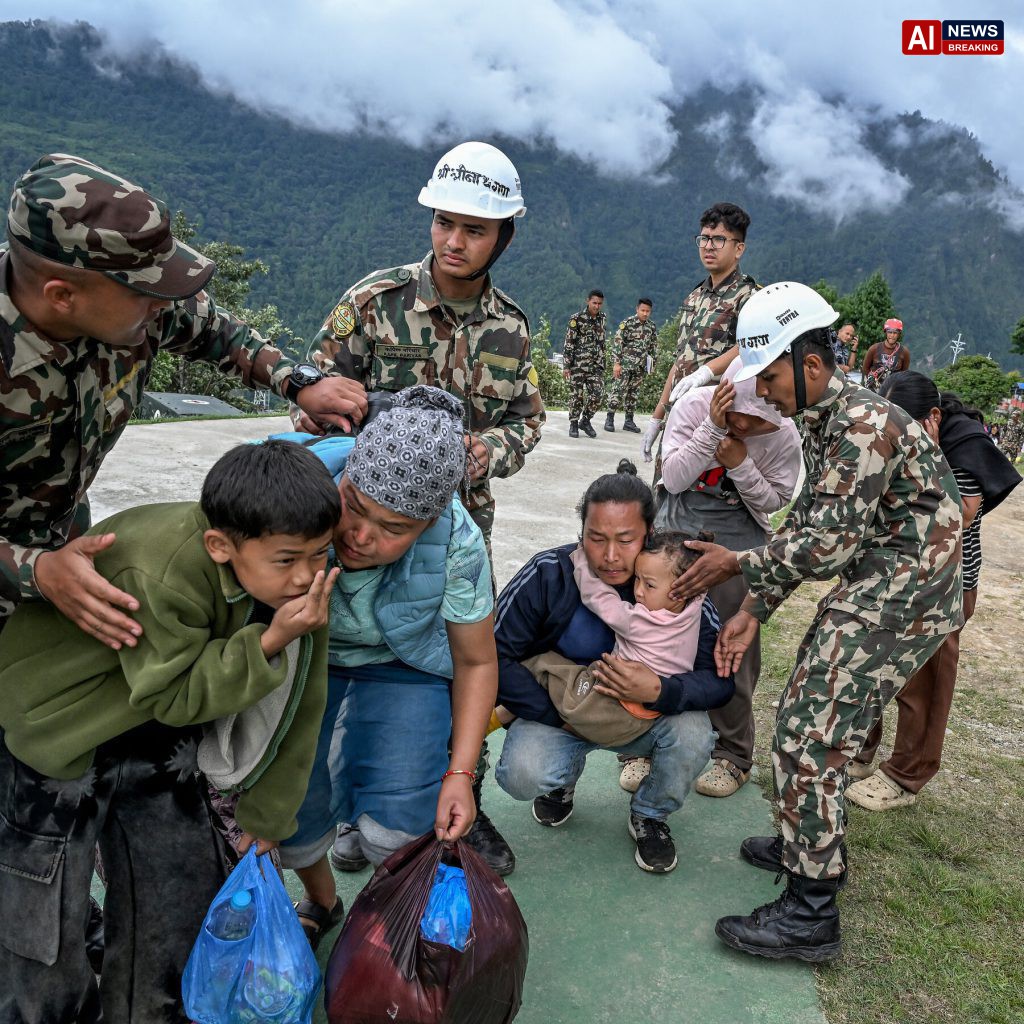
authorities warn secondary flooding:
The search for survivors in the scarred valleys along the China-Nepal border has entered a critical and increasingly perilous phase as emergency teams contend with the relentless force of nature. Just days after a catastrophic glacial lake outburst flood devastated communities on both sides of the Himalayan divide, authorities have issued urgent warnings of a secondary disaster. The threat of renewed flooding, driven by heavy monsoon rains and the destabilization of landslide dams, has complicated rescue operations and heightened fears for the hundreds still missing in the remote terrain..
The situation remains fluid, with rescuers racing against time and deteriorating weather conditions to locate those trapped beneath tons of debris and rising waters.In Nepal’s Gorkha district, police officials warned citizens in Friday’s afternoon briefing to seek higher ground immediately. The warning was not issued lightly, given the geological instability that now characterizes the region. The initial flood, which occurred earlier in the week, carved new channels through the landscape, burying villages under thick layers of mud, rocks, and uprooted vegetation..
Now, saturated soils and blocked riverways create a volatile environment where even minor rainfall can trigger new torrents. Local residents, many of whom have lost their homes, have been told to remain in temporary shelters, despite the crowded and unsanitary conditions that have begun to emerge.The logistical challenges facing rescue teams are immense. The remote location of the affected areas, combined with the destruction of key infrastructure, has made access difficult..
Roads have been severed in multiple places, and bridges that once connected these isolated communities to the outside world have been washed away. Helicopters have become the primary means of transport for both personnel and supplies, but their operations are frequently grounded by fog, heavy rain, and low visibility. This weather dependency has created significant delays, leaving many survivors stranded without food, clean water, or medical attention for extended periods.Social media platforms have become a crucial lifeline for families trying to locate their missing relatives..
In Kathmandu and Beijing alike, grieving relatives have taken to online forums to share last known locations of loved ones, hoping that the digital footprint might aid ground teams. These efforts have yielded some success, with several individuals being found alive after sharing their coordinates via mobile phones before signal loss. However, the sheer volume of requests has overwhelmed local coordination centers, which are struggling to verify information and deploy resources efficiently amidst the chaos..
The emotional toll on these families is palpable, as they wait for news that may never come.On the Chinese side of the border, in the Tibet Autonomous Region, the response has been equally chaotic. State media reports indicate that thousands of people have been evacuated from the most vulnerable zones. Heavy machinery has been deployed to clear debris from main thoroughfares, but the scale of the destruction is staggering..
Entire sections of towns have been reduced to rubble, and the agricultural land that sustains the local population is buried under meters of silt. Farmers report that their livelihoods have been wiped out in a matter of hours, raising concerns about long-term food security and economic recovery in the region.International aid organizations have begun to mobilize, recognizing the severity of the humanitarian crisis. The United Nations and several non-governmental organizations are coordinating with local authorities to deliver essential supplies, including tents, blankets, and medical kits..
However, the approval processes for cross-border aid remain a point of contention. Divergent priorities between the two nuclear-armed neighbors have slowed the establishment of joint disaster response mechanisms, despite clear precedents for cooperation in other areas. Critics argue that bureaucratic hurdles are costing lives, as aid sits in warehouses waiting for clearance while needs on the ground escalate daily.The environmental implications of the disaster are also coming under scrutiny..
Scientists warn that the glacial lake outburst was likely exacerbated by climate change, which has accelerated melting in the Himalayas. The region is home to thousands of glacial lakes, many of which are now considered unstable. The debris left by the flood has altered the natural flow of rivers, creating artificial dams that could burst without warning..
This creates a cycle of risk that threatens not only the immediate vicinity but also downstream communities in India and Bangladesh, which rely on these waterways for irrigation and drinking water.Local governments in Nepal are grappling with the political fallout from the disaster. Opposition parties have criticized the ruling coalition for inadequate preparation and slow response, pointing to years of underinvestment in early warning systems and infrastructure resilience. Prime Minister Pushpa Kamal Dahal has acknowledged the failures, vowing to form a high-level committee to investigate the causes of the flood and improve disaster management protocols..
However, skeptics remain doubtful that such promises will translate into tangible action, citing a history of political infighting that often sidelines critical development issues.The human cost of the tragedy is still being tallied, with death figures expected to rise significantly in the coming days. Rescue workers describe harrowing scenes of destruction, where only the roofs of submerged houses are visible above the muddy water. Personal belongings, stripped from homes by the torrent, are scattered across fields and forests, serving as stark reminders of the lives disrupted..
The trauma inflicted on survivors, particularly children, is profound. Psychological support teams have been deployed, but their numbers are insufficient to meet the overwhelming demand for counseling and care in the aftermath of such a sudden and violent event.Cross-border tensions have flared occasionally, with both nations blaming each other for contributing to the disaster. Chinese officials have accused Nepal of failing to maintain upstream infrastructure, while Nepali leaders argue that waste management practices in Tibet have contributed to the instability of glacial lakes..
These diplomatic spats threaten to overshadow the collaborative humanitarian effort required to save lives. International observers have urged both governments to set aside political differences and focus on immediate relief, emphasizing that nature does not recognize borders and that cooperation is essential for regional stability.As night falls over the Himalayas, the urgency of the situation remains undiminished. Search and rescue teams work under headlamps, using thermal imaging cameras to detect signs of life in the darkness..
The hope is that more survivors will be found in the coming days, but the window for rescue is narrowing. The unpredictability of the weather and the ongoing risk of secondary floods mean that the danger is far from over. Communities along the border are bracing for a long and difficult recovery, marked by loss, uncertainty, and the need for resilient rebuilding.The global community watches with growing concern as the crisis unfolds..
This disaster serves as a grim reminder of the vulnerabilities inherent in climate-sensitive regions. It highlights the urgent need for better scientific monitoring, improved infrastructure, and stronger international cooperation to mitigate the risks posed by glacial lake outbursts. Until such measures are implemented, the people of the Himalayas remain at the mercy of the mountains, facing a future that is increasingly uncertain and fraught with natural hazards..
The world’s attention must now turn to sustainable solutions that address the root causes.
Updated: August 28, 2026
Rescue efforts in the Himalayan border region face renewed peril as monsoon rains threaten secondary floods and cross-border bureaucratic delays hinder aid delivery.
Families on both sides of the Nepal-China divide struggle to locate missing loved ones while facing logistical barriers exacerbated by destroyed infrastructure and worsening weather conditions.
Cross-border bureaucratic friction and climate-induced instability threaten to eclipse the immediate humanitarian crisis in the Himalayas. This disaster exposes how geopolitical rivalry and ecological neglect combine to leave vulnerable populations defenseless against recurrent natural catastrophes.