 Odisha moves Supreme Court against Andhra Pradesh over rural poll notice in Kotia area
  NASA outlines Artemis III test flight plan
  Sacha Baron Cohen Says Donald Trump Has ‘Elements of Brilliance’ and ‘We Were Too Easy to Dismiss Him as a Nincompoop’
 Congress Bihar leaders plan protest in Delhi to demand state chief’s removal
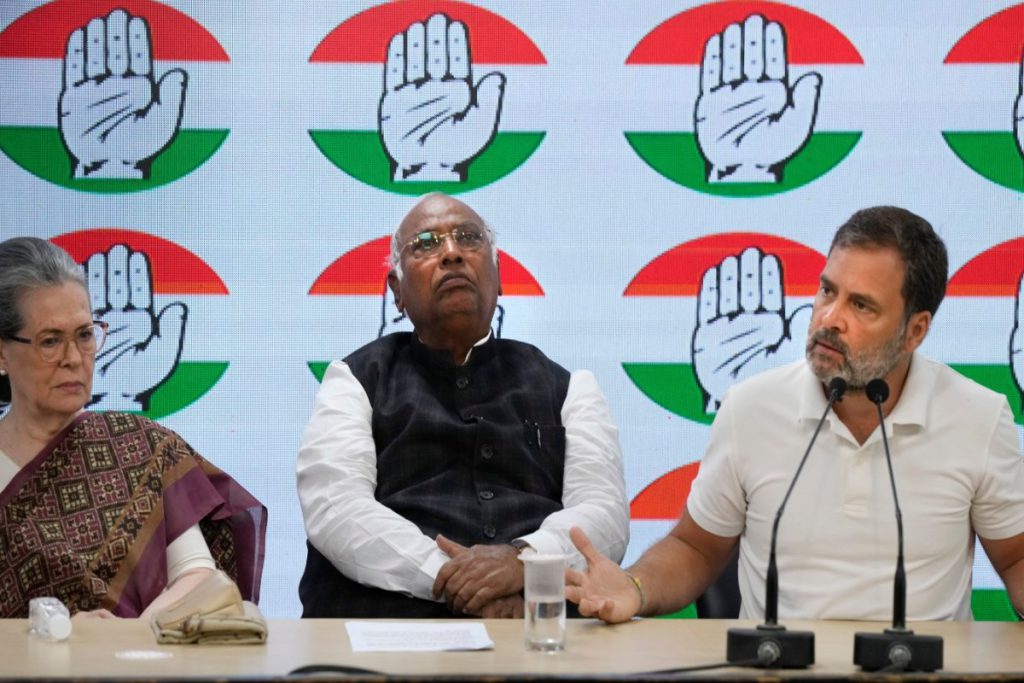
Congress Bihar leaders plan protest in Delhi to demand state chief's removal - AI News Breaking
Political tensions within the Indian National Congress in Bihar have reached a critical juncture, as senior state leaders have announced plans for a significant protest outside the party’s national headquarters in New Delhi. Scheduled for September 8, the demonstration, known as a dharna, is being organized to express deep dissatisfaction with the current leadership structure and decision-making processes within the party. The core demands of this collective action include an immediate meeting with party president Rahul Gandhi and the removal of the current state chief, who faces mounting criticism from within the ranks for alleged mismanagement and lack of consultative governance.The move signals a growing fracture within the Bihar unit of the Congress, a party that has struggled to regain its historical stronghold in the eastern Indian state..
For decades, Bihar has been a political battleground where local dynasties and charismatic leaders have often overshadowed the central party machinery. However, recent internal dynamics suggest a shift in power balance, with grassroots workers and senior legislators demanding greater transparency and accountability. The planned protest is not merely a symbolic gesture but a strategic pressure tactic designed to force the national leadership to intervene directly in the state’s internal affairs and address the grievances of a significant faction.At the heart of the dispute is the leadership of the state Congress committee, which has come under intense scrutiny for its handling of party affairs in the aftermath of recent election losses..
Critics within the party argue that the state chief has failed to consolidate support among key political allies and has alienated potential allies by adopting a top-down approach to decision-making. The allegations extend to questions of financial irregularities and favoritism in the selection of candidates for upcoming elections. These accusations, while not yet substantiated by formal charges, have created an atmosphere of distrust and unease among party members who feel their voices are being systematically ignored by the current leadership.Rahul Gandhi, as the president of the Indian National Congress, finds himself at the center of this escalating crisis..
His role remains pivotal in determining the future direction of the party, particularly in states like Bihar where the Congress is striving to rebuild its influence after years of marginalization. The demand for a direct meeting with Mr. Gandhi reflects the state leaders’ belief that only the highest level of intervention can resolve the internal discord..
They argue that the national leadership has been too passive in addressing the complaints of the Bihar unit, allowing the problems to fester and expand. This perception of neglect has fueled the determination of the protesting leaders to take drastic measures.The timing of the protest is strategically significant, occurring just weeks before crucial political developments could reshape the landscape of Bihar politics. With various local bodies and potentially new alliance negotiations on the horizon, the unity of the Congress front is more important than ever..
Internal divisions at such a time are seen as detrimental to the party’s electoral prospects and its ability to present a united front against the ruling National Democratic Alliance. The protesters argue that without a change in leadership and a commitment to inclusive dialogue, the party risks further erosion of its base and credibility among voters who are looking for stable and coherent political alternatives.In Delhi, the atmosphere outside the party headquarters on Lodi Road is expected to be charged with emotion and political fervor. The dharna is likely to be attended by a large number of legislators, grassroots workers, and sympathizers who view the current state leadership as an obstacle to the party’s revival..
Organizers have promised a peaceful but firm demonstration, aiming to capture media attention and public sympathy. They intend to use the platform to lay out a detailed case against the state chief, highlighting specific instances of alleged misconduct and strategic failures that they believe have hindered the party’s progress in the state.Reaction from the national party office has been cautious, with spokespersons emphasizing the importance of internal dialogue and adherence to party constitution. However, the silence from the top brass has only served to embolden the protesters, who interpret the lack of immediate response as a sign of weakness or complicity..
This dynamic is typical of intra-party conflicts in Indian politics, where public displays of dissent are often used as leverage in negotiations with the central leadership. The Congress high command faces the delicate task of balancing the need for internal stability with the demand for accountability and reform.Political analysts suggest that this crisis is symptomatic of broader challenges facing the Indian National Congress across the country. The party has struggled with issues of succession, leadership continuity, and the integration of regional factions into a cohesive national strategy..
Bihar represents a microcosm of these larger problems, where local ambitions clash with central directives. The outcome of this protest could set a precedent for how the central party handles dissent in other weakened units, potentially influencing the power dynamics in states like Madhya Pradesh, Rajasthan, and Karnataka.The removal of the state chief is a demand that carries significant weight in the political culture of Bihar. Leadership changes in the state are often seen as necessary for rejuvenating the party and connecting with the electorate on a more personal level..
The current chief is accused of being out of touch with the ground reality and failing to inspire confidence among the party cadres. By demanding his removal, the protesters are signaling that they believe a new leadership style is required to navigate the complex political terrain of Bihar, characterized by strong regional parties and evolving voter preferences.As the date of the protest approaches, anticipation builds regarding how the national leadership will respond. A meeting with Rahul Gandhi is viewed by the protesters as a necessary step toward trust-building and conflict resolution..
They hope that such an engagement will lead to a formal inquiry into the allegations and a roadmap for rebuilding the state unit. For the Congress high command, the challenge lies in addressing these concerns without appearing to capitulate to factional pressures or undermining the authority of the existing state leadership.The broader implications of this conflict extend beyond the immediate issue of state leadership. They touch upon the very identity and future of the Congress in Bihar..
If the party fails to resolve this internal crisis, it risks further fragmentation and irrelevance in a state that is crucial for national political arithmetic. Conversely, if the leadership can successfully mediate the dispute and implement meaningful reforms, it could serve as a model for revitalizing other struggling units. The days leading up to September 8 will be critical in determining whether this protest becomes a catalyst for change or merely another episode in the long history of Congress internal strife.Ultimately, the outcome of this dharna will hinge on the willingness of the central leadership to engage in genuine dialogue and the readiness of the state faction to work towards a unified future..
The eyes of the political world will be on Delhi, watching closely to see if the Indian National Congress can overcome its internal divisions and present a united front. For now, the atmosphere remains tense, with both sides preparing for a confrontation that could reshape the political landscape of Bihar and influence the trajectory of the party at the national level. The coming weeks will be a test of resilience, strategy, and political will for all involved stakeholders..
Updated: August 29, 2026