
 Karnataka SIR: Teaching on the back burner
  Trump administration offers mixed messages on limits to Ukraine’s Starshield access
  US Treasury proposes a rule to crack down on high-tech investments in China, other adversaries
  Calley Means, a key MAHA advocate, resigns as a top RFK Jr. adviser
  Spotify Tightens Family Plan Controls with QR Code Verification
 Pilgrims continue Mount Kailash trek despite Nepal floods
**
Pilgrims to Flood-Stricken Nepal Sought the Divine at Sacred Mountain - AI News Breaking
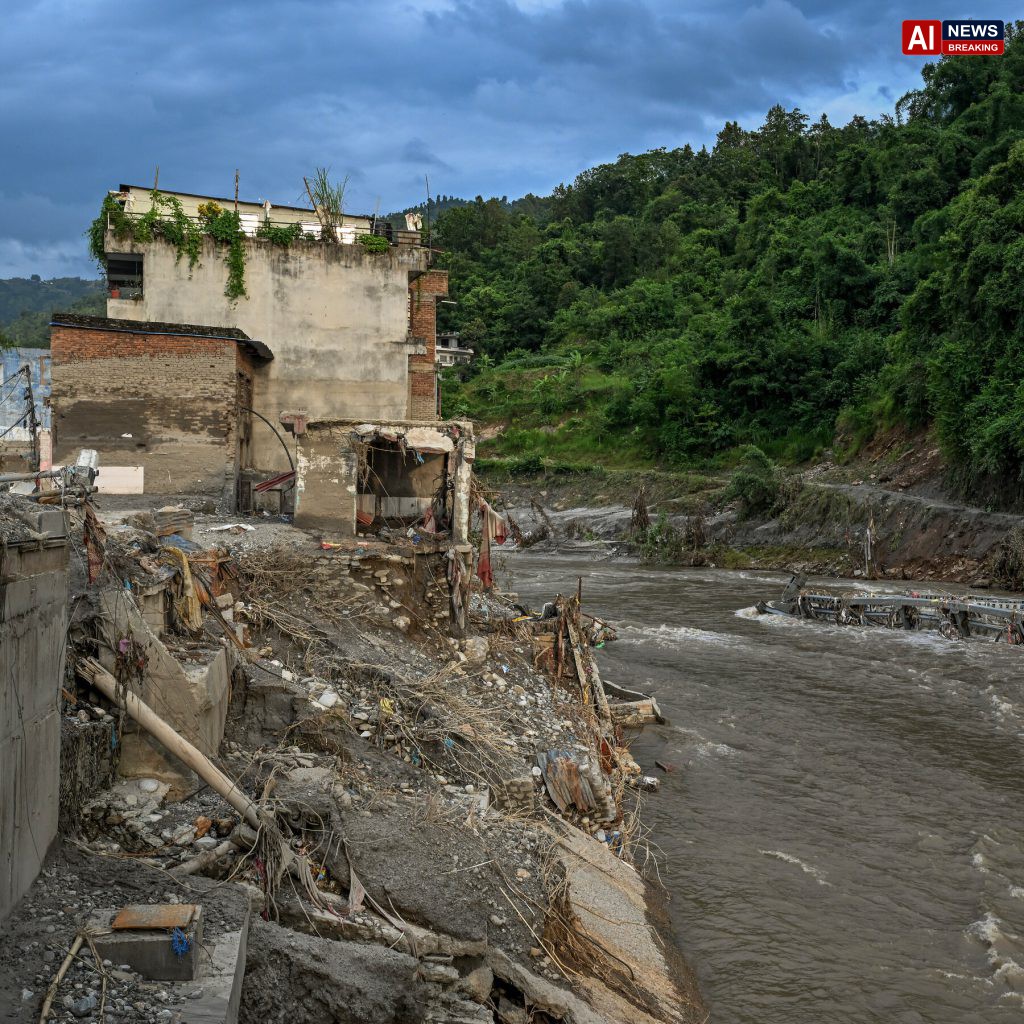
Pilgrims have been making their way to the remote slopes of Mount Kailash, a site revered by Buddhists, Hindus, Jains and Bon practitioners, even as Nepal grapples with the aftermath of unprecedented flooding that has left villages submerged, roads washed away and livelihoods shattered. The annual pilgrimage, which traditionally draws thousands of devotees from across South Asia, has been forced to adapt to a landscape dramatically altered by the deluge, prompting both logistical challenges and profound reflections on the relationship between nature and faith.The monsoon season of 2024 brought rains of a magnitude not seen in decades, triggering flash floods in the Terai plains and the mountainous foothills of the country. According to the National Disaster Risk Reduction and Management Authority, more than 1,200 homes were destroyed and over 8,000 people displaced across the districts of Rasuwa, Dolakha and Sindhupalchok, regions that lie on the main routes to Kailash..
The destruction of bridges and the closure of key mountain passes have complicated travel plans for pilgrims, many of whom now face detours that add days to an already arduous trek.Local authorities, in cooperation with the Ministry of Culture, Tourism and Civil Aviation, have set up temporary shelters and medical posts along the traditional pilgrimage routes. These facilities, staffed by volunteers and disaster relief workers, aim to provide basic care and information to both displaced residents and incoming travelers. “We are trying to balance the immediate humanitarian needs with the spiritual significance of the journey,” said Laxmi Shrestha, the regional disaster response coordinator..
“Our priority is to ensure safety, but we also recognise that for many, the pilgrimage is a lifeline that offers hope amidst tragedy.”The spiritual significance of Mount Kailash, known as the abode of Lord Shiva in Hindu tradition and as a sacred axis mundi in Buddhist cosmology, has drawn seekers for centuries. For many pilgrims, the act of circumambulating the mountain—known as the kora—represents a symbolic journey towards enlightenment and purification. In the wake of the floods, the symbolism has taken on an added layer of meaning..
“When you walk around the mountain, you are reminded of the impermanence of life and the need to respect the forces that shape our world,” said Tsering Dorje, a Tibetan Buddhist monk accompanying a group of pilgrims from Lhasa. “The water that has reshaped the valleys is a reminder that the divine is present in both creation and destruction.”Travel agencies that specialise in the Kailash pilgrimage have reported a mixed response from clients. While some have postponed their trips, citing safety concerns, others have insisted on proceeding, viewing their journey as an act of solidarity with the affected communities..
“We cannot let the floods halt our devotion,” said Anita Sharma, a 38‑year‑old pilgrim from Delhi. “Our prayers are for the people who have lost everything, and we want to be there to offer our support, even if it means navigating damaged roads.”Logistical adjustments have also been evident on the ground. The traditional trekking season, which runs from June to September, now sees a surge in the use of alternative routes that bypass flood‑hit valleys..
Guides have employed satellite maps and local knowledge to chart new paths, while the Nepalese Army has deployed engineering units to repair critical bridges and clear landslides that block mountain passes. In the town of Simikot, a key gateway to the Kailash region, makeshift camps have sprung up to accommodate both pilgrims and flood‑displaced families, fostering a shared sense of community.The influx of pilgrims amidst a disaster scenario has raised concerns among humanitarian organisations about the potential strain on scarce resources. The International Federation of Red Cross and Red Crescent Societies warned that the convergence of tourists and displaced residents could exacerbate health risks, particularly in the wake of water‑borne diseases that often follow floods..
In response, health officials have intensified water purification efforts and distributed hygiene kits at major checkpoints along the pilgrimage corridor.Environmentalists have highlighted the paradox of increased footfall in a fragile ecosystem already under pressure from climate change. “Mount Kailash and its surrounding habitats are highly sensitive to disturbance,” said Dr. Rajendra Singh, a conservation biologist at Tribhuvan University..
“The added stress of a higher number of trekkers, combined with the destabilising effects of recent floods, could accelerate erosion and threaten biodiversity.” He called for stricter regulation of waste disposal and the promotion of low‑impact trekking practices.Despite these challenges, the pilgrimage has proceeded, underscoring the resilience of faith communities in the face of natural calamities. On the morning of the first full moon after the floods, a procession of around 300 pilgrims set out from the village of Simigaon, chanting prayers and carrying prayer flags that fluttered above the newly formed riverbanks. Their journey, though marked by detours and the occasional broken bridge, was completed without serious incident, and many reported a renewed sense of purpose upon reaching the base of Kailash.The experience of navigating a sacred landscape altered by floodwaters has left a lasting imprint on participants..
“The mountain seemed even more majestic, as if it were reminding us of a higher order that we cannot control,” reflected Sunita Patel, a pilgrim from Kathmandu. “We arrived with sorrow for the people we left behind, but we also left with a deeper appreciation of the interconnectedness of all life.” As Nepal continues to rebuild, the pilgrimage to Mount Kailash may serve not only as a ritual of personal devotion but also as a collective reminder of humanity’s fragile bond with the natural world..
Updated: August 30, 2026
The flood‑ravaged trek to Kailash forces believers to confront climate’s relentless agency, turning devotion into an unwitting act of ecological stewardship. If pilgrimage persists without stricter environmental safeguards, reverence may soon be outweighed by the very degradation it seeks to transcend.