 Finnish puppy livestream boosts pet ownership and sales.
  Punjab CM alleges he was made to sit at Delhi airport, officials told him they were ‘under pressure from above’
  Jordanian police investigate church shooting killing
 Mysuru Kannada Sahitya Parishat president Maddikere Gopal dies
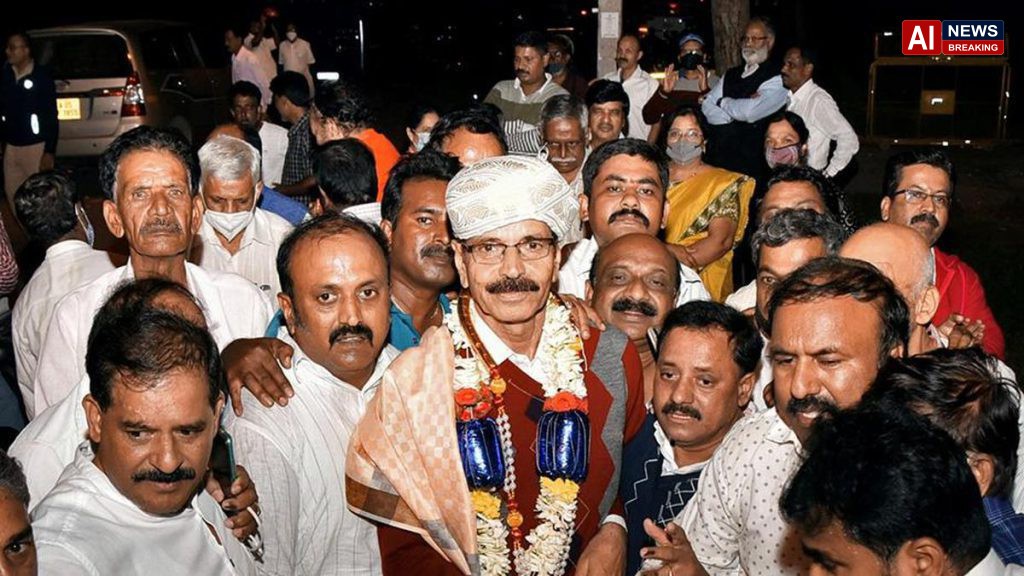
Mysuru district Kannada Sahitya Parishat President Maddikere Gopal passes away - AI News Breaking
Maddikere Gopal, the revered President of the Mysuru district Kannada Sahitya Parishat and a prominent figure in the state’s literary and cultural landscape, passed away on Saturday. His death marks a significant loss for the Kannada literary community, leaving behind a legacy of dedication to language preservation, cultural promotion, and social welfare. Gopal breathed his last at Jayadeva Hospital in Mysuru, after a prolonged period of illness that had confined him to bed for several weeks..
The news of his passing has sent waves of grief across the district and beyond, drawing condolences from political leaders, literary figures, and the general public who admired his unwavering commitment to the Kannada language and heritage.The immediate family and close associates expressed their deep sorrow over the loss, describing Mr. Gopal not merely as a literary figure but as a guiding light for many aspiring writers and cultural activists. His health deteriorated rapidly in recent months, leading to repeated hospitalisations, yet he remained mentally active until the end, often discussing literary trends and advising younger members of the Parishat..
Friends recall that even during his final days, his thoughts were rarely far from the organisation he served with such distinction. The atmosphere at Jayadeva Hospital on the day of his passing was somber, with family members and a few close colleagues gathered around his bedside, reflecting on a life defined by service to the Kannada-speaking community.Maddikere Gopal’s journey into the world of literature and cultural activism began in the quiet environs of Mysuru district, where his early exposure to classical Kannada literature shaped his worldview. Born into a family that valued education and the arts, he developed a profound respect for the nuances of the Kannada language at a young age..
This foundational appreciation evolved into a lifelong mission to promote and protect the linguistic and cultural identity of the region. He believed that language was not just a medium of communication but the very soul of a community, carrying within it the history, values, and aspirations of its people. His early writings and speeches often reflected this philosophy, urging others to take pride in their linguistic heritage.His rise within the Kannada Sahitya Parishat was marked by a consistent display of leadership, integrity, and a pragmatic approach to cultural diplomacy..
The Parishat, which has long been a bastion for Kannada literature and culture, required leaders who could navigate the complex interplay between tradition and modernity. Gopal emerged as such a leader, known for his ability to bridge generational gaps and foster unity among diverse literary factions. As President of the district branch, he played a pivotal role in revitalizing local literary festivals, encouraging rural participation, and ensuring that the voices of lesser-known writers were heard on larger platforms..
His tenure was characterized by inclusive policies that brought together poets, scholars, and artists from various backgrounds.Beyond his organizational roles, Mr. Gopal was a respected scholar and writer in his own right. Though he never sought the limelight for personal fame, his contributions to Kannada prose and essay writing were widely acknowledged by peers and critics alike..
His works often explored themes of social justice, rural life, and the evolving identity of Karnataka in a globalized world. Critics praised his ability to articulate complex socio-cultural issues with clarity and empathy, making them accessible to a broad audience. Several of his essays have been included in academic curricula, ensuring that his intellectual legacy continues to influence future generations of students and scholars.The impact of Mr..
Gopal’s leadership extended well beyond the confines of literary circles. He was actively involved in various social initiatives aimed at uplifting marginalized communities in the Mysuru district. Recognizing the power of culture as a tool for social cohesion, he supported programs that used art and literature to address issues such as caste discrimination, gender inequality, and educational disparity..
His efforts often involved collaboration with local NGOs, educational institutions, and religious organizations, demonstrating a holistic approach to community development. Many beneficiaries of these programs expressed their gratitude, noting that Mr. Gopal’s interventions were always guided by a genuine concern for human dignity and welfare.Political leaders across the spectrum have also paid tribute to Mr..
Gopal, acknowledging his role in fostering a spirit of inclusivity and cultural pride in the region. In a letter of condolence, the Governor of Karnataka described him as a custodian of Kannada culture who worked tirelessly to preserve the state’s linguistic heritage. Opposition leaders cited his impartiality and dedication as defining traits that transcended political affiliations..
Even those with differing ideological views respected his ability to maintain a neutral stance in literary matters, focusing instead on the broader goal of promoting Kannada literature without partisan bias. This broad-based respect is a testament to the integrity he maintained throughout his public career.Friends and colleagues who worked closely with Mr. Gopal recall his modest lifestyle and his preference for quiet reflection over public acclaim..
Unlike many contemporary cultural figures who seek media attention, he remained largely reserved, letting his work speak for itself. He was known for his punctuality, his meticulous organization of events, and his personal interactions with every participant, regardless of their status or fame. These personal qualities earned him a deep reservoir of goodwill among the people of Mysuru..
His home, often a hub for literary discussions, was a place where ideas were exchanged freely and respectfully, creating an environment conducive to creative growth and intellectual exchange.The passing of Maddikere Gopal has sparked a renewed conversation about the future of the Kannada Sahitya Parishat and the broader literary community in Karnataka. Many ask how the organization will move forward without his guiding presence and whether his successors can maintain the momentum he generated. However, his legacy provides a roadmap for future leaders..
He demonstrated that cultural activism requires patience, persistence, and a deep-rooted love for the language and the people. His emphasis on grassroots engagement and institutional strengthening offers valuable lessons for those who wish to continue his work. The district branch is expected to hold special memorial meetings to plan tributes and initiatives in his honor, ensuring that his memory remains vibrant.Family members have requested people to refrain from sending floral wreaths, in keeping with Mr..
Gopal’s lifelong advocacy for simplicity and environmental consciousness. Instead, they have appealed for donations to be made to a literacy fund established in his name, aiming to support underprivileged children in the Mysuru district. This final request underscores his commitment to education and his belief that the empowerment of the youth is the key to the preservation of any culture..
The funeral rites are scheduled to be performed with traditional solemnity, attended by thousands of mourners who wish to pay their last respects to a man who dedicated his life to the soul of Karnataka.In the broader context of Karnataka’s cultural history, Maddikere Gopal occupies a unique space as a bridge between the traditionalists and the modernists. He understood that for a language to thrive, it must.
Veteran Kannada literary luminary Maddikere Gopal has died in Mysuru after a long illness, prompting an outpouring of grief from across the state.
The respected former Parishat president leaves behind a profound legacy of cultural preservation and social welfare, with tributes highlighting his unwavering dedication to the language.
His passing leaves a vacuum in Karnataka’s cultural governance, challenging successors to replicate his rare ability to unite disparate literary factions.
The shift from floral tributes to literacy funding signals a critical juncture where cultural preservation must actively invest in grassroots education to survive.