 1 killed, 4 injured after man opens indiscriminate fire from car in Paris
  Open to alliance with parties that agree with SAD’s ideology: Sukhbir Singh Badal
  Palestinian Gunmen Open Fire on Israelis in the West Bank, Officials Say
  Russians across
  Jagan to move Supreme Court again over ‘obstruction’ of YSRCP nominees in Andhra local body polls
 India’s Jaishankar to Address UN General Assembly on Sept 26
**
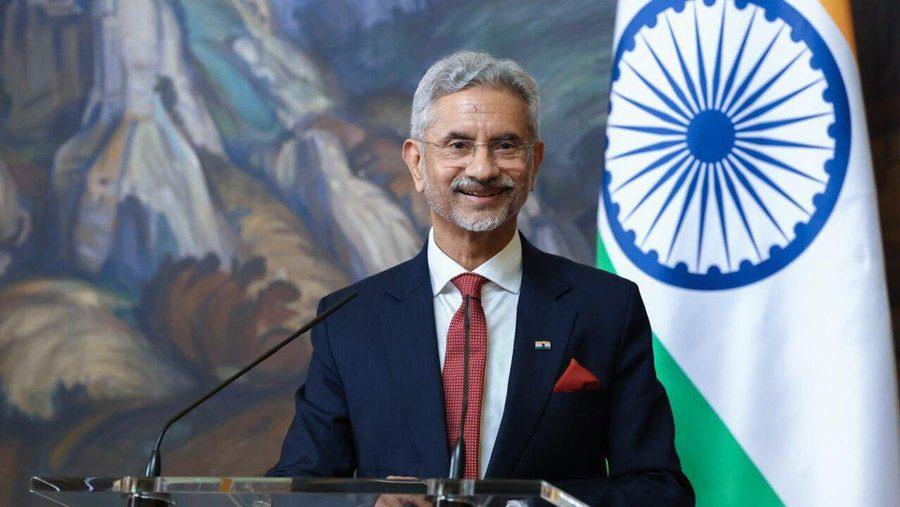
India's Jaishankar to Address UN General Assembly on Sept 26 - AI News Breaking
indias jaishankar address general:
India’s Foreign Minister Dr S. Jaishankar will address the United Nations General Assembly’s high‑level annual meeting on 26 September, marking a pivotal moment in New Delhi’s diplomatic outreach as the 81st session of the UN General Assembly convenes in New York. The speech comes at a time when the world is wrestling with a confluence of crises – from the lingering economic fallout of the COVID‑19 pandemic and the war in Ukraine to escalating climate emergencies and rising geopolitical tensions in the Indo‑Pacific. Jaishankar’s appearance is expected to underline India’s stance on these issues while reinforcing the country’s aspirations for a larger role in shaping global governance.The General Debate, which runs from 22 September to 28 September, provides a platform for heads of state, foreign ministers and other senior officials from the 193‑member UN body to outline their nations’ priorities and propose pathways to collective action..
Historically, India has used the forum to champion multilateralism, stress the importance of a rules‑based international order and call for reforms that reflect contemporary realities. This year’s agenda is likely to be heavily influenced by the ongoing war in Ukraine, where India has maintained a position of strategic autonomy, urging dialogue while refraining from joining sanctions regimes imposed by Western powers.Jaishankar is expected to reaffirm India’s commitment to the principles of sovereignty, territorial integrity and non‑interference, while also emphasizing the need for a balanced approach to conflict resolution that respects the legitimate security concerns of all parties. In recent weeks, New Delhi has engaged in diplomatic outreach to both Moscow and Kyiv, offering to facilitate dialogue and urging an end to hostilities that have devastated civilian populations and disrupted global supply chains..
The minister’s remarks are likely to echo this nuanced stance, highlighting India’s willingness to act as a bridge between divergent blocs without compromising its strategic interests.Climate change will feature prominently in the address, reflecting India’s dual identity as both a rapidly developing economy and a nation vulnerable to climate impacts. The country has pledged to achieve net‑zero emissions by 2070, a target that is considerably later than the 2050 deadline set by many developed nations. Jaishankar is anticipated to call for equitable climate finance, technology transfer and capacity‑building support for developing countries, arguing that climate action must be underpinned by the principle of common but differentiated responsibilities..
He may also cite India’s own domestic initiatives – such as the expansion of renewable energy capacity, the launch of the International Solar Alliance and the promotion of electric mobility – as evidence of its commitment to a greener future.In the realm of global health, the minister is likely to draw attention to the lingering effects of the pandemic and the necessity of strengthening the World Health Organization’s (WHO) capacity to respond to future health emergencies. India, which contributed significantly to the COVAX initiative and supplied billions of vaccine doses to low‑ and middle‑income countries, may use the platform to advocate for a more resilient, well‑funded WHO and for greater cooperation on vaccine equity, research and development. The speech could also underscore the importance of addressing the social determinants of health, including poverty, education and nutrition, as integral components of a comprehensive health security framework.Trade and economic cooperation are expected to occupy a substantial portion of the discourse, particularly as the world grapples with supply‑chain disruptions, inflationary pressures and the spectre of protectionism..
Jaishankar may highlight India’s ambition to become a hub for global manufacturing and services, citing the country’s participation in the G20’s “Resilient, Inclusive, and Sustainable Growth” agenda. He could also point to recent steps to deepen economic ties with the European Union, the United States and regional blocs such as the Association of Southeast Asian Nations (ASEAN), while stressing the importance of a rules‑based multilateral trading system that eschews unilateral sanctions and trade barriers.The minister is also expected to address the issue of reforming the United Nations itself, a long‑standing demand of India’s foreign policy establishment. With the Security Council’s composition still reflecting the post‑World‑War‑II order, India has persistently lobbied for a permanent seat, arguing that its demographic size, economic weight and contributions to UN peacekeeping missions warrant greater representation..
Jaishankar may use the occasion to reiterate this claim, while acknowledging the need for a broader consensus on institutional reforms that enhance the UN’s legitimacy and effectiveness in a multipolar world.Human rights and the protection of democratic values are likely to feature as well, especially in light of recent crackdowns on civil liberties in several regions. India, which has faced scrutiny over its own human‑rights record, may adopt a cautious tone, emphasizing the universality of human rights while calling for dialogue rather than punitive measures. The minister could also highlight India’s efforts to promote gender equality, digital inclusion and the empowerment of marginalized communities, framing these initiatives as part of a larger agenda to foster inclusive development.Security concerns in the Indo‑Pacific will undoubtedly be a focal point, given the increasing strategic competition between major powers in the region..
Jaishankar may reiterate India’s “Act East” policy, underscoring partnerships with Japan, Australia and the United States under the Quad framework, while also stressing the importance of regional confidence‑building measures, maritime security and freedom of navigation. At the same time, he is likely to caution against the escalation of a new cold war, urging all states to respect international law, avoid arms races and resolve disputes through peaceful means.In concluding his address, the Foreign Minister is expected to call for renewed collective action, urging member states to set aside narrow national interests in favour of common global goals. He will probably reiterate India’s readiness to contribute constructively to peace‑building, climate mitigation, health security and economic recovery, positioning the country as a responsible stakeholder in a rapidly changing international landscape..
As the UN General Assembly proceeds through its week‑long debate, Jaishankar’s speech will be scrutinised both for its substantive content and for the broader signal it sends about India’s evolving role on the world stage..
Updated: September 5, 2026
Foreign Minister Jaishankar heads to New York to outline India’s strategic stance on Ukraine, climate equity, and UN reform during the 81st General Assembly. His address aims to reinforce the nation’s push for a multipolar global order while championing multilateral solutions to converging geopolitical and economic crises.
Insight: New Delhi is leveraged its strategic ambiguity to transition from a passive beneficiary of multilateralism to an indispensable broker in a fragmented global order.
This diplomatic pivot suggests that emerging powers can now dictate the pace of institutional reform by balancing ideological alliances with pragmatic geopolitical independence.