 Russians across
  Jagan to move Supreme Court again over ‘obstruction’ of YSRCP nominees in Andhra local body polls
  Pentagon directive bans troops from using nonpublic info to bet in prediction markets
  Plaintiffs in Trump arch project seek injunction to stop administration from beginning work Nov. 5
 Modi urges teachers to monitor student well-being beyond academics
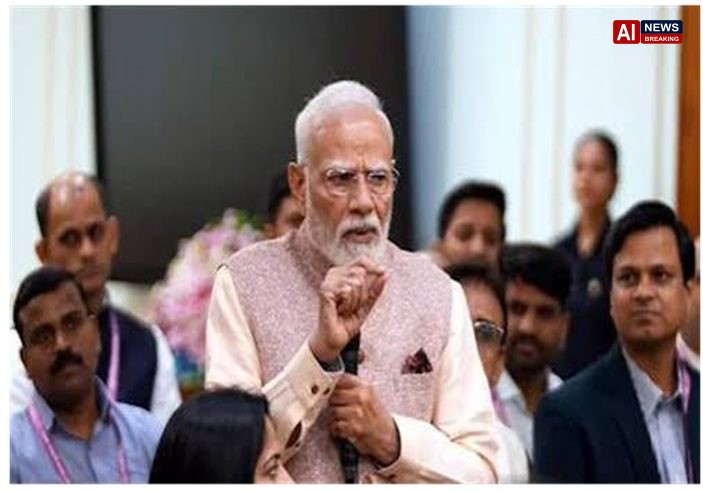
modi urges teachers monitor:
Prime Minister Narendra Modi addressed the nation’s teaching fraternity in a televised address on Tuesday, urging educators to move beyond traditional metrics of academic achievement and to become vigilant observers of their pupils’ broader well‑being. “A child’s mind is not a ledger of marks alone,” the prime minister said, “it is a canvas where habits, emotions and choices are painted every day.” His remarks came amid growing concerns that India’s rapid digital transformation, coupled with rising rates of substance abuse among youth, is reshaping the school environment in ways that standard examinations cannot capture.
The prime minister’s call arrived at a time when recent surveys by the National Crime Records Bureau and independent think‑tanks have highlighted an unsettling uptick in drug‑related incidents among adolescents. While the overall prevalence of drug use in the country remains lower than in many western nations, the proportion of users aged fifteen to nineteen has risen by nearly twelve percent over the past three years, according to a 2024 report by the Ministry of Social Justice and Empowerment.
Simultaneously, the Ministry of Electronics and Information Technology noted that screen time among school‑aged children now averages five to six hours per day, a figure that has more than doubled since 2015. Modi argued that these twin trends—substance misuse and excessive digital consumption—pose a silent threat to the holistic development of students.In his speech, Modi emphasized that teachers occupy a unique frontline position from which they can detect early signs of distress that often go unnoticed by parents or counselors. “When a child begins to withdraw, shows sudden irritability, or exhibits a decline in participation, these are not merely academic setbacks; they are signals that something deeper is amiss,” he said..
He urged teachers to cultivate a culture of observation, encouraging them to note changes in attendance patterns, shifts in social circles, and variations in classroom engagement. The prime minister also called for a systematic approach to documentation, suggesting that schools maintain confidential logs of behavioural observations that can be shared with designated child‑welfare officers when necessary.To operationalise this vision, the government announced a suite of measures aimed at equipping teachers with the tools and training required to recognise and address non‑academic challenges. A new module on “Behavioural Health and Digital Literacy” will be incorporated into the National Council for Teacher Education’s (NCTE) mandatory professional development programme, with a rollout slated for the upcoming academic year..
The module, developed in partnership with the National Institute of Mental Health and Neurosciences (NIMHANS) and leading child‑psychology NGOs, will cover topics ranging from early identification of substance‑abuse risk factors to strategies for fostering healthy screen‑time habits.In addition to curricular changes, the prime minister highlighted the importance of strengthening school‑based support systems. He announced the expansion of the existing “School Counsellor” scheme, which currently places a certified counsellor in one‑third of government schools, to cover at least seventy percent of public institutions by 2027. The counsellors will work closely with teachers, parents and local health officials to create individualized intervention plans for students displaying concerning behaviours..
Funding for this expansion will be drawn from the central government’s “Sukanya Samriddhi” education fund, with an earmarked allocation of ₹1,200 crore over the next three years.Modi also underscored the role of community engagement in tackling the twin challenges of addiction and screen overuse. He urged schools to partner with local NGOs, parents’ associations and law‑enforcement agencies to organise regular awareness workshops. These sessions, he said, should not merely lecture students about the dangers of drugs or the perils of excessive internet use, but should also provide practical tools such as mindfulness exercises, peer‑support groups and alternative recreational activities..
“When the community rallies around its children, the safety net becomes far stronger,” he remarked, citing successful pilot programmes in Karnataka and Maharashtra where collaborative efforts have led to a measurable decline in reported cases of teenage substance abuse.Critics, however, have cautioned that the success of Modi’s directive will hinge on the availability of resources at the grassroots level. Teachers in many rural and under‑funded schools already contend with large class sizes, limited infrastructure and insufficient salaries, factors that could impede their capacity to take on additional responsibilities. The All India Teachers’ Federation (AITF) released a statement acknowledging the merit of the prime minister’s concerns but calling for concrete assurances regarding workload reduction, remuneration for extra duties and access to continuous professional development..
“We welcome the focus on student well‑being, but we must ensure that teachers are not left to shoulder the burden alone,” the statement read.In response, the Ministry of Education affirmed its commitment to addressing these logistical hurdles. A task force comprising senior bureaucrats, education experts and representatives from teacher unions has been set up to draft a comprehensive implementation framework. The task force is expected to propose guidelines for teacher‑student ratios, mechanisms for periodic mental‑health audits in schools, and a transparent grievance redressal system for educators who encounter challenges in executing the new mandates..
The ministry also pledged to allocate an additional ₹500 crore to upgrade digital infrastructure in schools, ensuring that technology can be harnessed for positive educational outcomes rather than becoming a source of distraction.The broader societal implications of the prime minister’s appeal have sparked a national conversation about the evolving role of education in a rapidly changing world. Sociologists argue that the traditional view of schooling as a conduit for knowledge transmission is increasingly outdated, advocating for a more holistic model that integrates emotional intelligence, digital citizenship and resilience training. Meera Sharma, a child development researcher at the Indian Institute of Technology Delhi, noted that “when teachers are empowered to observe and intervene in behavioural shifts, schools become proactive agents of social health, rather than reactive institutions that only respond after crises emerge.”As India prepares for the upcoming academic year, the onus now lies on state governments, school administrations and individual educators to translate Modi’s exhortation into tangible practice..
The prime minister concluded his address with a reminder that the future of the nation rests on the well‑being of its youngest citizens. “Our children are the architects of tomorrow,” he said. “If we equip them with the support they need today—beyond grades, beyond screens—we build a stronger, healthier India for generations to come.”.
Insight: Modi’s push to turn teachers into “well‑being scouts” signals a policy shift that treats schools as early‑warning health hubs, blurring the line between education and public‑health surveillance. If backed by real resources, this could embed preventive mental‑health care in India’s learning ecosystem; without it,