 CSD urges govt to drop Gram Sabha consent rule for projects
  NATS glitch causes major Heathrow flight delays and cancellations
  Yemen Tilts Toward Full-Scale War as Saudi-Houthi Clashes Escalate
  Syrian weapons depot explosion kills 14 in Idlib
 Heavy security deployed in South Africa ahead of anti-migrant protests
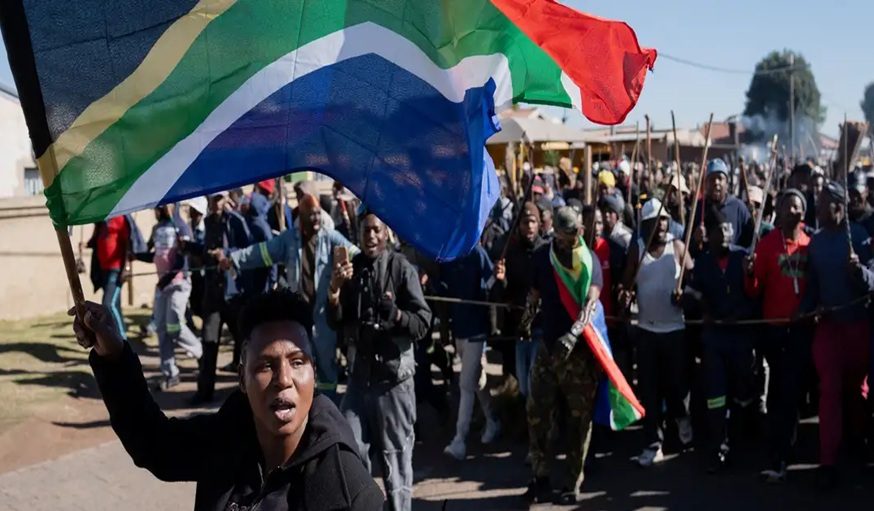
heavy security deployed south:
Heavy security deployed in South Africa ahead of anti-migrant protests The South African government has deployed a heavy security presence in major cities across the country ahead of anti-migrant protests scheduled to take place on Wednesday. The move comes after thousands of foreign nationals, mostly from other African countries, left South Africa ahead of a deadline set by the groups organizing the demonstrations. The protests are expected to be tense, with many migrants and their supporters fearing violence and intimidation.
The anti-migrant groups, which have been gaining traction in recent months, have been calling for the expulsion of foreigners from South Africa, citing concerns over job competition and crime. However, human rights organizations and migrant communities have condemned the groups’ rhetoric, describing it as xenophobic and divisive. The government has urged calm and warned against any form of violence or discrimination, but many migrants are taking no chances, opting to leave the country or seek shelter in safer areas.
As the deadline set by the anti-migrant groups approaches, many migrants are living in fear of being attacked or forced to flee their homes. Some have reported being harassed or intimidated by groups of locals, who accuse them of taking jobs and resources away from South Africans. The government has promised to protect the rights of all individuals, regardless of their nationality, but many migrants are skeptical, citing past incidents of xenophobic violence in the country.
The police and military are on high alert, with reinforcements deployed to potential hotspots in cities such as Johannesburg and Pretoria. The security presence is aimed at preventing clashes between protesters and migrant communities, as well as maintaining order and stability. However, some critics have accused the government of not doing enough to address the underlying issues driving the anti-migrant sentiment, such as poverty and unemployment.
The African diaspora community in South Africa is diverse, with migrants from countries such as Nigeria, Zimbabwe, and Mozambique. Many have been living in the country for years, contributing to the economy and society, but they now face an uncertain future. Some have expressed frustration and disappointment at the lack of support from the government and local communities, feeling that they are being unfairly scapegoated for the country’s problems.
The international community has been watching the situation in South Africa with concern, with some countries warning their citizens to exercise caution when traveling to the country. The United Nations has also weighed in, urging the government to take steps to protect the human rights of all individuals, regardless of their nationality. The situation has sparked a wider debate about migration and xenophobia in Africa, with some arguing that the continent needs to do more to promote integration and understanding between different communities.
As the protests approach, many South Africans are speaking out against xenophobia and discrimination, condemning the anti-migrant groups’ rhetoric as divisive and unrepresentative of the country’s values. Some have organized counter-protests and rallies, calling for unity and solidarity with migrant communities. However, the atmosphere remains tense, with many fearing that the protests could turn violent.
The government has promised to hold accountable anyone who engages in violence or discrimination, but some critics argue that more needs to be done to address the root causes of the anti-migrant sentiment. The country’s economy has been struggling in recent years, with high levels of unemployment and poverty, and some argue that migrants are being scapegoated for these problems. The government has announced plans to create jobs and stimulate economic growth, but many migrants are skeptical, feeling that they will be excluded from these initiatives.
The situation in South Africa has raised concerns about the rise of xenophobic nationalism in Africa, with some arguing that the continent needs to do more to promote regional integration and cooperation. The African Union has called for greater solidarity and unity between African countries, but some argue that more needs to be done to address the underlying drivers of xenophobia, such as poverty and inequality. As the protests in South Africa continue, many are watching with concern, hoping that the country can find a way to address its problems without resorting to violence and discrimination.
The protests are expected to be widespread, with demonstrations planned in cities across the country. The security presence will be heavy, with police and military units deployed to maintain order and stability. However, many migrants are bracing themselves for the worst, fearing that the protests could turn violent and that they will be targeted.
The international community will be watching the situation closely, hoping that the government can find a way to address the concerns of all parties and promote a peaceful and inclusive resolution. As the deadline set by the anti-migrant groups approaches, many migrants are preparing for the worst, stocking up on food and supplies and preparing to flee if necessary. Some have already left the country, seeking safety in neighboring states or further afield.
The situation is a tragic reminder of the ongoing struggles faced by migrants across the continent, who often face discrimination, violence, and marginalization. The government has promised to support migrant communities and promote social cohesion, but many are skeptical, citing past failures to address xenophobia and intolerance. The situation in South Africa has sparked a wider debate about migration and integration in Africa, with some arguing that the continent needs to do more to promote understanding and empathy between different communities.
As the protests continue, many are holding out hope that the country can find a way to address its problems peacefully and promote a more inclusive and equitable society. The world will be watching the situation in South Africa closely, hoping that the government can find a way to address the concerns of all parties and promote a peaceful and inclusive resolution. The situation has raised concerns about the rise of xenophobic nationalism in Africa, but it has also sparked a wider debate about migration and integration on the continent.
As the protests approach, many are holding out hope that the country can find a way to promote unity and solidarity, rather than division and violence.
The deployment of heavy security in South Africa ahead of anti-migrant protests underscores the deep-seated tensions and divisions within the country, highlighting the need for a more nuanced approach to addressing the complex issues of migration, unemployment, and social cohesion. Ultimately, the situation serves as a stark reminder that the failure to promote inclusive and equitable societies can have far-reaching consequences, not only for migrant communities but also for the stability and cohesion of the nation as a whole.