 Canadian Jet Maker Is Target in Trump’s Trade War
  Daughter, father arrested for religious conversion in U.P.; nine booked
  TN Assembly Speaker rebukes Stalin over body-shaming remarks
  Approach NGT with plea on installation of FGD systems in thermal power plants: Supreme Court to petitioner
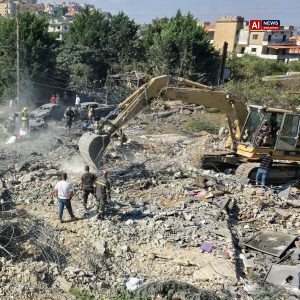
 Hezbollah Rejects US-Israel-Lebanon Deal, Warns of ‘Civil War’ Over Disarmament as Regional Tensions Escalate
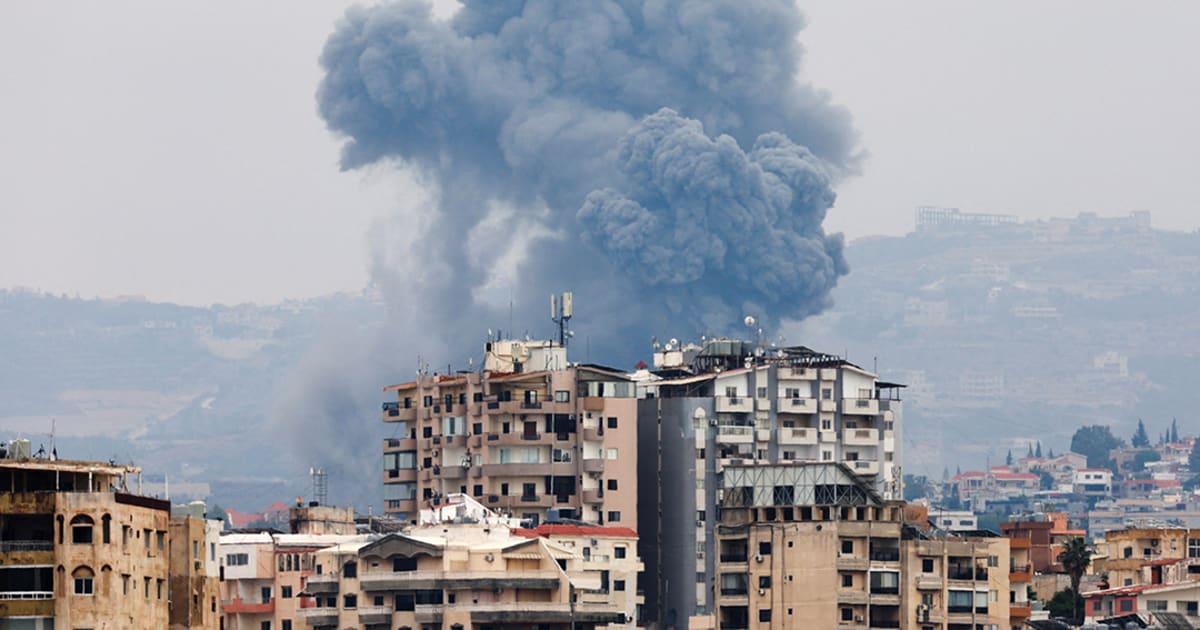
hezbollah rejects usisraellebanon deal:
Hezbollah has strongly rejected growing international calls for its disarmament under a proposed US-Israel-Lebanon security arrangement, warning that any attempt to strip the group of its weapons could push Lebanon toward civil war. The confrontation highlights the deep political and security divisions threatening Lebanon’s fragile stability while regional tensions remain high.
Lebanon has entered another period of intense political uncertainty after Hezbollah forcefully rejected reports of a US-backed security arrangement involving Israel and Lebanon that would require the Iran-backed movement to surrender its weapons. The group’s leadership warned that any attempt to forcibly disarm Hezbollah could trigger a civil war, raising fears that the country may once again be drawn into internal conflict while simultaneously facing growing regional security challenges.
The latest dispute comes amid increasing diplomatic efforts led by the United States and international mediators to establish a long-term security framework along the Israel-Lebanon border following months of military confrontations. While officials hope the proposed arrangement could reduce the risk of another major regional war, Hezbollah has made clear that it views any demand for disarmament as unacceptable.
The standoff has placed Lebanon’s already fragile political system under enormous pressure, with competing factions divided over the country’s future security strategy, its relationship with Israel, and Hezbollah’s continued military role.
Hezbollah Says Weapons Are Not Negotiable: Senior Hezbollah officials insisted that the movement’s arsenal remains an essential component of Lebanon’s national defense and cannot be included in any political negotiations or international agreements.
According to Hezbollah leaders, the organization’s military capabilities exist primarily to deter Israeli military operations and protect Lebanese territory. They argue that Israel continues to occupy disputed areas, regularly violates Lebanese airspace, and poses an ongoing security threat that justifies maintaining an armed resistance.
The group warned that attempts by either foreign governments or Lebanese authorities to remove its weapons by force would create dangerous internal divisions and could plunge the country into widespread violence.
One senior Hezbollah figure described the issue as crossing a “red line,” arguing that disarmament under international pressure would weaken Lebanon rather than strengthen it.
US Pushes for Long-Term Border Stability: The United States has spent months working alongside regional and European partners to prevent the Israel-Lebanon conflict from expanding into a broader regional war.
American officials believe that a comprehensive security arrangement could significantly reduce cross-border hostilities, improve stability in southern Lebanon, and lower the chances of another destructive military confrontation.
Diplomatic discussions have reportedly focused on strengthening the Lebanese Armed Forces, expanding the role of United Nations peacekeepers operating in southern Lebanon, and reducing the presence of heavily armed non-state actors near the Israeli border.
Washington has repeatedly argued that only the Lebanese state should possess military authority within the country and that strengthening state institutions is essential for Lebanon’s long-term stability.
However, Hezbollah maintains that these proposals effectively seek to dismantle what it considers Lebanon’s most effective defense against Israel.
Israel Maintains Pressure on Hezbollah: Israel has consistently identified Hezbollah as one of its most serious national security threats.
Israeli officials argue that Hezbollah possesses one of the world’s largest arsenals held by a non-state military organization, including tens of thousands of rockets and increasingly sophisticated precision-guided missiles capable of reaching deep inside Israeli territory.
Since the outbreak of the Gaza conflict, the Israel-Lebanon frontier has experienced repeated exchanges of fire involving rockets, drones, artillery, and airstrikes. Although neither side has appeared eager to launch a full-scale war, the continued clashes have kept the region on edge.
Israeli leaders have repeatedly stated that any future security agreement must significantly reduce Hezbollah’s military capabilities near the border.
The prospect of Hezbollah retaining its existing arsenal remains unacceptable for many Israeli security officials, who argue that lasting peace cannot be achieved while heavily armed militant groups continue operating independently of the Lebanese government.
Lebanon Faces Deep Internal Divisions: The debate surrounding Hezbollah’s weapons has long been one of Lebanon’s most controversial political issues.
Supporters of Hezbollah view the organization as a legitimate resistance movement that successfully forced Israel’s withdrawal from southern Lebanon in 2000 and later defended the country during the 2006 war.
Opponents argue that no political party should possess an independent military force outside state control, claiming that Hezbollah’s military strength undermines Lebanon’s democratic institutions and weakens government authority.
The issue has repeatedly divided successive Lebanese governments, preventing national consensus on defense policy.
Many political leaders fear that reopening the debate under current regional conditions could inflame sectarian tensions that Lebanon has spent decades trying to overcome following its devastating civil war between 1975 and 1990.
Economic Crisis Adds to Political Instability: Lebanon’s worsening economic collapse has further complicated the political landscape.
The country continues to experience one of the world’s worst financial crises in modern history. The Lebanese currency has lost much of its value, inflation remains extremely high, unemployment continues to affect millions, and public services have deteriorated significantly.
Many Lebanese citizens are increasingly frustrated with political leaders across the spectrum, blaming years of corruption, economic mismanagement, and institutional paralysis for the country’s decline.
Analysts warn that any renewed military conflict or major internal political confrontation could deepen the humanitarian crisis and further discourage international investment and financial assistance.
For many ordinary Lebanese families, concerns about jobs, electricity, healthcare, and food security have become just as urgent as national security debates.
Regional Powers Closely Watching Developments: The confrontation has attracted close attention from regional and international powers.
Iran, Hezbollah’s principal political and military supporter, continues to describe the group as an important component of the regional “Axis of Resistance.” Tehran has consistently opposed international calls for Hezbollah’s disarmament.
Meanwhile, Gulf Arab states generally support strengthening Lebanon’s official institutions while reducing the influence of armed non-state groups.
European governments have also encouraged diplomatic solutions aimed at preventing further escalation, emphasizing that another Israel-Hezbollah war would likely trigger widespread humanitarian consequences across the Middle East.
The United Nations continues to urge all parties to exercise restraint and fully implement existing Security Council resolutions designed to maintain stability along the Blue Line separating Israel and Lebanon.
Risk of Miscalculation Remains High: Security experts believe that even if political negotiations continue, the risk of accidental escalation remains significant.
Military activity along the border has already demonstrated how rapidly isolated incidents can evolve into broader confrontations involving drones, missiles, artillery exchanges, and airstrikes.
Both Israel and Hezbollah possess extensive military capabilities, meaning that any future conflict would likely be substantially more destructive than previous confrontations.
Analysts note that neither side appears eager for a full-scale war, but the combination of political tensions, military deployments, and competing regional interests continues to create an unpredictable security environment.
Diplomatic efforts therefore remain focused on establishing communication mechanisms capable of preventing isolated incidents from escalating into wider conflict.
Lebanon’s Government Walks a Difficult Path: Lebanese authorities continue attempting to balance competing domestic and international pressures.
On one hand, Western governments encourage Beirut to strengthen state institutions and gradually expand government control over national security.
On the other, Hezbollah remains one of Lebanon’s most influential political and military actors with significant parliamentary representation and broad support among sections of the population.
Government officials therefore face the difficult challenge of pursuing reforms while avoiding actions that could destabilize the country’s delicate political balance.
Most analysts believe any sustainable solution will require broad political consensus inside Lebanon rather than externally imposed conditions.
Uncertain Road Ahead: As negotiations surrounding regional security continue, Hezbollah’s warning has underscored the enormous obstacles facing diplomats attempting to reduce tensions between Israel and Lebanon.
While international mediators hope that diplomatic engagement can prevent another devastating regional conflict, Hezbollah’s refusal to consider disarmament illustrates how deeply entrenched the security debate has become.
For Lebanon, the stakes are exceptionally high. The country continues to battle economic collapse, political fragmentation, and regional instability simultaneously. Any failure to manage these competing pressures could threaten both national stability and wider Middle Eastern security.
Whether diplomacy ultimately succeeds will depend not only on agreements between governments but also on Lebanon’s ability to reconcile competing visions of national defense, sovereignty, and political authority.
Hezbollah’s rejection of disarmament highlights one of the Middle East’s most complex security dilemmas. While the United States, Israel, and many international partners argue that lasting stability requires the Lebanese state to hold exclusive military authority, Hezbollah maintains that its armed presence remains essential to deter future Israeli attacks. The challenge for diplomats lies in balancing Lebanon’s sovereignty, Israel’s security concerns, and the country’s deeply divided political landscape. Without a comprehensive political settlement that addresses both security and governance, efforts to reduce tensions are likely to face significant resistance, leaving the risk of renewed conflict persistently high.