Israel Conducts Targeted Strikes, Killing Top Iranian Security Officials Including Ali Larijani
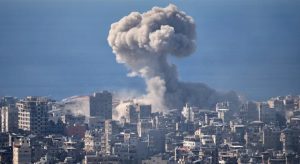
In a significant escalation of regional tensions, Israel has reportedly carried out a series of precision strikes targeting high-ranking Iranian officials, including Ali Larijani, a top security figure in Iran, and commanders of Iran’s Basij militia, a paramilitary force under the Islamic Revolutionary Guard Corps (IRGC). This series of strikes marks one of the most direct actions taken by Israel against Iranian leadership in recent years and has raised concerns about a potential broader conflict in the Middle East.
Key Highlights:
- Israel confirmed that Ali Larijani was killed in an airstrike, describing him as a central figure in Iran’s security apparatus.
- The strikes also claimed the life of the commander of Iran’s Basij militia, a significant branch of the Islamic Revolutionary Guard Corps (IRGC).
- CBS News reported that two additional senior Iranian leaders were killed, marking one of the most direct Israeli operations against Iran’s leadership in recent years.
- The killings come amid heightened geopolitical tensions surrounding the Strait of Hormuz, where allies have reportedly rejected former U.S. President Donald Trump’s call for coordinated intervention.
- The Wall Street Journal and Al Jazeera provided live updates as the situation unfolded, emphasizing potential retaliatory measures by Iran.
- The Guardian highlighted that these developments could dramatically reshape the security landscape in the Middle East, affecting both regional and global energy routes.
Key Details of the Strikes
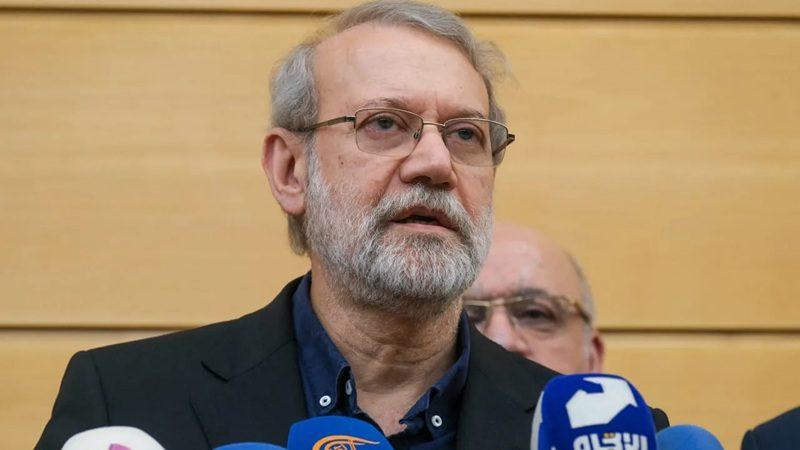
According to Israeli authorities, Ali Larijani, long regarded as a central figure in Iran’s political and security apparatus, was killed in the airstrike. Larijani, who has served in various high-level positions including Speaker of the Iranian Parliament and head of Iran’s Supreme National Security Council, was a significant architect of Iran’s domestic and foreign security policies. His death is seen as a substantial blow to Tehran’s strategic leadership.
Alongside Larijani, Israel has reportedly targeted and killed a commander of Iran’s Basij militia, which plays a critical role in Iran’s domestic security and paramilitary operations abroad. CBS News confirmed that two additional senior Iranian leaders were killed in related strikes, highlighting the scope of the Israeli operation.
Al Jazeera and The Wall Street Journal reported that these attacks were highly coordinated and aimed at disrupting Iran’s paramilitary and security command structure, sending a clear message regarding Israel’s willingness to take pre-emptive measures against perceived threats.
Background: Israel-Iran Tensions
Tensions between Israel and Iran have escalated over the past decade due to longstanding disagreements over nuclear capabilities, regional influence, and proxy conflicts in Syria, Lebanon, and Yemen. Israel has repeatedly accused Iran of developing nuclear weapons and supporting militant groups such as Hezbollah and Hamas, which Israel views as direct threats to its security.
Iran, on the other hand, has consistently framed its military and paramilitary activities as defensive measures against external aggression and interference in its regional affairs. The killing of high-ranking officials like Larijani is likely to be perceived by Tehran as a major provocation, potentially prompting retaliatory measures against Israeli interests in the region.
The Basij Militia: Role and Importance
The Basij militia, formally part of Iran’s IRGC, has been a cornerstone of Iran’s domestic security and ideological enforcement. Established after the 1979 Iranian Revolution, the Basij functions as both a paramilitary and civil mobilization force, with responsibilities ranging from internal policing to supporting Iran’s military campaigns abroad.
The elimination of a senior Basij commander by Israeli forces represents a direct strike at Iran’s internal and regional enforcement capabilities, likely intended to disrupt the coordination of Iran’s paramilitary operations. Analysts suggest that this could have ramifications for Iran’s ability to project power in Syria, Lebanon, and Iraq, where Basij-linked forces have historically played a critical role.
Regional Repercussions
The strikes come amid heightened global focus on the Strait of Hormuz, a strategic waterway through which a significant portion of the world’s oil supply passes. Former U.S. President Donald Trump had recently urged international powers to coordinate in securing the strait against potential Iranian threats. Reports indicate that these calls were largely rejected by allies, underscoring the complex geopolitics surrounding the region.
Israeli strikes on Iran’s leadership have the potential to escalate tensions not only bilaterally but also across the broader Middle East. Analysts warn of possible retaliatory actions by Iran, ranging from missile attacks on Israeli or allied targets to increased support for proxy groups in Lebanon, Gaza, and Syria.
Neighboring countries, including Saudi Arabia, the UAE, and Iraq, are monitoring the situation closely, with the risk of regional instability becoming a significant concern. Any escalation could disrupt trade routes, energy exports, and diplomatic relations, further complicating an already volatile environment.
International Response
Global reactions have been cautious but concerned. Western governments, including the United States and European Union member states, have called for restraint from all parties. While Israel asserts that its actions are defensive and necessary to neutralize imminent threats, Iran has condemned the strikes as violations of its sovereignty and promises strong retaliation.
The UN and other international bodies are closely monitoring developments. Diplomatic efforts are expected to intensify in the coming days, aiming to prevent a further escalation that could engulf the region in a larger conflict.
Implications for Iran’s Leadership
The death of Ali Larijani, coupled with the elimination of other senior commanders, raises questions about the continuity and stability of Iran’s security hierarchy. Larijani’s experience in both domestic governance and foreign security matters made him a central figure in Iran’s decision-making processes.
Analysts suggest that Iran may accelerate the promotion of loyalists within its security structures to fill the vacuum created by these strikes. However, sudden shifts in leadership could create internal friction and disrupt the command and control of paramilitary forces, particularly in volatile regions where Iran has strategic interests.
This article may be prepared with the assistance of artificial intelligence (AI) and is reviewed before publication. While we aim for accuracy and timeliness, readers should verify important facts from official or primary sources. If you believe any information is inaccurate or that any content infringes your rights, please contact ainewsbreaking.com for review and appropriate action.