US Supreme Court Grapples with Fate of Birthright Citizenship
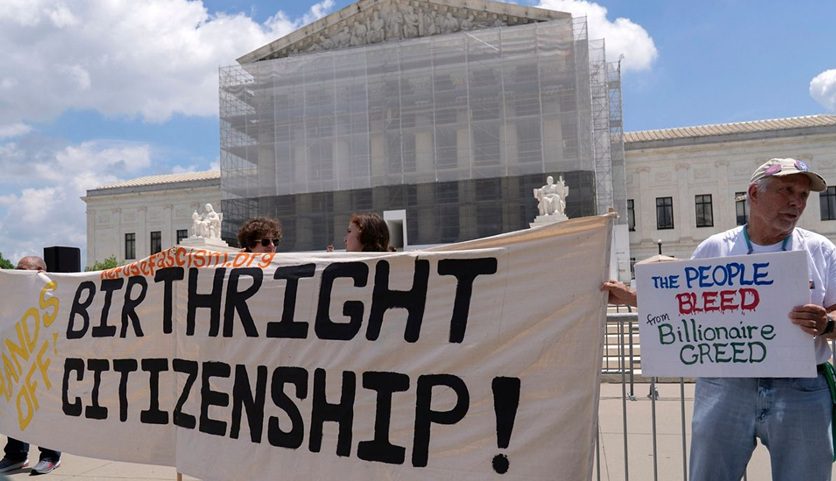
In a highly anticipated oral argument on Wednesday, the US Supreme Court appeared to be questioning the constitutionality of birthright citizenship, a doctrine that has been a cornerstone of American law for over a century. The high-stakes case drew an unusual in-person appearance from President Trump, who was visibly present in the courtroom.
The landmark case, which centers on the definition of citizenship, specifically hinges on a 14th Amendment clause that grants US citizenship to anyone born on American soil. A group of states has argued that this interpretation is too broad and has led to unintended consequences, including the naturalization of children born to undocumented immigrants. On the other side of the debate, advocacy groups have countered that the clause is crystal clear in its intent and must be upheld to maintain fundamental American values.
In what has been interpreted as an extraordinary display of presidential interest, President Trump attended the oral argument, breaking from the tradition of remote observation or written submission. By his presence, the president demonstrated the high level of scrutiny and attention surrounding the challenge to birthright citizenship. Supreme Court justices posed pointed questions to both parties, including the attorneys representing the states and advocacy groups, in an effort to clarify the contentious issues and ultimately render a verdict.
Key legal experts have cautioned against drawing definitive conclusions based on the justices’ queries during the oral argument, emphasizing that the final verdict could still go either way. However, the intensity and range of the questions did suggest a degree of skepticism from the bench regarding the current interpretation of birthright citizenship.
A ruling on the case is expected in the coming months, with far-reaching consequences for millions of individuals across the United States, particularly those with ancestral ties to various countries in Central and South America. The Supreme Court’s decision will be watched closely by immigration policy advocates, lawmakers, and, of course, the 40 million children and adults who are or have been US citizens by birth.
This article may be prepared with the assistance of artificial intelligence (AI) and is reviewed before publication. While we aim for accuracy and timeliness, readers should verify important facts from official or primary sources. If you believe any information is inaccurate or that any content infringes your rights, please contact ainewsbreaking.com for review and appropriate action.