 FDA suspends food licenses of IRCTC supplier and three ISKCON outlets
  Delhi Building Collapse LIVE Updates: Demolition Starts Next to Ruined PG, Contractor Taken Into Custody
  1,083 UK flights cancelled after NATS technical failure
  Iran warns of escalating war with US amid economic pressure
  ED raids Karnataka minister Satish Jarkiholi’s properties
 1,083 UK flights cancelled after NATS technical failure
**
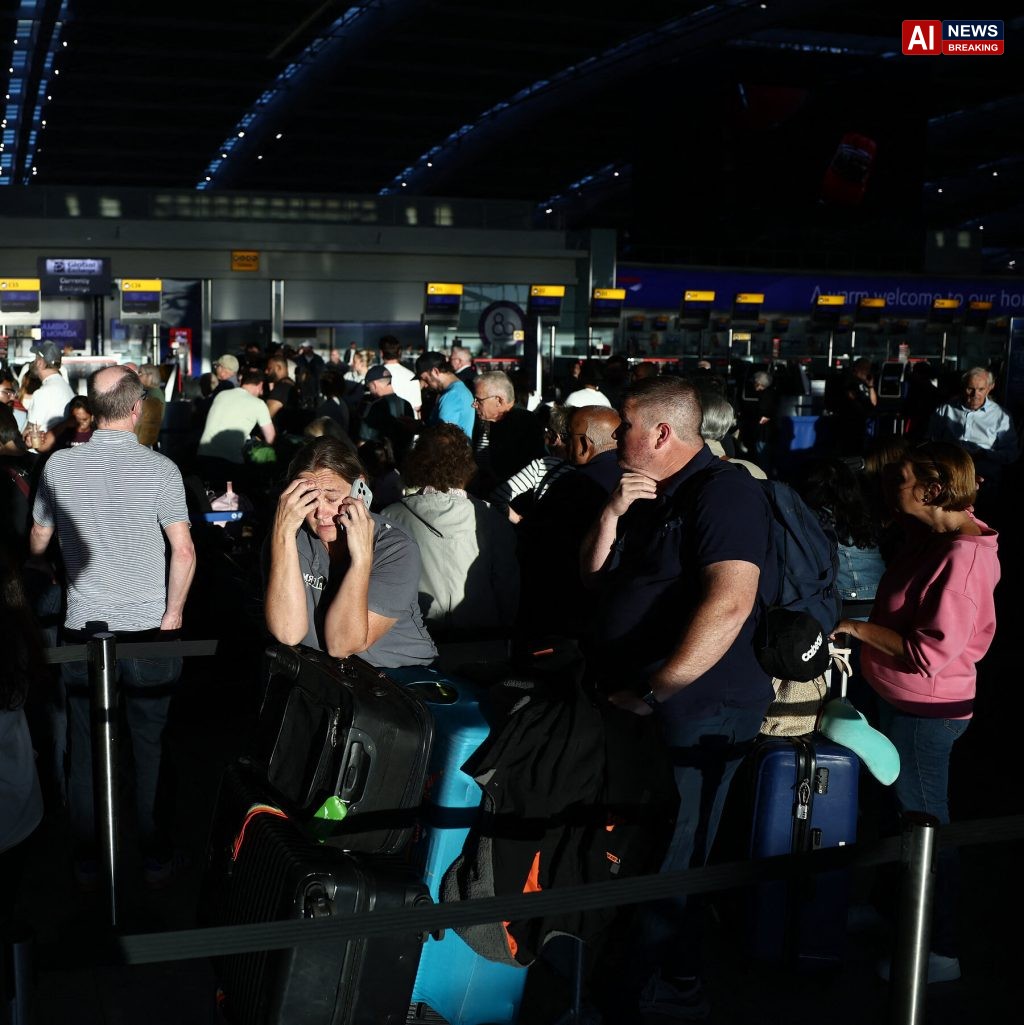
Travelers Face More Flight Delays After Major Air Traffic Disruption at UK Airports - AI News Breaking
1083 flights cancelled nats:
More than a thousand flights were cancelled on Tuesday across the United Kingdom after a technical failure at the nation’s main air traffic control centre triggered a cascade of disruptions that have left passengers stranded and airlines scrambling to re‑schedule services. The incident, which unfolded at the NATS (National Air Traffic Services) Central Operations Centre in West Drayton, has raised fresh concerns about the resilience of the country’s aviation infrastructure and the capacity of airlines to manage the fallout from large‑scale operational interruptions.The failure, described by NATS as a “critical systems fault” affecting its flight data processing and radar monitoring capabilities, forced controllers to revert to manual procedures and impose restrictions on the number of aircraft that could be handled at any given time. By mid‑morning, the reduced capacity had already forced the cancellation of 1,083 scheduled movements, according to data compiled by the Civil Aviation Authority (CAA)..
The numbers include both departures and arrivals, with the majority of cancellations concentrated at London Heathrow, London Gatwick and Manchester, the three busiest airports in the network.Airlines were quick to issue statements warning passengers that the impact of the outage would extend beyond Tuesday. British Airways, which operates a significant proportion of its schedule from Heathrow, announced that it expected “disruption to continue into the next 24‑48 hours” and urged customers to monitor their bookings online. EasyJet, the low‑cost carrier with a strong presence at Gatwick, said it was “working around the clock” to re‑allocate aircraft and crew, but that some passengers might face “further delays and cancellations” as the system stabilises..
Ryanair, which operates from multiple UK airports, echoed similar concerns, adding that it was “actively reviewing its schedule” and would provide refunds where applicable.The immediate human cost of the breakdown has been palpable. Passengers at Heathrow reported long queues for information desks, with some waiting over an hour for updates. Families with young children and travelers with connecting flights expressed particular frustration, as missed connections often meant a domino effect of further delays..
“We were told our flight was cancelled, but then we were offered a later one that still left us missing our onward train,” said a passenger who was traveling from Manchester to Edinburgh via Heathrow. “It’s a nightmare for anyone trying to make any plans.”Airport operators have deployed additional staff to manage the surge in enquiries and to assist with re‑booking. Heathrow Airport’s chief operating officer, Ian Stone, highlighted the “extraordinary circumstances” and assured that “all reasonable steps are being taken to minimise inconvenience”..
Gatwick’s management similarly reported that they had activated contingency plans, including opening extra check‑in counters and providing additional ground transport options for stranded passengers.Industry analysts point to the incident as a reminder of the delicate balance that underpins modern air travel. “Air traffic control is the nervous system of the aviation network; when it hiccups, the whole body feels the pain,” said Dr. Emily Hargreaves, a transport economist at the University of Leeds..
She noted that while NATS has a robust track record of reliability, the increasing volume of flights and the reliance on sophisticated digital systems mean that a single point of failure can have outsized consequences. “Investments in redundancy and real‑time system monitoring are essential, but they must be matched by clear crisis communication strategies to keep passengers informed,” she added.The CAA has launched a formal investigation into the cause of the failure and its handling. In a statement released on Wednesday, the regulator said it would assess whether “operational safeguards and contingency procedures were adequate” and will publish its findings within 90 days..
NATS, for its part, has pledged a thorough internal review and promised to publish a report outlining corrective actions. A spokesperson for the organisation said that “the incident was an unprecedented event for our central hub, and we are committed to learning from it to prevent recurrence.”Government officials have also weighed in. Transport ary Mark Harper addressed the issue in a press briefing, acknowledging the inconvenience caused to travellers and the broader economic impact..
“We recognise that reliable air travel is a cornerstone of the UK’s connectivity and commerce,” he said. “The Department for Transport will work closely with NATS, airlines and airport operators to ensure that the necessary safeguards are in place, and we will consider whether further regulatory measures are needed to bolster system resilience.”While the immediate crisis appears to be stabilising, the ripple effects are likely to be felt for days. Airlines have begun to re‑allocate aircraft to cover the most heavily affected routes, but the shortage of crew members, many of whom were grounded by the initial cancellations, complicates the recovery effort..
Some carriers have offered vouchers or compensation to affected passengers, but consumer groups warn that the volume of claims could overwhelm existing dispute‑resolution mechanisms.For travellers still stranded or facing uncertain itineraries, the advice from both airlines and airports is consistent: monitor booking portals, keep an eye on email and SMS alerts, and consider flexible ticket options where possible. The situation also underscores the importance of travel insurance, especially for journeys involving multiple legs or tight connections. As the aviation sector works to restore normalcy, the episode serves as a stark illustration of how a technical glitch in a single control centre can cascade into a nationwide disruption, affecting not only the economy but the everyday plans of millions of passengers..
A technical fault at NATS’s central air‑traffic hub forced controllers onto manual procedures, prompting the cancellation of over 1,000 flights and leaving passengers stranded at Heathrow, Gatwick and Manchester. Airlines and regulators say the disruption will linger for days as they scramble to re‑schedule services and investigate the system’s vulnerability.
Tech fragility exposes how tight scheduling leaves no buffer for error, turning a single glitch into systemic paralysis.
Resilience must now shift from mere hardware backups to redesigning entire operational workflows for chaos.