Indonesia denies foreign claim to rescued orangutans
 Turkey hosts COP31 climate talks in Antalya.
 Pope meets Argentine bishops.
 APOD: 2026 November 8 – Major Fireball Meteor
 Indonesian Horror Hit ‘Pabrik Gula’ Gets 2028 Sequel as MD Entertainment Lines Up Three Imax Films
14 candidates contest Ongole mayoral election.
**
14 candidates contest Ongole mayoral election. - AI News Breaking
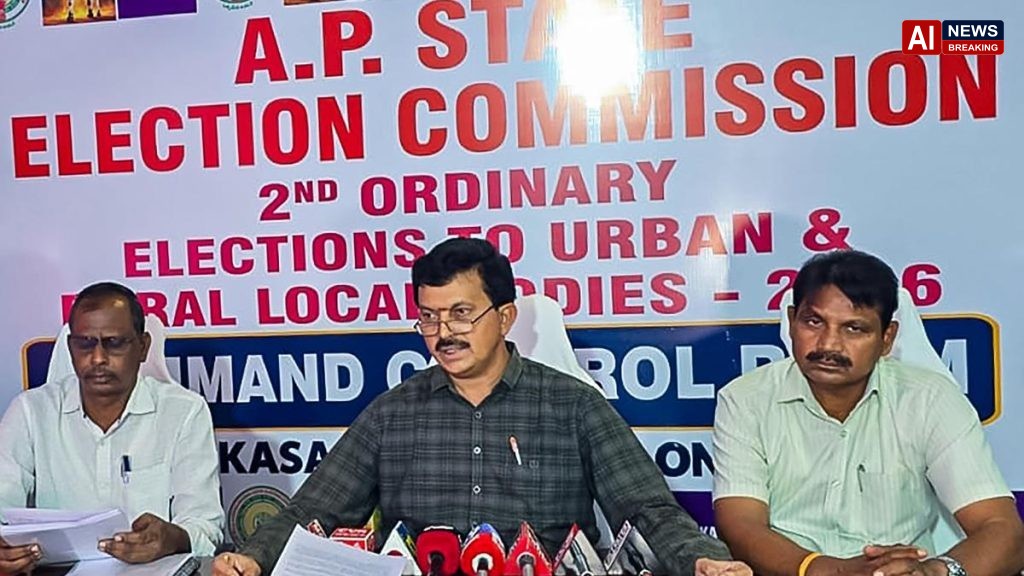
The municipal election in Ongole, a key political battleground in Andhra Pradesh, has drawn the attention of state officials and local residents alike as a record fourteen candidates vie for the mayoral seat. The Municipal Commissioner, in a briefing to the press on Thursday, confirmed that the contest will be fought across all sixty‑two wards of the city, each of which will send a representative to the newly formed council that will, in turn, elect the mayor. The unusually large field reflects a fragmented political landscape, with candidates ranging from seasoned party veterans to independent aspirants, all hoping to capitalize on the city’s growing urban profile and the promise of development projects that have been promised by the state government.The electorate for the upcoming poll numbers 1,92,873 registered voters, a figure that underscores the significance of the election for the city’s future..
Of these, 92,228 are men, while women constitute a clear majority with 1,00,591 registered voters. An additional 54 voters are listed under other categories, a small but symbolically important segment that highlights the increasing inclusivity of the electoral roll. The gender disparity, though modest, has been a point of discussion among political analysts, who note that the higher number of female voters could influence campaign strategies, especially on issues such as public health, education, and safety, which traditionally resonate more strongly with women’s groups.The municipal election is scheduled to be conducted at 224 polling stations strategically distributed throughout the city’s wards..
The Commissioner emphasized that each station has been equipped with the necessary electronic voting machines and security arrangements to ensure a smooth and transparent process. The logistical challenge of managing a vote of this scale in a city that has witnessed rapid expansion in recent years has been met with coordinated efforts from the state’s election machinery, which has also deployed additional staff to oversee the counting of votes and to address any grievances that may arise on the day of the poll.Among the fourteen candidates, the most prominent names include the incumbent mayor’s protégé, who is seeking a full term after serving as acting mayor following the resignation of the previous office‑holder. He is backed by the ruling YSR Congress Party and is campaigning on a platform of continuity, promising to complete ongoing infrastructure projects such as the new ring road and the expansion of the municipal water supply network..
Opposing him is a former municipal councilor representing the opposition Telugu Desam Party, who has vowed to prioritize waste management and the establishment of more green spaces, citing the city’s rising pollution levels as a pressing concern.The remaining candidates represent a mix of smaller regional parties, independent civic activists, and community leaders. One independent contender, a local entrepreneur, has gained visibility through a social media campaign focused on digital governance and the introduction of e‑services for citizens, aiming to reduce bureaucratic delays. Another notable entrant is a retired school teacher who has entered the fray on a platform of educational reform, pledging to improve the quality of government schools and to provide scholarships for underprivileged students..
While these candidates are unlikely to win the mayoral seat outright, their presence adds depth to the debate and forces the major parties to address a broader range of local issues.Political observers note that the sheer number of candidates could lead to a fragmented vote share, potentially resulting in a scenario where no single contender secures an outright majority in the council’s internal mayoral election. In such a case, coalition-building will become essential, and smaller parties or independents could wield disproportionate influence as kingmakers. The Commissioner’s office has reminded all participants that the election code of conduct must be strictly adhered to, warning against any attempts at voter inducement, intimidation, or the dissemination of false information that could skew the electoral outcome.The city’s civic administration has also taken steps to encourage voter participation, launching a series of awareness drives in local schools, community centers, and through televised public service announcements..
These initiatives stress the importance of each ballot, especially given the close gender balance among voters and the presence of a sizeable youth demographic that has become increasingly politically active in recent municipal elections across the state. Early data suggests that a significant proportion of eligible voters have already registered for absentee voting, a trend that may reflect the growing mobility of Ongole’s working population.Security arrangements for the polling day have been bolstered in anticipation of the large turnout. The district superintendent of police has coordinated with municipal officials to deploy additional personnel at high‑traffic polling stations and to monitor potential hotspots for unrest..
The Commissioner assured that any reports of misconduct will be swiftly investigated, and that the election commission’s observers will be present at all venues to oversee the process. This heightened security posture aims to prevent the kind of disturbances that have occasionally marred local elections in other parts of the state.The outcome of the mayoral race is expected to have implications beyond Ongole’s municipal boundaries. The city’s strategic location on the Bay of Bengal and its role as a commercial hub for surrounding agricultural districts make it a focal point for state‑level development schemes..
A mayor aligned with the ruling party could facilitate smoother implementation of projects funded by the state, while an opposition‑led council might prioritize oversight and demand greater transparency in the allocation of resources. Analysts therefore view the election as a litmus test for the broader political climate in Andhra Pradesh as the next state assembly elections approach.As the polling day draws nearer, candidates continue to hold rallies, engage in door‑to‑door canvassing, and leverage regional media to amplify their messages. Voters, equipped with the knowledge of the extensive candidate list and the demographic composition of the electorate, are poised to make a decision that will shape Ongole’s governance for the next five years..
The Municipal Commissioner concluded his briefing by urging all citizens to exercise their franchise responsibly, reminding them that the collective voice of the 1,92,873 voters will determine not only who occupies the mayor’s office but also the direction of the city’s development trajectory in an era of rapid urbanisation..
Updated: October 28, 2026
A record fourteen candidates will contest Ongole’s mayoral race across all 62 wards, with a voter roll of 1.93 lakh—women outnumbering men—prompting parties to tailor campaigns toward issues like health, education and urban development. Officials say robust security, electronic voting machines and heightened awareness drives aim to ensure a smooth, transparent poll that could reshape the city’s growth agenda and signal broader state‑level political trends.
Insight: A fragmented ballot in Ongole could hand disproportionate sway to fringe candidates, turning them into kingmakers and forcing the ruling YSR Congress to negotiate on development promises it once took for granted.
With women outnumbering men among voters, the city’s policy agenda may pivot toward health, education and safety, compelling parties to reshape their platforms or risk alienating the decisive gender majority.