Use of Chief Minister C. Joseph Vijay’s deep fake videos to collect money: Rajasthan youth moves Madras High Court seeking bail
 Florida officer took possession of man’s home after finding him dead 4 years ago, police say
 Jury weighs fate of US woman who says father forced her into Syria’s war zone when she was a teen
 France bans certain protests to restore public
17 Dead, Dozens Injured After Stampede at Indian Religious Event
**
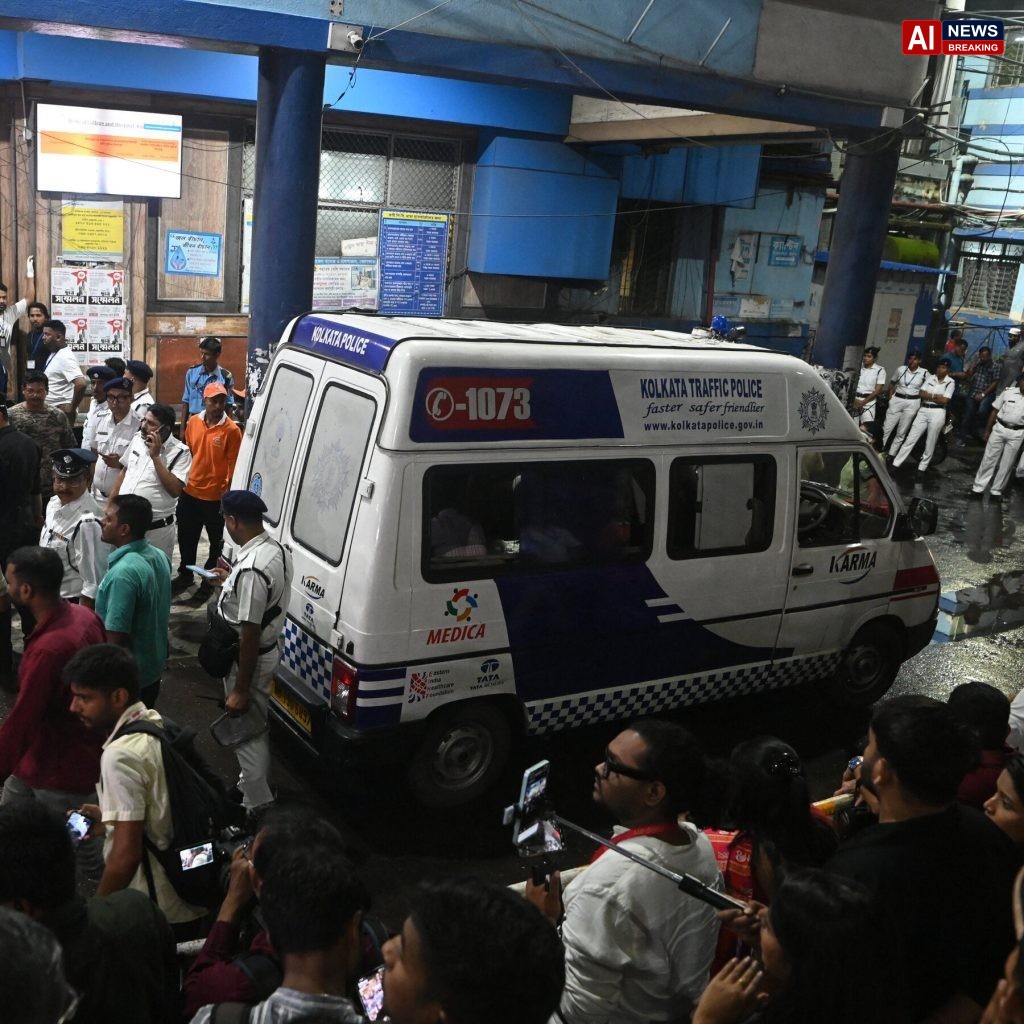
17 Dead, Dozens Injured After Stampede at Indian Religious Event - AI News Breaking
dead dozens injured stampede:
A crowd of thousands gathered at the sacred precinct of the Shri Khandeshwar Mahadev temple in the city of Nagpur on Tuesday evening, hoping to take part in a devotional ceremony that marks the start of the annual Navratri festival. What began as a religious observance turned into a tragedy when a sudden surge of people forced their way into a narrow exit, causing a stampede that left at least seventeen people dead and dozens more injured, according to official figures released by the state health department.Emergency services arrived within minutes of the first reports of the crush, but the sheer density of the crowd made it difficult for ambulances and rescue teams to reach those trapped under the mass of bodies. Hospital officials said that many of the victims suffered from suffocation, fractures and severe lacerations, injuries that are typical of crowd disasters where individuals are unable to breathe or move..
Of the injured, more than thirty required intensive care, while the majority were treated for minor wounds and shock. The death toll, confirmed by the Nagpur Medical College, includes both men and women ranging in age from teenagers to senior citizens, reflecting the wide demographic that attends the event.Police on the scene, who had been deployed to manage the flow of worshippers, were quickly overwhelmed as the crush intensified. Witnesses described a sudden “wave” of people pushing forward after a loudspeaker announcement called for devotees to move toward the exit for a concluding ritual..
In the ensuing confusion, the narrow passageway, flanked by makeshift barricades and vendor stalls, became a bottleneck. As the crowd surged, people fell, were trampled, and were unable to escape the tightening space. “I heard a loud shout and then everyone started moving at once..
It was like a wall of bodies,” said one attendee, who asked not to be named for safety reasons. “I tried to get out, but the crowd was too dense. I could not breathe.”The precise trigger for the sudden rush remains unclear..
Initial investigations by the Nagpur Police have ruled out any malicious intent, such as a bomb threat or an external attack, and focus instead on possible mismanagement of crowd control. Authorities have noted that the event’s organizers had not secured the required permits for handling a gathering of this magnitude, nor had they coordinated adequately with municipal officials to ensure safe egress routes. The police also highlighted that several on‑duty officers appeared to be unarmed and lacked proper training for managing large religious congregations, a shortfall that has been highlighted in past incidents across the country.The stampede adds to a growing list of crowd‑related tragedies in India, where high‑density gatherings at religious sites, festivals and political rallies have repeatedly resulted in loss of life..
According to a 2022 report by the National Disaster Management Authority, India records an average of 30 to 40 deaths per year from such incidents, a figure that experts say could be reduced through stricter enforcement of safety protocols. “Crowd management is a science, not an afterthought,” said Dr. Anjali Sharma, a professor of disaster studies at the Indian Institute of Technology Delhi..
“When you combine large numbers of people with limited exits, inadequate signage and insufficient personnel, the risk of a stampede rises sharply. It is essential that organizers conduct thorough risk assessments and that law enforcement is equipped with both training and resources to intervene swiftly.”In the wake of the disaster, the state government announced an immediate inquiry, appointing a senior judicial officer to head a commission that will examine the actions of the temple authorities, police and municipal officials. The commission will also review the legal framework governing public gatherings, with a view to recommending tighter regulations..
Chief Minister Devendra Fadnavis expressed his condolences to the families of the victims and pledged “prompt justice and accountability.” He also directed the health department to provide free medical care for all those injured and to ensure that the families of the deceased receive financial assistance in accordance with state policy.Religious leaders have called for calm and solidarity, urging the public not to jump to conclusions before the facts are known. The head priest of the Shri Khandeshwar Mahadev temple, who was present at the time of the crush, said that the temple had been following all traditional protocols and that the unexpected surge was beyond their control. “We mourn the loss of our brothers and sisters,” he said, “and we pray that this tragedy serves as a lesson for better safety in future gatherings.” He also appealed to devotees to cooperate with authorities during the investigation and to refrain from spreading rumors that could inflame tensions.Human rights groups, meanwhile, have warned that the incident underscores systemic shortcomings in how public safety is managed at mass events, particularly in densely populated regions..
The National Human Rights Commission issued a statement urging the central government to enforce the “Model Guidelines for Crowd Management” that were drafted in 2019 but have yet to be uniformly applied across states. “The loss of life in Nagpur is a stark reminder that without robust oversight and accountability, the rights to life and safety of citizens are jeopardized,” the statement read.Families of the victims gathered outside the temple grounds, holding candles and photos of their loved ones, demanding answers and faster action. Several relatives have filed formal complaints against the event’s organizers, alleging negligence and violation of safety norms..
Lawyers representing the affected families said they would seek compensation and demand that those found culpable be held criminally liable. “We are not just looking for monetary relief,” said one attorney, “we want systemic change that will prevent such a catastrophe from happening again.”The disaster has also sparked a broader conversation on the role of technology in crowd management. Experts point to the potential of real‑time monitoring systems, such as CCTV analytics and mobile crowd‑density tracking, to alert officials to dangerous buildups before they become lethal..
In cities like Mumbai and Delhi, pilot projects have already demonstrated that predictive algorithms can guide police to deploy resources pre‑emptively. However, implementing such systems nationwide faces challenges, including funding constraints and concerns over privacy.As the investigation proceeds, the immediate priority remains caring for the injured and supporting the bereaved. Medical teams continue to treat survivors for both physical wounds and psychological trauma, with counselors made available at nearby hospitals..
Community volunteers have set up temporary shelters for those who lost family members, providing meals and basic necessities. The atmosphere in Nagpur, normally vibrant with festival preparations, has been marked by a somber silence, broken only by the occasional prayer chant echoing from the temple courtyard.The incident serves as a painful reminder that while religious devotion brings people together, it also places a responsibility on organizers and authorities to ensure that safety measures keep pace with attendance..
A stampede at Nagpur’s Shri Khandeshwar Mahadev temple during the Navratri opening ceremony killed at least 17 people and injured dozens, officials say the crush was triggered by a sudden surge toward a narrow exit. Investigations point to inadequate crowd‑control planning and lack of permits, prompting a state‑led inquiry and calls for stricter safety regulations at mass gatherings.
The stampede exposed a systemic failure: when faith crowds outpace the infrastructure meant to contain them, lives are sacrificed. It’s a stark reminder that devotion must be matched with rigorous, technologically backed crowd‑control protocols—otherwise, the very rituals that bind communities become their own undoing.