Indonesia denies foreign claim to rescued orangutans
 Turkey hosts COP31 climate talks in Antalya.
 Pope meets Argentine bishops.
 APOD: 2026 November 8 – Major Fireball Meteor
 Indonesian Horror Hit ‘Pabrik Gula’ Gets 2028 Sequel as MD Entertainment Lines Up Three Imax Films
2 astronauts will finish upgrading ISS solar arrays during spacewalk today: Watch it live
**
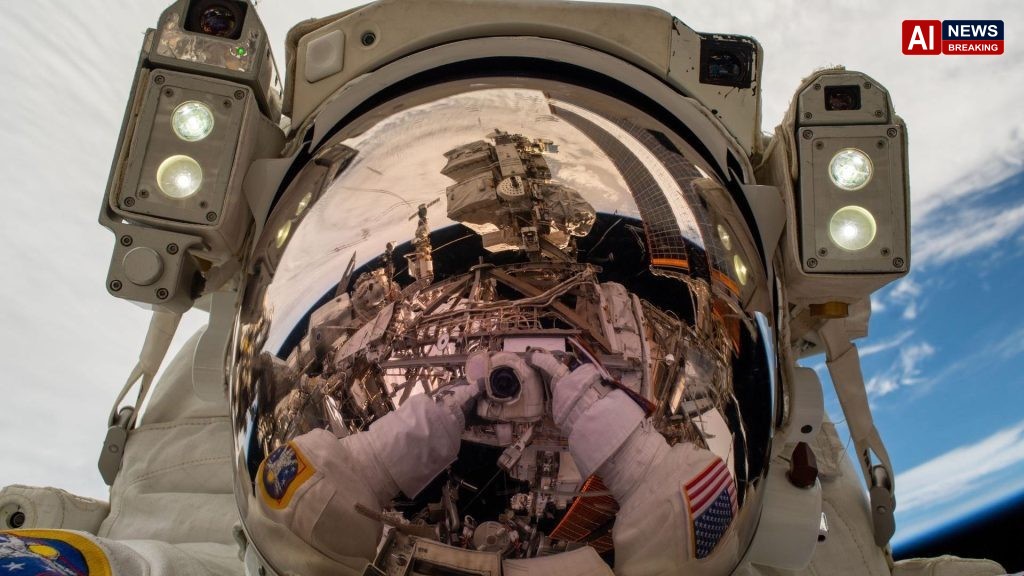
2 astronauts will finish upgrading ISS solar arrays during spacewalk today: Watch it live - AI News Breaking
NASA astronauts Anil Menon and Canadian Space Agency flight engineer Joshua Kutryk are set to complete the International Space Station’s solar‑array upgrade during a spacewalk scheduled for this morning, November 5. The pair will attach the eighth and final International Space Station Roll‑Out Solar Array (iROSA) to the station’s existing power system, bringing the total number of new panels to eight. The operation, which is expected to last roughly seven hours, will commence at 8:30 a.m..
Eastern Standard Time (1330 GMT) and will be streamed live by Space.com, with a pre‑EVA feed beginning at 7 a.m. EDT (1200 GMT).The iROSA program, launched in 2020, is part of a broader effort to modernise the ISS’s ageing power infrastructure. The station originally relied on twelve ageing silicon‑photovoltaic panels installed during its construction in the late 1990s..
While those original arrays continue to generate electricity, they have gradually lost efficiency, prompting NASA to supplement them with the lighter, more efficient roll‑out panels. Each iROSA unit consists of a thin, flexible solar‑cell blanket that unfurls like a carpet, delivering up to 20 per cent more power per unit area than the legacy panels. Over the past two years, NASA has sent eight of these units to the station aboard various cargo missions, where they have been stored and then installed during scheduled extravehicular activities.Menon and Kutryk are already seasoned in the demanding choreography required for such tasks..
This will be their second EVA in a single week, following a successful sortie on October 29 that saw them install the seventh iROSA. That earlier spacewalk marked the 100th United States‑conducted EVA from the ISS, a milestone celebrated by mission control and highlighted in a series of public briefings. The pair’s experience, coupled with extensive training on the Neutral Buoyancy Laboratory at NASA’s Johnson Space Center, has been crucial in ensuring that the complex sequence of bolt‑tightening, cabling, and connector‑verification steps proceeds without incident.The upcoming EVA will begin with the astronauts exiting the Quest airlock, a joint U.S.‑Russian module that provides a controlled environment for spacewalks..
After a brief period of repressurisation checks, Menon will tether himself to the station’s truss structure while Kutryk positions the final iROSA near the port side of the S6 truss segment. The panel will be unfolded and secured using a series of specially designed bolts that lock the array into the existing framework. Once in place, the crew will route power and data cables, connect them to the station’s electrical bus, and run a series of diagnostic checks to confirm that the new array is transmitting electricity as intended.Mission control in Houston will monitor each step through a combination of live video feeds, telemetry, and voice communication..
Engineers will be ready to intervene remotely if any anomaly appears, such as a misaligned connector or an unexpected voltage fluctuation. In the event of a serious issue, the astronauts are trained to abort the installation and return to the airlock for a safe re‑pressurisation. However, the procedures have been rehearsed extensively, and the likelihood of a full‑scale abort is low.The final iROSA is expected to raise the station’s overall power generation capacity by roughly 25 kilowatts, enough to meet the increased demand from new scientific experiments and future commercial modules slated for attachment in the coming years..
This additional power will also provide a buffer for the station’s aging Russian‑built solar arrays, extending their operational life and reducing the risk of power shortages during periods of high scientific activity.Beyond the technical benefits, the completion of the iROSA suite has symbolic significance for the partnership that underpins the ISS program. The project has been a collaborative effort involving NASA, the Canadian Space Agency, the European Space Agency, and private industry partners such as SpaceX and Northrop Grumman. Canadian astronaut Joshua Kutryk’s participation underscores Canada’s growing role in the station’s maintenance and research agenda..
His contributions to the EVA are part of a broader Canadian commitment that includes the development of Canadarm2, the station’s robotic arm, and a suite of experiments focusing on microgravity‑induced health research.Public interest in the EVA remains high, with space enthusiasts tuning in from around the globe. The live stream will feature commentary from NASA’s Public Affairs Office, providing context for each maneuver and answering viewer questions in real time. Social media platforms are also expected to amplify the event, as NASA’s official accounts share short clips and explanatory graphics..
Earlier in the week, the agency released an infographic outlining the iROSA installation sequence, aimed at demystifying the process for a lay audience.The successful integration of all eight iROSA units marks a pivotal step in the ISS’s transition toward a more sustainable power architecture. As the station approaches its planned retirement in the late 2030s, the upgrades ensure that it can continue to host a vibrant mix of scientific research, commercial activity, and international cooperation. The enhanced power margin will also support upcoming experiments that require high‑energy laser systems, advanced particle detectors, and large‑scale biology habitats, all of which depend on a stable and abundant electricity supply.Looking ahead, the crew will continue to conduct routine maintenance and scientific work throughout the week..
Following the EVA, Menon and Kutryk will re‑enter the airlock, undergo a post‑spacewalk health check, and begin the process of stowing their tools and equipment. The station’s crew, now comprised of astronauts from the United States, Canada, Japan, and Europe, will resume their scheduled research agenda, which includes investigations into protein crystallisation, fluid dynamics in microgravity, and the effects of long‑duration spaceflight on human physiology.As the final iROSA is bolted into place, the International Space Station will once again demonstrate the resilience and adaptability of an orbiting laboratory that has operated continuously for over two decades. The live broadcast offers a rare glimpse into the painstaking work that keeps the outpost functional, reminding viewers that even in the vacuum of space, progress is achieved one carefully tightened bolt at a time..
Updated: November 5, 2026
NASA astronauts Anil Menon and Canadian flight engineer Joshua Kutryk will spend roughly seven hours installing the ISS’s eighth roll‑out solar array, boosting the station’s power by about 25 kW. The live‑streamed EVA, the final step of the iROSA upgrade, underscores the international partnership that keeps the orbiting laboratory running as it nears retirement.
Insight: The successful installation of the eighth iROSA underscores the ISS’s role as a proving ground for resilient, modular infrastructure—a model that could shape future orbital habitats and commercial space stations. By extending power capacity and extending the life of aging panels, NASA and its partners are buying critical years of research and international collaboration, ensuring that the station remains a viable platform long enough to bridge the gap to the next generation of low‑Earth orbit facilities.