Indonesia denies foreign claim to rescued orangutans
 Turkey hosts COP31 climate talks in Antalya.
 Pope meets Argentine bishops.
 APOD: 2026 November 8 – Major Fireball Meteor
 Indonesian Horror Hit ‘Pabrik Gula’ Gets 2028 Sequel as MD Entertainment Lines Up Three Imax Films
3 foreign nationals allegedly used AI to mimic CEOs in $129M scheme, DOJ says
**
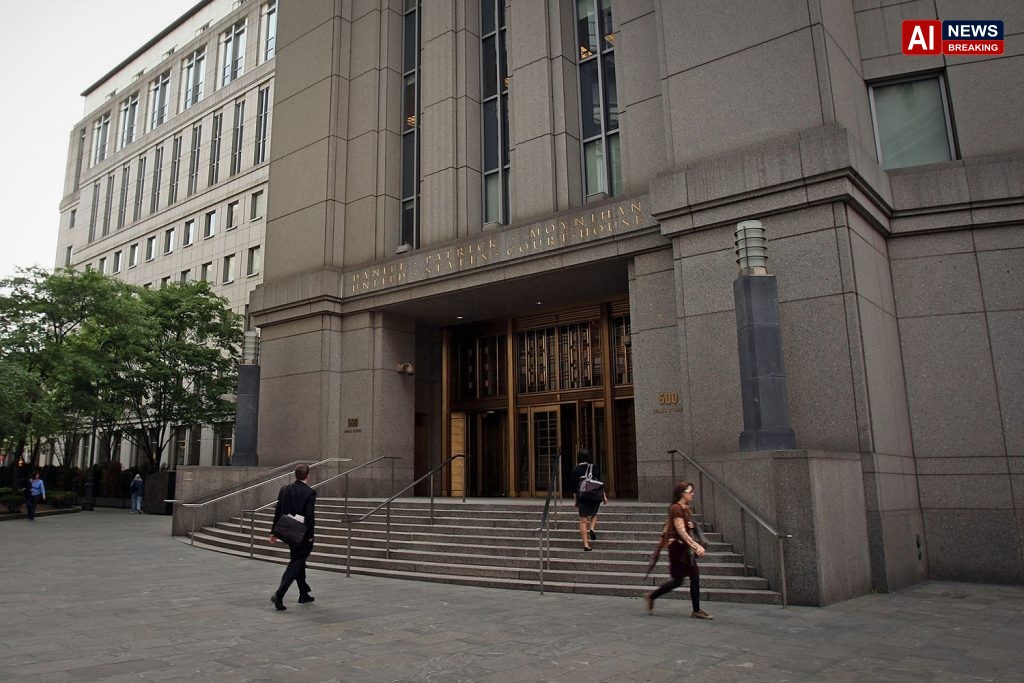
3 foreign nationals allegedly used AI to mimic CEOs in $129M scheme, DOJ says - AI News Breaking
Three foreign nationals have been charged in a sprawling fraud case that prosecutors say combined sophisticated social‑engineering tactics with artificial‑intelligence‑generated voice recordings to masquerade as senior executives and corporate lawyers. The Department of Justice, acting through the Southern District of New York, alleges that the scheme netted more than $129 million from victims in the United States and abroad between 2022 and 2024. The defendants – two citizens of Russia and one of China – are accused of orchestrating a series of “business‑email‑compromise” attacks that leveraged deep‑fake audio to convince targets that they were speaking with chief executive officers, chief financial officers or legal counsel..
The indictment, unsealed on Tuesday, marks one of the first high‑profile prosecutions in which artificial‑intelligence‑generated speech is alleged to have been a central tool in a multi‑million‑dollar fraud.According to the indictment, the conspirators first identified potential victims by scraping publicly available information from corporate filings, LinkedIn profiles and press releases. They built detailed dossiers on senior managers at publicly traded companies, focusing on individuals who regularly handled large wire transfers or oversaw merger and acquisition activity. Using this intelligence, the defendants crafted convincing email messages that appeared to originate from legitimate corporate domains, often employing slight variations of authentic addresses to evade spam filters..
The emails instructed the targeted employees to initiate urgent wire transfers to overseas accounts, citing reasons ranging from confidential acquisitions to settlement of regulatory fines.The novelty of the operation lay in its use of AI‑generated voice clips to reinforce the fraudulent narrative. Prosecutors allege that the defendants employed commercially available text‑to‑speech platforms, training the models on publicly available recordings of the CEOs and attorneys they intended to impersonate. The resulting deep‑fake audio was of sufficient fidelity to pass casual scrutiny, reproducing characteristic speech patterns, pauses and even background office ambience..
In at least six documented incidents, the deep‑fake calls were followed by a “call back” from the victim’s own phone, creating a feedback loop that made the deception appear more credible. Victims reported hearing their own voice echoing in the background, a detail the indictment says the conspirators deliberately used to mask any lingering artifacts in the synthetic speech.One of the most significant transfers involved a $37 million wire from a multinational pharmaceutical firm in New York. According to the complaint, a senior finance director received an email that appeared to come from the company’s chief financial officer, urging an immediate payment to a newly opened account in Hong Kong to secure a joint‑venture agreement..
The director, after confirming the request through a video conference, was persuaded by a voice clip that sounded indistinguishable from the CFO’s own. The funds were routed through a chain of shell companies before reaching a bank in Cyprus, from where they were quickly dispersed into cryptocurrency wallets controlled by the defendants. Similar patterns were repeated across the technology, energy and real‑estate sectors, with individual transfers ranging from $500 000 to $22 million.Law enforcement officials say the scheme was facilitated by the defendants’ access to a network of “money‑laundering intermediaries” in multiple jurisdictions..
These intermediaries, many of whom were unwitting participants, provided the offshore banking infrastructure necessary to obscure the ultimate beneficiaries of the illicit proceeds. The indictment lists at least twelve foreign financial institutions that processed the fraudulent wires, some of which have since been placed under heightened regulatory scrutiny. The Department of Justice has coordinated with the Financial Crimes Enforcement Network, the Securities and Exchange Commission and foreign law‑enforcement agencies to trace the flow of funds and to secure cooperation in the investigation.The use of AI‑generated voice in the fraud prompted a swift response from technology firms whose platforms were implicated..
Representatives from two leading text‑to‑speech providers issued statements saying they were “deeply concerned” about the misuse of their services and that they had already implemented stricter usage policies, including enhanced identity verification for corporate accounts. Both companies are cooperating with investigators, providing logs that detail how the defendants accessed the systems, the volume of generated audio and the specific parameters used to mimic the targeted individuals. The incident has reignited a broader debate within the tech community about the responsibility of AI developers to embed safeguards against malicious applications of their tools.Legal scholars note that the case raises novel questions about the intersection of emerging technology and existing fraud statutes..
While the underlying conduct – misrepresentation to obtain money – falls squarely within established wire‑fraud and money‑laundering statutes, the incorporation of AI‑generated speech adds a layer of complexity to both detection and prosecution. Professor Elena Ramirez, a cyber‑law specialist at Georgetown University, observes that “the law has not yet caught up with the speed at which synthetic media can be produced and weaponized. This case will likely become a reference point for future legislation aimed at regulating deep‑fake technology.” The Department of Justice has indicated that it intends to seek a maximum sentence for each defendant, citing the “extensive planning, the use of advanced technology, and the substantial financial harm inflicted on victims.”Victims of the scheme have begun to file civil actions against the companies that provided the AI services, as well as against the financial institutions that processed the fraudulent transfers..
A coalition of affected firms has lodged a joint complaint in the Southern District of New York, alleging negligence in allowing their platforms to be used for illicit purposes. In response, the banks have cited their compliance with existing anti‑money‑laundering protocols and have pledged to cooperate fully with ongoing investigations. The civil suits are expected to explore the extent to which service providers can be held liable for downstream misuse of their products, a legal frontier that remains largely unsettled.The indictment also highlights the role of human oversight – or lack thereof – in preventing such schemes..
In several instances, employees who received the deep‑fake calls reported feeling uneasy but proceeded with the transfers after receiving what they believed to be verbal confirmation from a trusted executive. Internal audit reports obtained by journalists reveal that many of the targeted companies lacked robust verification procedures for large, time‑sensitive wire transfers. Some firms have since revised their policies, instituting multi‑factor authentication that includes biometric checks and mandatory voice‑recognition verification when executives are consulted remotely..
Industry groups, including the American Bankers Association, have issued advisories urging member institutions to train staff on recognizing synthetic media and to adopt stricter controls for cross‑border payments.International cooperation proved pivotal in assembling the case. The investigation involved coordination with law‑enforcement agencies in Russia, China, Cyprus, Hong Kong and several European Union member states. Mutual legal assistance treaties facilitated the seizure of digital assets held in cryptocurrency exchanges and the freezing of bank accounts linked to the shell corporations..
The defendants, all of whom remain at large, are believed.
Updated: November 6, 2026
Three Russian and Chinese nationals have been indicted in a $129 million business‑email‑compromise scheme that used AI‑generated voice deep‑fakes to impersonate corporate executives and secure large wire transfers. The DOJ says the fraud spanned multiple sectors, routed money through offshore banks and crypto wallets, and marks one of the first high‑profile prosecutions centered on synthetic‑speech technology.
Insight: AI‑crafted voices have turned social‑engineering from a psychological trick into a believable “human” threat, exposing how easily corporate trust can be hijacked when verification still relies on presumed authenticity. The case forces regulators and tech firms to confront a looming arms race: building safeguards fast enough to outpace deep‑fake tools