A Corruption Scandal Is Reshaping Brazil’s Presidential Election
  US citizen injured in Illinois after ICE agents mistook him for fugitive, tried to arrest him
  At 10 years old, Smithsonian’s Black museum is undaunted amid pressure from Trump administration
  Beleaguered at Home, a Bellicose Netanyahu Heads to the U.N.
  Family to release cellphone report in Nolan Wells case
 AAP MP Raghav Chadha Urges Government to Allow Married Couples to File Joint Income Tax Returns
Aam Aadmi Party MP Raghav Chadha has urged the government to introduce an optional joint filing system for Income Tax Returns for married couples, aiming to make the tax structure fairer and more aligned with household financial realities, and to reduce tax inequities for families with uneven income distribution between spouses.
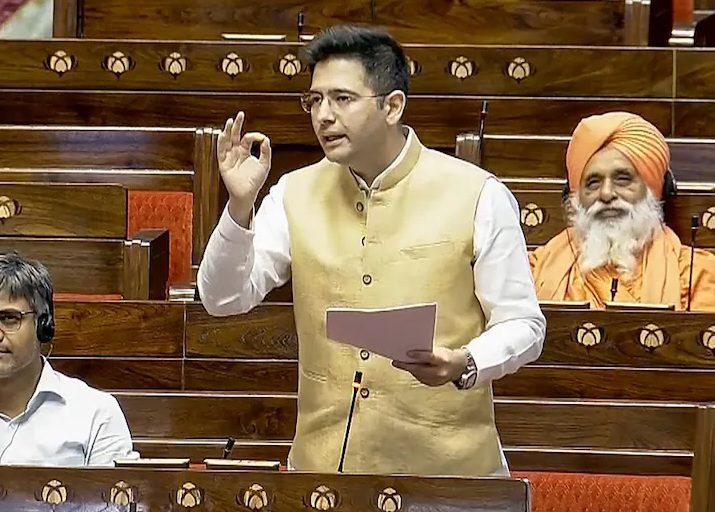
In a significant proposal aimed at reforming India’s income tax framework, Raghav Chadha, Member of Parliament from the Aam Aadmi Party, has urged the government to introduce an optional joint filing system for Income Tax Returns (ITR) for married couples. The suggestion was raised in the Rajya Sabha during discussions on financial and tax policy reforms.
Chadha argued that the current taxation system in India treats spouses as separate individual taxpayers, which can lead to inequitable tax burdens for families where one spouse earns significantly more than the other. He proposed that allowing couples to file taxes jointly—similar to systems in several developed economies—could make the tax structure fairer and more aligned with the financial realities of households.
The Key Proposal: Joint Filing of Income Tax Returns
During his speech in Parliament, Chadha emphasized that Indian families often operate as a single economic unit, sharing expenses, savings, and investments. However, the tax system treats them as two separate individuals at the time of filing taxes.
He recommended introducing an optional joint taxation model, allowing married couples to combine their income while filing tax returns.
According to Chadha, the goal of the proposal is to ensure that families with unequal income distribution between spouses are not unfairly penalized by the tax system.
In a statement shared publicly, he summarized the issue:
“One roof, one kitchen, one household budget — but when tax time comes, the system sees two individuals.”
The Tax Inequality Example
To explain the potential unfairness in the current system, Chadha presented a comparison between two hypothetical families:
Family A
- Husband earns: ₹10 lakh
- Wife earns: ₹10 lakh
- Combined income: ₹20 lakh
Under India’s new tax regime, income up to ₹12 lakh is tax-free for salaried taxpayers, so each spouse individually falls within the zero-tax bracket.
Result: The couple pays no income tax.
Family B
- Husband earns: ₹20 lakh
- Wife: Homemaker
Even though the combined family income is the same (₹20 lakh), the entire amount is taxed under one individual’s name.
Result: The family may have to pay approximately ₹1.92 lakh in income tax.
Chadha argued that this difference occurs simply because of how income is distributed between spouses, rather than the overall household earning capacity.
Why Joint Filing Could Change the System
The proposed system could transform how families approach taxation. If joint filing were allowed:
- Spouses could combine their incomes while calculating taxes.
- Tax slabs could apply to the total household income.
- Families with single earners would not face disproportionate tax liabilities.
In the earlier example, if joint filing were allowed, both families with ₹20 lakh total income could potentially fall within the same tax bracket, leading to similar tax outcomes.
Chadha said such a policy would recognize the shared financial responsibilities within marriages, especially when one partner chooses to focus on caregiving or household responsibilities.
Global Practices: Not a New Concept
Chadha noted that joint tax filing is common in many advanced economies, including:
- The United States
- Germany
- France
These countries allow married couples to file taxes jointly, often offering tax benefits or more favorable brackets for households with uneven incomes.
Such systems acknowledge that family finances are often integrated, making joint taxation more reflective of real-world economic arrangements.
Support from Tax Experts and ICAI
The proposal is not entirely new. Tax experts and professional bodies have discussed the idea before.
The Institute of Chartered Accountants of India (ICAI) has repeatedly recommended introducing joint taxation for married couples in its pre-budget memorandums.
According to tax professionals, such a system could:
- Simplify tax planning for families
- Encourage savings and investment decisions at the household level
- Reduce perceived inequities in the current structure
However, despite these suggestions, the government has not yet included any joint taxation provision in the latest income tax rules or recent budget proposals.
Additional Financial Reform Suggestions
Apart from joint ITR filing, Chadha also raised other issues affecting ordinary citizens.
1. Removal of Minimum Balance Penalties
He suggested eliminating penalties charged by banks for failing to maintain minimum account balances.
According to him, banks collected around ₹19,000 crore in such penalties over the past three years, often affecting low-income account holders the most.
2. Restoring Tax Exemption for Disability Pensions
Chadha also advocated restoring full income tax exemption for disability pensions for injured soldiers, regardless of whether they were invalided out of service.
These proposals were framed as part of a broader effort to make financial systems “fairer, more humane and more just.”
Potential Benefits for Indian Families
If implemented, the joint ITR filing system could bring several benefits:
Fairer Tax Burden
Families with a single income earner would not pay disproportionately higher taxes compared to dual-income households.
Recognition of Unpaid Work
It would acknowledge the economic contribution of spouses who manage households or raise children without earning formal income.
Simplified Financial Planning
Joint filing could allow couples to plan investments, deductions, and tax savings collectively.
Alignment with Global Tax Practices
It would bring India’s taxation structure closer to systems used in several developed countries.
Challenges and Policy Considerations
Despite its potential benefits, implementing joint taxation would require careful policy design.
Some experts warn that:
- It could reduce tax revenues in certain cases.
- The tax department would need new systems for processing joint filings.
- Rules would be required to address issues like divorce, separation, or death of a spouse.
There is also a debate among economists about whether joint taxation might discourage workforce participation among secondary earners in some cases.
Because of these complexities, policymakers would likely need to conduct detailed impact studies before introducing such a system.
Government’s Current Position
As of now, the Indian government has not announced any plans to introduce joint filing of income tax returns.
The idea was not included in the Union Budget 2026 or in recent tax law amendments.
However, Chadha’s remarks in Parliament have revived public debate on whether India’s tax system should evolve to reflect modern household financial structures.
Growing Debate on Tax Reform in India
The discussion comes at a time when India is already undertaking significant changes in its tax regime.
Recent reforms include:
- Expansion of the new tax regime
- Higher rebate limits for salaried taxpayers
- Simplified tax slabs
Experts believe that joint filing could be the next major step in restructuring the country’s personal income tax system.