Europe warns of Russia’s hybrid attacks but struggles to counter them
  Former chief election commissioner calls SIR scheme illegal.
  A Corruption Scandal Is Reshaping Brazil’s Presidential Election
  US citizen injured in Illinois after ICE agents mistook him for fugitive, tried to arrest him
  At 10 years old, Smithsonian’s Black museum is undaunted amid pressure from Trump administration
 Nepal Prime Minister Balendra Shah’s Blunder Sparks Indo-Nepal Border Crisis

Nepal-India Border Tensions Escalate: A Delicate Balance
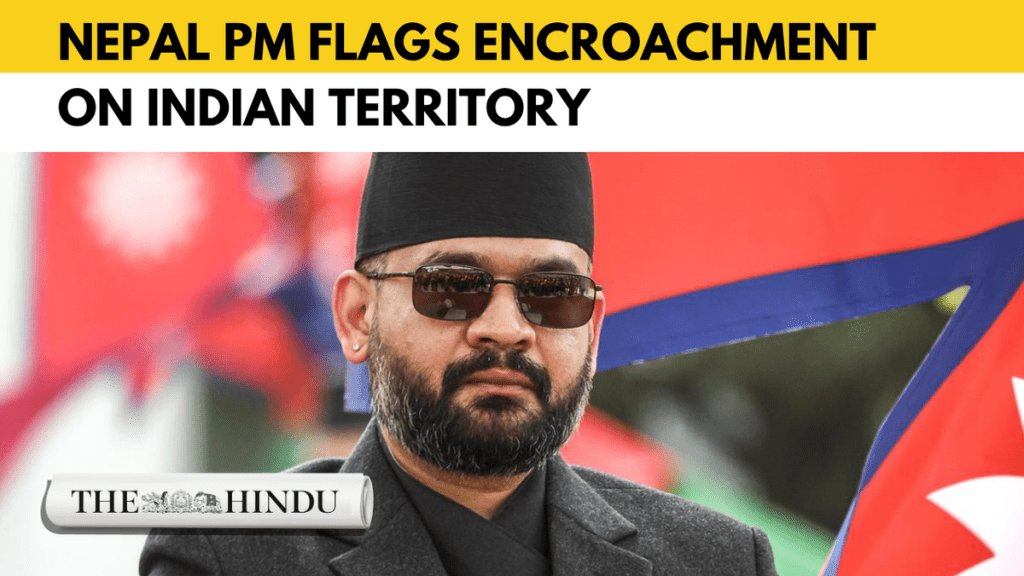
In a recent bombshell statement, Nepal Prime Minister Balendra Shah sparked a major diplomatic row by claiming that Nepal has encroached on Indian territory.
The remark sent shockwaves through the Indian Parliament and raised eyebrows in both Nepal and India.
Updated: June 1, 2026
Nepal-India Border Tensions Escalate: A Delicate Balance
In a recent bombshell statement, Nepal Prime Minister Balendra Shah sparked a major diplomatic row by claiming that Nepal has encroached on Indian territory. The remark sent shockwaves through the Indian Parliament and raised eyebrows in both Nepal and India. But what exactly happened, and what’s at stake in this sensitive border dispute?
What Happened
Nepal’s Prime Minister Balendra Shah made the remarks in Parliament, triggering an immediate reaction from the Indian government and media. However, before the situation could escalate further, the Nepalese government quickly issued a clarification, stating that the encroachment was due to technical factors related to shifting river boundaries. While the clarification may have diffused the immediate tensions, the incident has raised concerns about the delicate balance of power in the region.
Background
The Indo-Nepal border issue has been simmering for decades. The two countries share a 1,800-kilometer border, with the Kosi, Mahakali, and other rivers acting as natural barriers. The border was originally marked in 1814 and 1816 with the Treaty of Sugauli, but disputes over the boundary have persisted. In recent years, tensions have flared over issues such as land distribution, water rights, and the movement of people across the border.
Key Concerns
The border dispute is not just about territory; it also has far-reaching implications for trade, migration, and national security. India has long been a major trading partner for Nepal, with the two countries sharing a significant trade imbalance. However, the border tensions have also led to fears of increased migration and security threats. India has also been concerned about the influence of neighboring countries, including China, which has been making significant inroads into the region.
Real-World Impact
The border tensions have already taken a toll on India-Nepal relations. Trade between the two countries has slowed, and there have been reports of increased checks and restrictions on movement across the border. The situation has also led to concerns about the impact on the local population on both sides of the border, who have historically relied on the open border for economic and social exchange.
What Next
The border dispute highlights the need for sustained diplomatic efforts to resolve the issue. The Indian and Nepalese governments have expressed a desire to resolve the dispute through dialogue, and both countries have established committees to address the issue. Despite the challenges, experts believe that a resolution to the border dispute is possible with sustained efforts from both sides. The situation serves as a reminder of the importance of maintaining good neighborly relations in this increasingly complex and interconnected world.
The recent Nepal-India border tensions showcase the fragile balance of power in the Himalayan region, where economic, security, and cultural interests converge. This delicate dance of diplomacy will not only determine the fate of India-Nepal relations but also impact regional geopolitics, as other powers, like China, weigh in on the situation.
This is a developing story. More updates will follow as new information becomes available.