
 Matcha popularity rises in India.
  Namma BMTC 2.0 app brings bus and metro ticketing and live-tracking under one platform
  Trump’s 5,000 ‘Dividend’ Promise Sparks Bribery Claims as GOP Faces Crucial Midterms
  Why Yemen Is Back on the Brink of War
  Delhi HC Questions Unverified Posts Against Gaurav Bhatia, Asks CJP Leaders to Consider Voluntary Takedown
 India Signals Tougher Red Warning Labels on Food Packs as Supreme Court Pushes for Stricter Rules
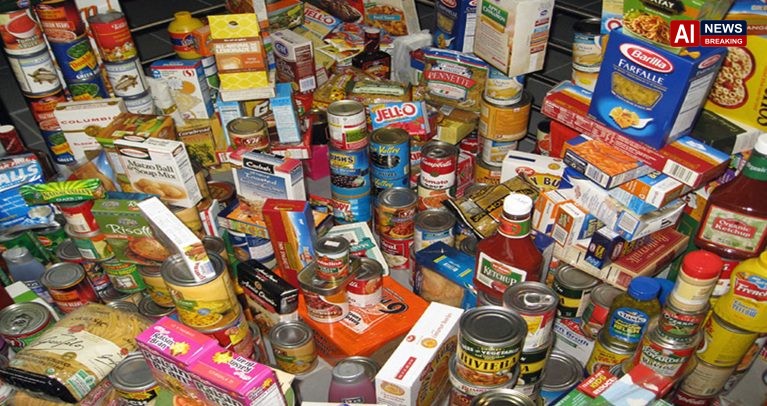
india signals tougher warning:
New Delhi: India has signalled that it is willing to consider tougher front-of-pack warning labels on packaged foods after the Supreme Court questioned why stricter nutritional warnings should be introduced only in phases. The development could significantly change how companies selling biscuits, snacks, cereals, beverages, packaged meals and other processed foods market their products in India.
The Food Safety and Standards Authority of India (FSSAI) had proposed a two-stage system under which prominent red warning labels would initially apply to products high in at least two of three nutrients — added sugar, salt or saturated fat. A second phase was expected to extend the warnings to products exceeding the limit for even one of those nutrients.
During Thursday’s Supreme Court hearing, however, the government indicated that the two phases could potentially be implemented together. That would mean a packaged food product could face a red warning if it is high in any one of the specified nutrients.
Supreme Court questions the two-phase approach
The latest development came after the Supreme Court questioned the logic of waiting for a second phase before applying stricter warnings.
Justice J.B. Pardiwala pressed the government’s lawyer on why a warning should require a product to be high in both sugar and salt, rather than addressing each nutritional risk separately.
Responding to the court’s concerns, Additional Solicitor General Brijender Chahar, representing the government, said the Centre could consider bringing the proposed phases into effect “in one go”.
Such a change would represent a substantial strengthening of the proposed framework and could place a much larger number of packaged food products under the warning-label regime.
What would the red warnings look like?
Under the FSSAI proposal, warning symbols would appear prominently on the front of packaged food products.
The proposed red hexagonal warnings could identify products containing high levels of:
- Added sugar
- Salt
- Saturated fat
The objective is to make nutritional risks easier for consumers to recognise without requiring them to study detailed nutrition tables on the back of a package.
The proposed thresholds are based on nutritional recommendations including the Dietary Guidelines for Indians, 2024, developed by the Indian Council of Medical Research and the National Institute of Nutrition.
The proposed labels could carry straightforward declarations such as “HIGH SUGAR”, “HIGH SALT” and “HIGH FAT”, allowing shoppers to identify products of concern more quickly.
Why food companies are worried
The prospect of stricter warnings is a major concern for India’s packaged food and beverage industry, which is worth more than $100 billion.
International companies including Nestlé, PepsiCo, Unilever, Mondelez and Mars compete alongside major Indian companies such as ITC and Dabur in a market that also includes thousands of smaller food manufacturers.
A prominent red warning on the front of a packet could influence consumer perceptions even before shoppers examine a product’s ingredients or price.
Industry representatives have therefore questioned whether the proposed system should assess nutritional content according to 100 grams of product or according to the amount normally consumed in a serving.
During the court proceedings, an industry lawyer used pickle as an example, arguing that consumers would not normally consume 100 grams of pickle in one sitting. The industry therefore favours a serving-based approach.
Industry fears warnings could spread across traditional foods
The debate is not limited to biscuits, sugary drinks and ultra-processed snacks.
Food manufacturers argue that strict thresholds could result in warnings appearing on a wide range of traditional Indian foods.
The industry has previously warned that products such as namkeen, sweets and other commonly consumed foods could be affected by the proposed thresholds.
This has created a difficult regulatory balance. Health campaigners argue that the warning system must accurately identify nutritional risks, while manufacturers say the system should account for portion sizes and the way different foods are traditionally consumed.
Health activists wanted an even tougher system
Health groups have criticised the original FSSAI proposal because they believe requiring two nutrients to cross their limits could allow products high in only one potentially harmful nutrient to escape a warning.
The group 3S And Our Health challenged the proposal before the Supreme Court, arguing that a product high in sugar alone could still pose significant health risks.
The group described the two-nutrient requirement as an “industry-friendly loophole”, according to Reuters.
The dispute has therefore placed the government between two opposing positions.
Health advocates want warnings that are comprehensive enough to identify individual nutritional risks. Food companies, meanwhile, are concerned that broad warning requirements could negatively affect sales and brand perception.
India’s obesity problem adds urgency
The debate comes as India faces growing concerns about obesity, diabetes and diet-related illnesses.
According to a study cited in recent reporting, around 180 million Indian adults were overweight or obese in 2021, with the figure projected to reach approximately 450 million by 2050 if current trends continue.
The growth in consumption of processed and packaged foods has added to concerns among public-health experts.
Supporters of front-of-pack warnings argue that consumers should be able to identify products with high levels of sugar, salt or saturated fat without having to interpret complicated nutritional information.
Global experience strengthens the case for warning labels
India’s debate is also taking place against the backdrop of food-labelling experiments in other countries.
Chile, for example, introduced prominent black warning symbols for foods high in nutrients such as sugar, salt and saturated fat. Research cited in the debate has linked the Chilean system to a 23.7% decline in purchases of sugary drinks during the first 18 months following implementation.
Indian health advocates have pointed to such international examples while arguing that consumers respond more effectively to simple warnings than to complicated nutritional tables.
The Indian food industry, however, maintains that international systems cannot necessarily be copied directly because Indian diets, serving sizes and traditional foods are different.
FSSAI also wants to tackle misleading health claims
The food-labelling controversy extends beyond red warning symbols.
FSSAI has also expressed concern about marketing claims that could create an overly healthy impression of packaged products.
Terms such as “healthy”, “natural” and “100% pure” have increasingly become part of the regulatory debate. FSSAI has indicated that misleading claims can influence consumers even when the nutritional composition of a product tells a different story.
That means the future regulatory framework could involve not only warning symbols but also tighter scrutiny of the language and claims companies use on packaging.
What could change for consumers?
If the stricter approach is adopted, consumers could see a significant change in supermarket packaging.
Instead of relying primarily on nutrition tables, shoppers could immediately see red warnings identifying products high in sugar, salt or saturated fat.
For example, a product exceeding the prescribed sugar threshold could receive a HIGH SUGAR warning even if its salt and fat levels remain within the permitted range.
Similarly, a product high in salt could receive a warning independently of its sugar content.
That would be a major departure from the initial proposal, under which a product generally needed to exceed thresholds in at least two nutritional categories during the first phase.
Key Points
1. India is considering tougher food warnings: The government has indicated that it is open to implementing stricter red warnings in a single phase.
2. One nutrient could be enough: The tougher approach could require warnings when a product is high in added sugar, salt or saturated fat individually.
3. Food companies face a major impact: A broader warning regime could affect a large number of packaged food and beverage products and potentially influence consumer demand.
4. Health activists want stronger protection: Campaigners have argued that the original two-nutrient requirement could allow products high in one harmful nutrient to escape warnings.
5. Supreme Court intervention is central: The court has questioned the phased approach and emphasised the importance of public health, particularly for children.
AI News Breaking Insight
India’s food-label debate is becoming much bigger than a question of packaging design. It is turning into a test of how far the government is prepared to go when public-health objectives collide with the commercial interests of a powerful consumer industry.
A red warning on the front of a packet could fundamentally change the economics of food marketing. Products that have traditionally relied on branding, celebrity endorsements or claims such as “healthy” and “natural” may increasingly have to compete with a highly visible nutritional warning.
For consumers, the change could be significant: instead of searching through small-print nutrition tables, shoppers may be able to identify major nutritional risks at a glance.
For food companies, however, the consequences could extend from packaging redesign and reformulation to changes in advertising strategies and consumer demand.
The Supreme Court’s intervention therefore marks an important turning point. If India ultimately adopts a system in which one high-risk nutrient is enough to trigger a prominent red warning, the country’s packaged-food market could enter a new era of nutritional transparency.