 Trump calls for united Ireland; US State Dept reaffirms neutrality
  In Flood-Stricken Nepal, a Cool Gust Carries Hopes of a Miracle Rescue
  BRICS Summit 2026: Modi, Xi Jinping and Putin Back New Delhi Declaration as Global South Pushes for a Bigger Voice
  UK data shows fall in high-paying jobs for CS and economics grads
 BRICS Summit 2026: Modi, Xi Jinping and Putin Back New Delhi Declaration as Global South Pushes for a Bigger Voice
brics summit 2026 modi:
New Delhi | September 12, 2026
The 18th BRICS Summit in New Delhi has produced a major political statement with leaders adopting the New Delhi Declaration and calling for changes to the international system, including stronger representation for developing countries. Prime Minister Narendra Modi used India’s chairmanship to push a people-centric agenda, global governance reform and practical cooperation, while China’s Xi Jinping and Russia’s Vladimir Putin brought their own geopolitical priorities to a summit taking place amid wars, trade tensions and pressure on global supply chains.
The declaration addresses multilateral reform, trade, terrorism, maritime security and the use of local currencies in intra-BRICS trade. Bilateral diplomacy has been equally important, with Modi holding talks with Putin and engaging with Xi as India seeks to balance strategic autonomy, economic interests and its relationships with major powers.
Key Points
- BRICS leaders adopted the New Delhi Declaration at the 18th summit in New Delhi.
- The declaration calls for reform of global institutions, including a structural update of the UN Security Council.
- BRICS criticised unilateral tariff and non-tariff measures and backed a stronger, rules-based multilateral trading system.
- Prime Minister Narendra Modi called for a new and ambitious agenda for BRICS for the next 20 years.
- Modi and Russian President Vladimir Putin discussed bilateral cooperation, trade, energy, defence, space and conflicts affecting maritime security.
- China’s Xi Jinping urged BRICS members to oppose violations of sovereignty and interference in internal affairs.
The summit gives India an opportunity to position BRICS as a practical platform for the Global South rather than only a geopolitical counterweight.
BRICS Summit 2026 opens with a changing global order in the background
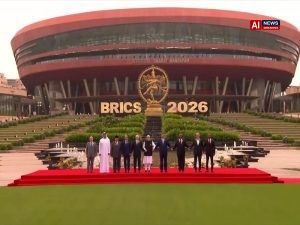
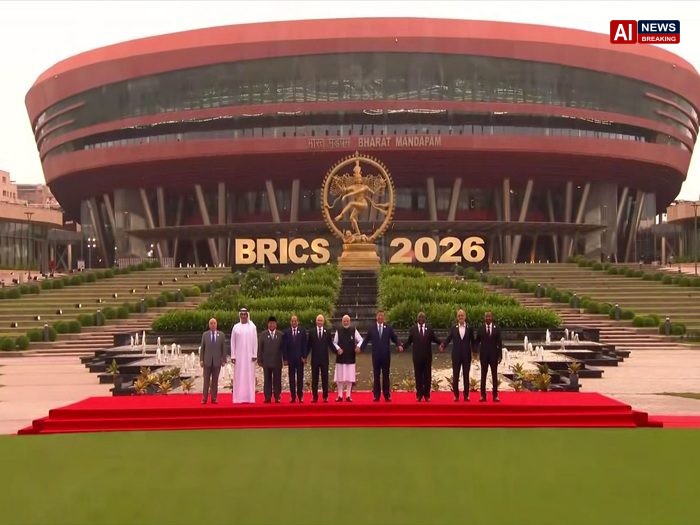
New Delhi’s Bharat Mandapam became the centre of international diplomacy on September 12 as leaders of the expanded BRICS grouping gathered for the 18th BRICS Summit under India’s chairmanship. The meeting comes at a moment when the global economy and security system are under simultaneous pressure from armed conflicts, trade restrictions, disrupted shipping routes, strategic rivalry and a growing debate over whether institutions created in an earlier era still reflect today’s distribution of economic and political power.
Prime Minister Narendra Modi welcomed the participating leaders and described BRICS as having reached a “coming of age” moment after two decades of evolution. His central message was that the group now needs to convert its consensus into practical outcomes. India’s chairmanship has been organised around “Building for Resilience, Innovation, Cooperation and Sustainability”, with a stated emphasis on a people-centric and “Humanity First” approach.
That framing is important because BRICS has changed considerably from the original Brazil-Russia-India-China-South Africa grouping. Its expansion has brought in major energy producers, large emerging economies and countries with very different diplomatic alignments. The result is a bloc with substantial economic and demographic weight but also considerable internal diversity.
The New Delhi summit therefore has two stories running in parallel. The first is institutional: can BRICS create mechanisms that make cooperation more useful to businesses, governments and citizens? The second is geopolitical: can countries that disagree on security questions still coordinate around trade, development, finance and global governance?
India’s approach has been to emphasise the first story without ignoring the second. That gives New Delhi room to work with Russia and China while also strengthening ties with the UAE, Saudi Arabia, Indonesia, Egypt, Ethiopia and other partners.
The New Delhi Declaration becomes the summit’s central outcome
The most significant formal outcome of the summit is the adoption of the New Delhi Declaration. Prime Minister Modi announced the consensus document on Saturday, giving the meeting a common political framework covering global governance, trade, security and development.
The declaration calls for reforms to multilateral institutions and specifically backs a structural update of the United Nations Security Council. It also supports greater representation for developing countries from Africa, Asia and Latin America and the Caribbean. China and Russia, both permanent members of the Security Council, reiterated support for the aspirations of Brazil and India to play a larger role at the United Nations, including on the Council.
For India, this is a significant diplomatic point. New Delhi has long argued that the architecture of global governance has not kept pace with the rise of emerging economies. The BRICS platform allows India to make that argument in a broader coalition while avoiding the impression that the issue is solely an India-specific campaign for a permanent Security Council seat.
The declaration also strongly condemns terrorism and refers to the April 22, 2025 terrorist attack in Jammu and Kashmir’s Pahalgam, in which 26 people were killed. It reiterates opposition to terrorism in all forms, including cross-border movement of terrorists, terrorism financing and safe havens.
Another important section concerns trade. BRICS leaders expressed concern over unilateral tariff and non-tariff measures and warned that protectionism can disrupt global supply chains and deepen economic disparities. The bloc reaffirmed support for World Trade Organization reform and for an open, transparent, equitable and rules-based trading system.
The document also supports increasing the use of local currencies in intra-BRICS trade. This does not amount to an immediate replacement of the US dollar, but it is politically significant because reducing dependence on a single dominant currency has been an ongoing discussion within the expanded grouping.
The practical challenge now is implementation. Declarations can create diplomatic direction, but their long-term value depends on whether governments develop payment mechanisms, financing channels, customs cooperation, investment platforms and other tools that businesses can actually use.
Modi’s 20-year vision: from consensus to delivery
Modi’s intervention at the summit went beyond a list of current priorities. He argued that BRICS needs a new and ambitious agenda for the next 20 years and suggested that the grouping should improve its own internal working systems as it becomes larger and more influential.
The argument reflects a basic problem created by expansion. A small group of countries with broadly similar economic-development concerns can reach consensus relatively easily. An expanded BRICS, by contrast, includes countries with competing interests, different foreign-policy relationships and different exposures to sanctions, energy markets and Western financial systems.
India’s emphasis on resilience, innovation, cooperation and sustainability is an attempt to provide a broad umbrella under which these differences can coexist. Instead of requiring every member to agree on every geopolitical dispute, BRICS can focus on areas where cooperation produces measurable benefits.
That could include critical minerals, food security, energy security, digital public infrastructure, artificial intelligence, healthcare, clean energy, logistics, maritime safety and development finance.
Modi also highlighted a structural imbalance in global decision-making, arguing that the Global South is often heavily affected by international crises while having less influence over the institutions that make the rules. His proposal is essentially to move from a hierarchy of privilege toward a broader partnership model.
That message has resonance beyond BRICS. Many developing countries want access to technology and capital without being forced into rigid geopolitical camps. They also want a greater role in setting rules on emerging technologies, trade and finance.
India’s diplomatic opportunity is to make BRICS a platform for those demands without turning it into a purely anti-Western organisation. That distinction is central to New Delhi’s foreign policy. India maintains major economic and strategic relationships with the United States, Europe, Japan and other partners while simultaneously engaging Russia, China and the wider Global South.
Modi-Putin talks underline the depth of the India-Russia relationship
The bilateral meeting between Modi and Putin on the sidelines of the summit added another layer to the New Delhi gathering. The two leaders reviewed the India-Russia Special and Privileged Strategic Partnership and discussed cooperation across trade, energy, defence, space and people-to-people relations.
According to reporting from the summit, their conversation also covered conflicts in the Middle East and the Black Sea region, both of which have consequences for maritime trade and the safety of Indian seafarers. Modi reiterated India’s position that dialogue and diplomacy are the way forward and said India is ready to contribute to peace efforts.
The economic relationship is particularly important. India and Russia have maintained substantial energy and strategic links despite the changing international environment. The bilateral agenda has increasingly included efforts to expand trade beyond traditional areas and develop cooperation in sectors such as fertilisers, critical minerals and industrial production.
The appearance of Modi and Putin together at the INNOPROM exhibition in Delhi was another signal that economic engagement remains central to the relationship. The exhibition brought companies from the two countries together and provided a commercial dimension to the leaders’ political discussions.
The reported discussion of a long-term bilateral trade target also shows why Russia remains important to India’s economic strategy. For New Delhi, the objective is not simply to preserve legacy ties but to diversify the relationship into manufacturing, technology, investment and supply chains.
The Russia relationship nevertheless operates within a complicated international environment. India must manage its partnerships with Moscow alongside relations with the United States and European countries. That is why India repeatedly stresses strategic autonomy rather than formal alignment.
Xi Jinping’s BRICS message and the India-China dimension
Chinese President Xi Jinping’s presence at the New Delhi summit is especially significant because India-China relations have been improving cautiously after years of military tension. The two countries remain competitors in several strategic and economic areas, but sustained diplomatic engagement has reduced some of the immediate friction.
Xi told the summit that BRICS countries should oppose violations of sovereignty and interference in the internal affairs of other states and should participate constructively in resolving international hotspots. He also said that the ongoing war in the Middle East does not serve the common interests of the international community.
These positions fit China’s broader emphasis on sovereignty and non-interference, but they also illustrate the diplomatic language through which BRICS members try to find common ground despite their differences.
For India, the significance of Xi’s participation goes beyond the summit room. Any improvement in India-China relations can affect trade, border stability, regional diplomacy and the ability of both countries to cooperate inside multilateral institutions.
New Delhi is unlikely to treat BRICS cooperation as a substitute for resolving bilateral disputes with Beijing. Instead, India’s approach is likely to remain issue-specific: cooperate where interests overlap, compete where interests diverge and maintain channels for dialogue where disagreements are serious.
The broader BRICS setting makes that approach easier. India can engage China as a major economic and geopolitical actor while simultaneously working with other BRICS members to strengthen the voice of emerging economies.
The presence of Xi, Putin and Modi together therefore carries symbolic importance. It demonstrates that the three countries can occupy the same diplomatic space even while pursuing distinct national strategies.
Middle East war raises the stakes for BRICS diplomacy
The Middle East conflict has given the summit an immediate security dimension. The fighting has affected energy markets, commercial shipping, maritime insurance and the security of seafarers. For countries such as India, which depend heavily on imported energy and international trade routes, instability in the region can quickly become an economic issue.
The BRICS Declaration addresses the wider consequences of conflict by stressing the importance of safe navigation and the protection of commercial shipping. That language matters because disruption at sea can affect supply chains far beyond the countries directly involved in a conflict.
Iranian President Masoud Pezeshkian’s participation has also brought the war and sanctions debate directly into the summit environment. He criticised US sanctions and argued against measures that disrupt another country’s economy.
India’s position is more nuanced. New Delhi has maintained longstanding relations with Iran while also developing strong strategic and economic partnerships with the Gulf states and the United States. That makes de-escalation and freedom of navigation particularly important to Indian interests.
The summit’s discussion of conflict therefore cannot be separated from economics. Oil prices, shipping costs, insurance premiums, fertiliser availability and supply-chain reliability can all be affected by geopolitical instability.
BRICS is unlikely to resolve the Middle East conflict. Its more realistic role is to provide another diplomatic channel through which major developing countries can express common concerns and support dialogue.
That is consistent with India’s broader approach: avoid bloc politics where possible, encourage diplomacy and protect national economic and security interests.
Trade, tariffs and the fight over the future of globalisation
Trade policy is one of the most consequential economic themes of the New Delhi Declaration. BRICS members warned that unilateral tariffs and non-tariff measures can undermine the multilateral trading system, disrupt supply chains and create uncertainty for businesses.
The criticism comes at a time when governments around the world are increasingly using tariffs, industrial policy and strategic trade controls to protect domestic industries and reduce dependence on foreign suppliers. Some of these policies are motivated by national-security concerns, while others seek to build domestic manufacturing capacity.
For emerging economies, the challenge is balancing strategic industrial policy with the benefits of open markets. Countries need investment, technology and access to export markets, but they also want resilience against external shocks.
India’s own economic strategy reflects this tension. New Delhi has promoted domestic manufacturing and supply-chain diversification while seeking deeper trade and investment relationships with multiple regions.
BRICS can potentially play a useful role by creating practical mechanisms for customs cooperation, payment settlement, standards coordination and investment facilitation. But the bloc will have to overcome substantial differences in economic structure and policy.
The declaration’s support for WTO reform is therefore important. Rather than abandoning multilateral trade rules, BRICS is presenting itself as a group seeking to reshape them.
The use of local currencies is another part of that effort. Increasing local-currency settlement could reduce transaction costs and exposure to exchange-rate or sanctions risks in selected bilateral trade corridors. However, building a truly large-scale alternative to the dollar-based financial system would require deep capital markets, convertibility, liquidity and confidence in multiple currencies.
The most likely outcome is gradual diversification rather than an overnight monetary revolution.
BRICS and the question of de-dollarisation
The discussion of local currencies has generated considerable attention because BRICS is often portrayed as a vehicle for challenging the dominance of the US dollar. The reality is more complicated.
The New Delhi Declaration’s support for increasing local-currency use in intra-BRICS trade indicates a desire to make cross-border commerce less dependent on a single settlement currency. That can be useful for countries seeking to reduce transaction friction or manage sanctions and financial risks.
But currency internationalisation requires more than political agreement. Businesses need predictable exchange rates, deep financial markets, reliable payment infrastructure and the ability to move capital efficiently. The dollar remains deeply embedded in global trade, investment and financial markets.
BRICS therefore faces a practical rather than rhetorical test. If the group can build interoperable payment systems, strengthen local-currency settlement and develop financial institutions that businesses trust, its monetary cooperation could gradually become more important.
The issue is especially relevant for India because the country is simultaneously pursuing digital payment innovation and maintaining extensive relationships with dollar-based global markets.
A pragmatic approach would be to expand alternatives without attempting to eliminate existing systems. That would increase resilience while preserving access to the global financial architecture.
In this sense, BRICS’ monetary debate is less about replacing the dollar immediately and more about reducing concentration risk over time.
Global South representation becomes the political core of the summit
Perhaps the most important long-term theme of the New Delhi summit is representation. BRICS leaders are presenting the group as a platform through which emerging and developing economies can demand a larger role in institutions that shape global policy.
The Security Council debate is the clearest example. India and Brazil have long sought permanent membership, while African countries have pushed for stronger representation. Support from Russia and China for greater representation gives the issue added diplomatic weight, although actual reform requires agreement far beyond BRICS.
The same argument applies to financial institutions and global economic rule-making. Developing countries are increasingly significant contributors to global growth, manufacturing and consumption, yet their influence over some international institutions has not always increased at the same pace.
India’s chairmanship has sought to connect these structural concerns with practical cooperation. The aim is not simply to issue statements but to create projects and institutions that deliver benefits.
That could become the most durable measure of the 2026 summit. If BRICS can improve access to development finance, strengthen trade links, support technology sharing and create more resilient supply chains, it can demonstrate the value of a larger Global South coalition.
If it remains mainly a forum for declarations, its influence will be more limited.
The challenge is therefore institutional credibility. A larger BRICS must show that expansion creates capacity rather than simply increasing the number of flags around the table.
Energy, critical minerals and supply-chain resilience
The summit also highlights an increasingly important economic reality: geopolitical competition is moving from traditional military alliances toward control of technology, energy and critical inputs.
India’s bilateral discussions with countries including the UAE, Malaysia and Ethiopia have focused on areas such as critical minerals, semiconductors, clean energy, food security and infrastructure. These topics are directly connected to the resilience agenda of India’s BRICS chairmanship.
Critical minerals are especially important because they are essential to batteries, electronics, renewable-energy equipment, defence systems and advanced manufacturing. Countries that depend heavily on concentrated sources of supply can become vulnerable to geopolitical pressure or export restrictions.
BRICS members collectively possess significant energy and natural-resource assets, as well as major industrial and consumer markets. Coordinating investment and supply chains could therefore create economic advantages.
But cooperation will require transparency and commercial viability. Companies will invest where infrastructure, contracts, financing and regulatory conditions are reliable.
The UAE’s growing role in India’s strategic partnership illustrates the changing nature of BRICS-era diplomacy. Defence cooperation now sits alongside AI, space, clean energy and critical minerals.
Malaysia brings another set of opportunities, including semiconductors, infrastructure and talent mobility. Ethiopia adds potential in agriculture, healthcare, investment and critical minerals.
These bilateral relationships show why the BRICS summit should not be viewed only through the lens of Modi-Xi-Putin diplomacy. Much of its practical economic value lies in the network of relationships India can build with middle and emerging powers.
BRICS expansion creates opportunity — and a coordination problem
The expanded BRICS grouping represents a substantial share of the world’s population and economic activity. That gives the organisation obvious weight, but size alone does not guarantee influence.
The group includes countries with different political systems, economic models, foreign-policy priorities and relationships with Western powers. Some members are major energy exporters; others are large manufacturing economies or rapidly growing consumer markets.
That diversity can be an advantage when BRICS seeks to represent the broader Global South. It can also make consensus more difficult.
India’s chairmanship has attempted to manage this through an emphasis on consensus and practical cooperation. The idea is to avoid forcing members into a single geopolitical position and instead concentrate on issues where interests overlap.
This is particularly important because BRICS is often described as a counterweight to Western institutions. Such a description captures part of the geopolitical debate but risks overlooking the economic motivations of many members.
Countries may join BRICS because they want more trade, investment, development finance, technology cooperation or diplomatic influence. They do not necessarily want a confrontation with the United States or Europe.
The future effectiveness of BRICS will therefore depend on whether it can remain open enough to accommodate different strategic choices while still producing common policies.
India’s diplomatic experience gives it an important role in that process. New Delhi has consistently sought relationships across competing power centres, and its chairmanship reflects that balancing strategy.
Why the summit matters for India
For India, hosting the 2026 BRICS Summit is both a diplomatic opportunity and a test of leadership. The country is trying to establish itself as a major power with an independent foreign policy while avoiding the constraints of formal alliance politics.
The summit allows India to engage simultaneously with Russia, China, Iran, Gulf countries, African states and Southeast Asian partners. That breadth is valuable because India’s economic and security interests increasingly span multiple regions.
The domestic economic implications are also significant. Greater cooperation in critical minerals, manufacturing, digital technology, energy, food security and logistics could support India’s long-term development goals.
At the same time, India has to ensure that BRICS cooperation does not create unnecessary friction with its other major partners. The country’s trade and investment links with the United States and Europe remain important, as do security partnerships with countries such as Japan and Australia.
This is why the language of the summit has generally focused on reform rather than rupture. India is asking for a more representative global system without necessarily advocating the destruction of the existing one.
That position could become increasingly important as the world moves toward a more fragmented but interconnected economic order.
The success of India’s BRICS presidency will ultimately be judged less by the number of high-profile meetings and more by what survives after the leaders leave New Delhi: new trade arrangements, investment projects, financial mechanisms, technology partnerships and diplomatic initiatives.
Delhi’s summit diplomacy extends beyond the main plenary
The summit has also generated a large number of bilateral engagements. Modi held discussions with leaders from the UAE, Malaysia, Vietnam and Ethiopia, with agendas covering defence, AI, space, semiconductors, critical minerals, clean energy, healthcare, investment and food security.
These meetings demonstrate how modern summit diplomacy works. The formal BRICS agenda may focus on declarations and collective positions, but much of the economic value is created in smaller bilateral meetings.
For India, each conversation serves a different purpose. Relations with the UAE are increasingly broad, extending from defence and energy into AI and space. Malaysia offers opportunities in semiconductors and critical minerals. Ethiopia provides scope for cooperation in investment, healthcare, clean energy and capacity building. Vietnam is strategically important for India’s Act East policy and Indo-Pacific engagement.
The arrival of partner-country leaders also expands the summit’s reach beyond the 11 full BRICS members. Partner arrangements provide a way for countries to participate without immediately becoming full members.
That model may help BRICS manage future expansion. Instead of continuously enlarging the core group, it can create layers of participation around trade, finance, technology and development.
For India, this is another way to project influence without relying solely on formal institutions.
The maritime security message is more important than it may appear
One of the less headline-grabbing issues at the summit is maritime security, yet it has direct economic significance. Conflicts in the Middle East and around the Black Sea have demonstrated how quickly military developments can affect shipping routes.
India is particularly sensitive to disruptions because its economy relies on extensive international trade and energy imports. Indian seafarers also work across global shipping networks, making their safety a national concern.
The Modi-Putin discussions touched on conflicts affecting maritime trade, while the broader BRICS declaration emphasised the safety of seafarers and commercial navigation.
This points toward an area where BRICS could potentially develop practical cooperation. Member states could improve information sharing, emergency coordination, maritime training and mechanisms for protecting commercial shipping.
Such cooperation would not require BRICS members to agree on every aspect of foreign policy. Maritime safety is a concrete shared interest.
It also connects directly with supply-chain resilience. A secure shipping network reduces insurance costs, delays and price shocks.
For an organisation increasingly focused on economic resilience, this may become one of the most practical areas for future work.
The AI and technology agenda could shape BRICS’ next decade
Artificial intelligence and emerging technology are increasingly becoming part of India’s international economic diplomacy. The summit’s discussions and bilateral meetings reflect that shift.
India has positioned itself as a major digital economy and has increasingly promoted digital public infrastructure as a development tool. Other BRICS countries are pursuing their own AI, semiconductor, cloud and advanced manufacturing strategies.
A coordinated BRICS technology agenda could address several shared problems: access to computing infrastructure, responsible AI standards, data governance, cybersecurity, digital skills and technology transfer.
But technology cooperation will be difficult because major countries also compete intensely in AI and semiconductors. Export controls, intellectual-property rules and national-security concerns can limit collaboration.
India’s proposal for greater Global South participation in the development of future technologies and the rules governing them is therefore significant. It seeks to ensure that developing countries are not merely consumers of technology created elsewhere.
If BRICS can develop common training programmes, research networks and technology partnerships without requiring uniform national policies, the grouping could build a meaningful innovation ecosystem.
That would align directly with India’s chairmanship theme of resilience and innovation.
What the summit can realistically achieve
Expectations around BRICS are often inflated. The grouping is not a military alliance, does not have a unified foreign policy and cannot by itself redesign the international financial system.
Its strength lies elsewhere: collective bargaining power, economic scale and the ability to bring countries with different strategic relationships into the same conversation.
The New Delhi summit can therefore be considered successful if it produces a stronger framework for practical cooperation.
The first test is implementation of the declaration. Governments will need to convert commitments on trade, finance, maritime security and institutional reform into concrete programmes.
The second is economic connectivity. Local-currency trade, payment interoperability and customs cooperation can be measured by actual transaction volumes rather than political statements.
The third is institutional efficiency. As membership grows, BRICS will need processes that prevent meetings from becoming unwieldy and ensure that initiatives are followed through.
The fourth is strategic balance. India will want BRICS to remain useful without turning it into a rigid anti-Western bloc. Other members will have their own calculations.
The fifth is credibility with the Global South. Countries outside the core grouping will watch whether BRICS produces practical benefits or mainly serves the interests of its largest members.
The road ahead after New Delhi
When the summit ends, the political symbolism will gradually fade and implementation will become the real test.
The New Delhi Declaration provides a broad agenda: reform global institutions, strengthen the role of developing countries, defend multilateral trade, oppose terrorism, protect maritime commerce and increase cooperation among BRICS economies.
Each of those goals faces obstacles. Security Council reform requires consensus beyond BRICS. WTO reform requires cooperation with countries outside the bloc. Local-currency trade requires financial infrastructure. Supply-chain resilience requires investment. Technology cooperation requires trust.
Yet the same obstacles explain why the summit matters. The global system is becoming more fragmented, and countries are looking for ways to reduce vulnerability without completely abandoning international cooperation.
India’s strategy is to use BRICS as one platform within a wider network of relationships. That approach gives New Delhi flexibility. It can work with Russia on energy and defence, China on selected multilateral issues, Gulf partners on investment and energy, Southeast Asia on connectivity and supply chains, and Western economies on technology and trade.
The result is not a simple new bloc replacing an old one. It is a more complicated international system in which countries increasingly cooperate issue by issue.
The BRICS Summit 2026 captures that transition. Its importance lies not only in the leaders who met in Delhi but in the institutional choices they made about what comes next.
AI Insight: BRICS is moving from a political acronym toward an economic operating platform
The most important signal from the New Delhi summit is that BRICS is attempting to move beyond its old image as a loose grouping of large emerging economies. The adoption of the New Delhi Declaration, the emphasis on WTO reform, local-currency settlement, maritime security, critical minerals and technology suggests an effort to build a more operational platform.
The geopolitical dimension remains unavoidable. China, Russia and India represent three major strategic centres, while Iran, the Gulf countries and other members bring energy and regional-security considerations into the group. But the strongest case for BRICS is economic rather than ideological.
If the bloc can create practical mechanisms for trade settlement, investment, supply-chain resilience, development finance and technology cooperation, its influence could increase substantially even without becoming a formal alliance.
For India, this is potentially the most valuable outcome. New Delhi can use BRICS to increase the bargaining power of developing economies while maintaining strategic autonomy and continuing partnerships outside the bloc.
The biggest risk is fragmentation. A larger membership can produce more political statements without producing more implementation. The next phase will therefore depend on execution.
The New Delhi summit has established an ambitious direction. Whether BRICS becomes a durable pillar of the emerging global economic order will depend on what member states actually build after the cameras leave Bharat Mandapam.