 Trump calls for united Ireland; US State Dept reaffirms neutrality
  In Flood-Stricken Nepal, a Cool Gust Carries Hopes of a Miracle Rescue
  BRICS Summit 2026: Modi, Xi Jinping and Putin Back New Delhi Declaration as Global South Pushes for a Bigger Voice
  UK data shows fall in high-paying jobs for CS and economics grads
 Trump calls united Ireland ‘fantastic’ during Dublin visit
**
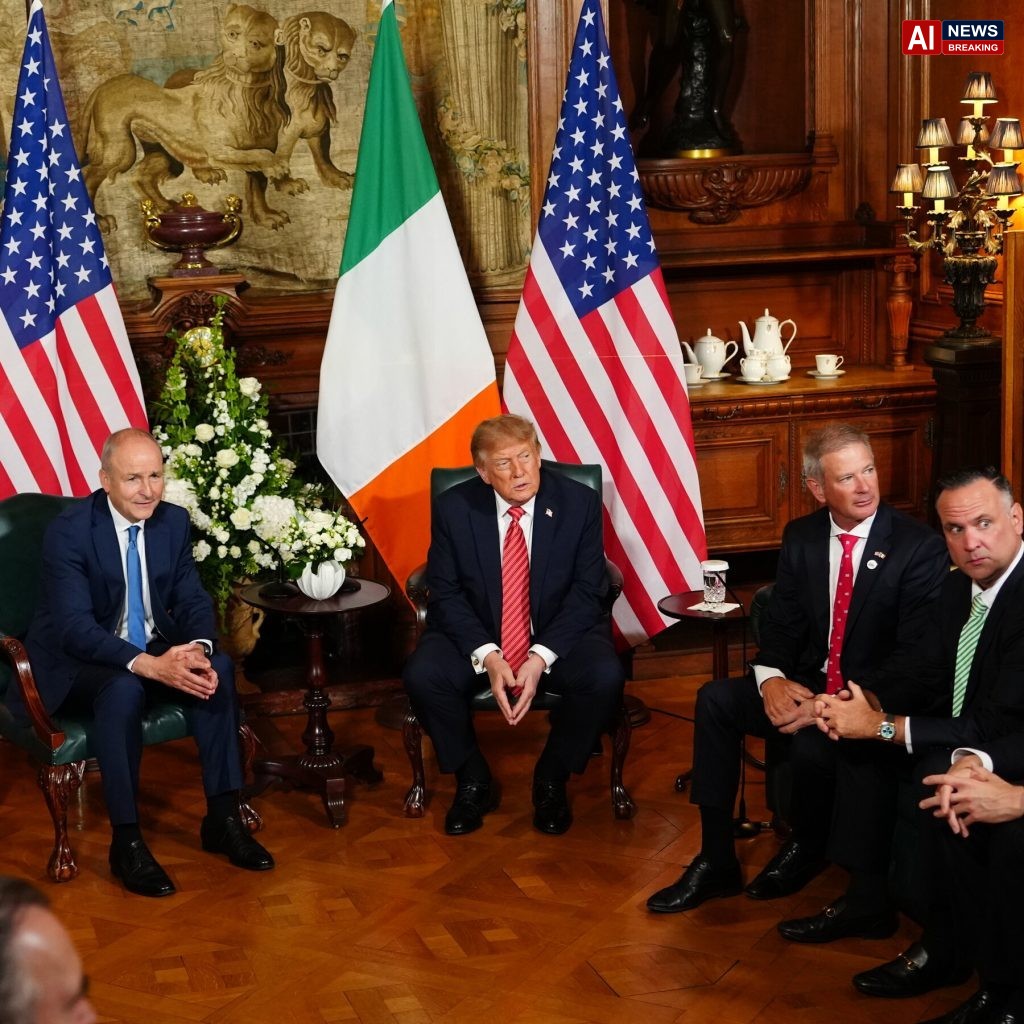
Trump Says Irish Unification Would Be ‘Fantastic,’ Breaking With Precedent - AI News Breaking
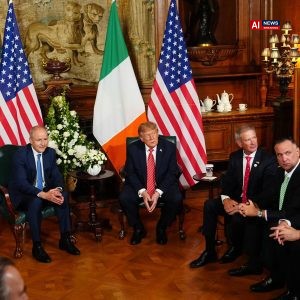
Donald Trump, the former president of the United States, has described the prospect of a united Ireland as “fantastic,” a statement that marks a departure from the traditionally cautious American stance on the island’s constitutional status. Speaking at a press conference in Dublin during a visit that included meetings with Irish leaders and a tour of historic sites, Trump said that a single, sovereign Ireland would bring “greater stability and prosperity” to the region. The comment was immediately noted by analysts as a rare public endorsement of Irish reunification by a figure who, while in office, adhered to a policy of strict neutrality on the matter.The United Kingdom and the Republic of Ireland have, since the Good Friday Agreement of 1998, managed a delicate balance that respects the right of the people of Northern Ireland to determine their constitutional future through a democratic process..
The accord, which helped bring an end to three decades of sectarian conflict known as the Troubles, established a framework whereby a border poll could be called if it appears that a majority of the population wishes to reunite with the Republic. The United States, for its part, has historically played a supportive but impartial role, offering diplomatic encouragement for peace while avoiding any overt political pressure on either side.Trump’s remarks arrived against a backdrop of shifting demographics and political dynamics in Northern Ireland. Recent census data show a modest but steady increase in the proportion of residents who identify as Irish rather than British, while younger voters tend to express more openness to the idea of a united island..
At the same time, Brexit has re‑ignited debate about the border, as the United Kingdom’s departure from the European Union removed the shared regulatory framework that had underpinned the open border on the island. The resulting trade and customs complexities have given renewed urgency to discussions about the long‑term constitutional arrangement.U.S. officials responded swiftly to clarify the administration’s official position..
A spokesperson for the State Department reiterated that Washington remains “committed to the principles of the Good Friday Agreement and will continue to support a peaceful, democratic process.” The statement emphasized that any change in the status of Northern Ireland must be the result of a freely expressed will of its people, in line with the consent principle that underpins the peace settlement. This diplomatic language seeks to balance the former president’s enthusiastic comment with the need to preserve the United States’ reputation as an impartial mediator.Irish Taoiseach Leo Varadkar welcomed the former president’s enthusiasm but cautioned against oversimplifying a complex issue. In a brief interview, Varadkar noted that “the desire for unity must be examined through the lens of economic viability, social cohesion and the aspirations of communities on both sides of the border.” He added that the Irish government remains committed to working with the United Kingdom and the European Union to ensure that any future referendum would be conducted fairly and without external pressure..
The Taoiseach’s measured response reflects a broader consensus among Irish politicians that any move toward reunification must be grounded in practical considerations as much as in symbolic support.British Prime Minister Rishi Sunak, whose government is currently navigating post‑Brexit trade arrangements, issued a more guarded reaction. Sunak affirmed the United Kingdom’s respect for the Good Friday Agreement and highlighted that “any decision about the future of Northern Ireland will be taken by the people who live there.” He also warned that premature external commentary could complicate delicate negotiations on the Northern Ireland Protocol, a set of rules designed to avoid a hard border on the island while keeping the UK aligned with EU customs standards. The prime minister’s remarks underscore the political sensitivity surrounding the protocol, which has been a flashpoint between London and Dublin since its implementation.Political scientists point out that Trump’s endorsement, while noteworthy, is unlikely to shift the substantive trajectory of the reunification debate..
Siobhan O’Leary, a lecturer in Irish studies at Queen’s University Belfast, argued that “public opinion in Northern Ireland remains deeply divided, and any referendum would require a clear and sustained majority for change.” She noted that previous polls have shown only a slim margin in favour of reunification, with unionist communities still expressing a strong preference for remaining within the United Kingdom. The expert added that external praise, even from a high‑profile figure, does not replace the need for robust economic planning and cross‑community dialogue.Economists also weigh in on the potential costs and benefits of a united Ireland. A joint report published last month by the Irish Fiscal Advisory Council and the Institute for Fiscal Studies in the UK estimated that a transition to a single jurisdiction could entail short‑term fiscal adjustments, particularly in aligning public services, taxation and social welfare systems..
However, the analysis identified long‑term gains from a larger internal market, streamlined infrastructure investment and the elimination of regulatory divergence. The report stressed that these outcomes would hinge on careful policy design and substantial investment, factors that would require coordination between Dublin, London and Brussels.The reaction among Northern Irish political parties reflects the entrenched divisions that have defined the region’s politics for generations. Sinn Féin, the nationalist party that advocates for reunification, hailed Trump’s comment as “a positive signal of international support” and called for renewed discussions on a border poll..
In contrast, the Democratic Unionist Party (DUP), which represents the unionist electorate, dismissed the former U.S. president’s remarks as “political posturing” with no relevance to the lived reality of Northern Irish communities. The Social Democratic and Labour Party (SDLP) and the Alliance Party, both of which occupy centrist positions, urged calm and reiterated the need for any decision to emerge from an inclusive, transparent process.In Washington, the reaction among lawmakers mirrors the broader partisan split that characterised Trump’s own presidency..
Republican members of the Senate Foreign Relations Committee praised the former president’s enthusiasm, suggesting that U.S. support could bolster the economic case for reunification. Democratic senators, however, warned that any overt U.S..
endorsement could jeopardise the delicate balance achieved by the Good Friday Agreement and risk inflaming tensions. A bipartisan letter to the ary of State urged the administration to reaffirm its commitment to neutrality and to continue facilitating dialogue between the British and Irish governments.The broader geopolitical context cannot be ignored. As Europe grapples with the aftermath of Brexit, the prospect of a united Ireland carries implications for EU‑UK relations, particularly concerning trade, security cooperation and the movement of people..
The European Commission has signalled readiness to support any peaceful, democratic outcome, while also emphasizing that any change must respect existing legal frameworks. In the United States, the evolving relationship with the UK—still a key NATO ally—adds another layer of diplomatic nuance to the conversation.
Updated: September 12, 2026
This isn’t just political theater; it’s a wake-up call that demographics are quietly rewriting the island’s destiny.
The real battleground now shifts from rhetoric to the cold hard math of economic viability.