 BRICS Summit 2026: PM Modi Warns Against Weaponisation of Technology and Critical Minerals, Puts Four-Pillar Vision at Centre
  Greater Noida magistrate files Supreme Court petition after High Court releases student activist.
  Blue Jays’ Veteran Castoff Leaves New Team Amid Shutout Debut
  How Iran’s Hard-liners Blew Up the Peace Deal with Trump
  Jarkiholi denies challenging ED over Mangalore probe
 BRICS Summit 2026: PM Modi Warns Against Weaponisation of Technology and Critical Minerals, Puts Four-Pillar Vision at Centre
BRICS Summit 2026: PM Modi Warns Against Weaponisation of Technology and Critical Minerals, Puts Four-Pillar Vision at Centre - AI News Breaking
brics summit 2026 modi:
New Delhi: Prime Minister Narendra Modi has issued a strong warning against the growing use of technology and critical minerals as strategic instruments of geopolitical pressure, saying such “weaponisation” could hinder shared progress and undermine the economic development ambitions of emerging economies.
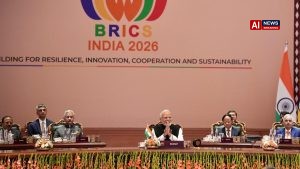
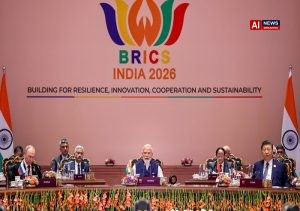
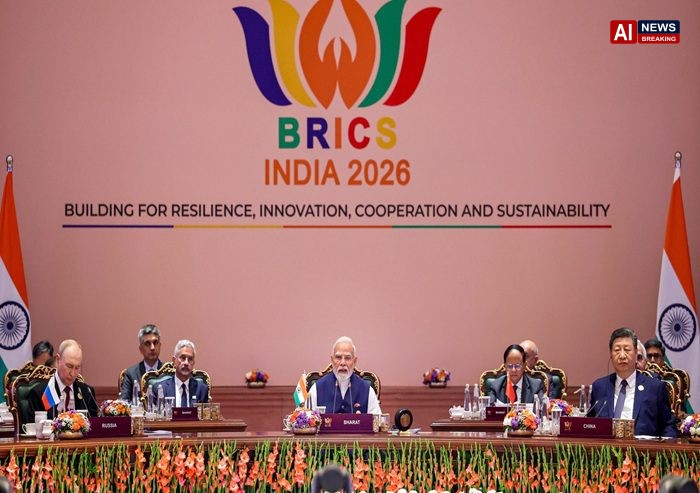
Addressing the concluding sessions of the 18th BRICS Summit in New Delhi on Sunday, September 13, Modi said India’s chairship of the grouping had been guided by four interconnected priorities — resilience, innovation, cooperation and sustainability. The Prime Minister argued that these pillars must move beyond diplomatic declarations and become mechanisms for practical cooperation capable of delivering tangible benefits to people across BRICS and the wider Global South.
His warning came at a time when access to advanced technologies, semiconductor-related materials, rare earth elements, energy resources and other critical minerals has become increasingly intertwined with national security, industrial policy and international trade. The issue has gained particular importance as countries seek to reduce dependence on concentrated supply chains and protect access to materials required for electric vehicles, renewable energy, advanced manufacturing, defence systems and digital infrastructure.
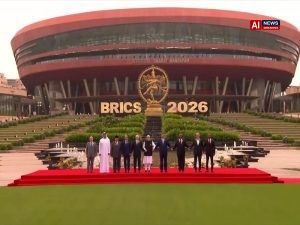
Modi’s remarks also carried wider geopolitical significance because Chinese President Xi Jinping, Russian President Vladimir Putin and other leaders of the expanded BRICS grouping were present at the summit. The meeting brought together countries with very different political systems, economic priorities and foreign-policy interests but with a shared interest in strengthening the voice of emerging and developing economies in global affairs.
Key Points
- PM Modi warned that weaponisation of technology and critical minerals could hinder shared global progress.
- India’s BRICS chairship focused on resilience, innovation, cooperation and sustainability.
- New Delhi pushed for inclusive access to technology and stronger, more resilient supply chains.
- BRICS leaders adopted the New Delhi Declaration covering geopolitical, economic, energy and development issues.
- India promoted practical initiatives involving logistics, startups, health security, energy storage, agriculture and technology.
PM Modi’s Four-Pillar Vision for BRICS
India’s presidency of BRICS in 2026 was built around four central concepts: resilience, innovation, cooperation and sustainability.
The four pillars reflect the challenges confronting emerging economies in an increasingly fragmented global economy.
Resilience has become particularly important because supply chains have been repeatedly disrupted by wars, sanctions, trade restrictions, geopolitical tensions, pandemics, extreme weather and energy-market shocks.
Innovation has emerged as a crucial requirement as artificial intelligence, advanced manufacturing, digital platforms, biotechnology and clean-energy technologies rapidly transform economies.
Cooperation is necessary because no single emerging economy can independently address every challenge involving global trade, health security, energy, climate change or technology.
Sustainability, meanwhile, has become central to the long-term development debate as BRICS economies attempt to expand while simultaneously addressing climate risks, energy security and environmental pressures.
India’s approach therefore attempted to connect economic growth with strategic resilience rather than treating these as separate policy objectives.
At the summit, Modi argued that BRICS must convert its growing influence into practical outcomes. The Prime Minister’s message was that the bloc should move beyond declarations and frameworks and focus increasingly on implementation and real-world impact.
Modi’s Warning on Technology Weaponisation
One of the most significant messages from the summit was Modi’s warning about the potential weaponisation of technology.
Technology has traditionally been viewed as a driver of productivity and economic development. However, the rapid transformation of digital infrastructure, artificial intelligence, semiconductor manufacturing, telecommunications and advanced computing has turned technology into an increasingly important component of geopolitical competition.
Countries that control critical technologies can potentially influence global supply chains, industrial production and strategic capabilities.
Modi warned that using technology as a tool of coercion or restricting access to essential technologies could ultimately damage shared development.
The Indian position emphasised the importance of inclusive technology adoption, particularly for developing countries that need access to advanced technologies to accelerate economic growth.
This message is especially relevant to the Global South, where countries are seeking affordable access to artificial intelligence, digital public infrastructure, advanced healthcare, clean technologies and modern manufacturing capabilities without becoming excessively dependent on a small number of technology suppliers.
The challenge is therefore not simply whether technology should advance, but whether the benefits of that advancement will be broadly distributed.
India has increasingly positioned itself as an advocate of technology that is accessible, affordable and development-oriented. During the BRICS presidency, this approach was reflected in initiatives relating to digital cooperation, startups, agriculture, energy and health.
Why Critical Minerals Have Become a Strategic Issue
Critical minerals were another major focus of Modi’s warning.
Minerals such as lithium, cobalt, nickel, graphite and rare earth elements are essential to many modern industries. They are used in electric vehicle batteries, renewable-energy systems, electronics, telecommunications equipment, advanced manufacturing and defence technologies.
The concentration of mining, processing or refining capacity in a limited number of countries has created concerns about supply-chain vulnerability.
According to reporting around the summit, China’s position in rare-earth processing illustrates the scale of this concentration. The issue has become increasingly important as countries compete to develop domestic manufacturing capabilities and reduce strategic dependencies.
For India and other developing economies, the issue has two dimensions.
The first is access.
Countries need reliable supplies of minerals to support industrialisation, energy transition and technological development.
The second is value addition.
Simply exporting raw materials does not necessarily create the same economic benefits as developing domestic processing, manufacturing and downstream industries.
The BRICS approach therefore places emphasis on creating reliable, diversified and resilient critical-mineral supply chains.
The New Delhi Declaration also highlighted the importance of reliable, responsible, diversified, resilient and sustainable critical-mineral supply chains while recognising the sovereign rights of resource-rich countries over their mineral resources.
This is a potentially important shift in the global economic debate.
The competition over critical minerals is no longer merely an issue of mining. It increasingly involves processing technology, industrial capacity, infrastructure, trade routes, investment and access to downstream markets.
Critical Minerals and the Global Energy Transition
The debate over critical minerals is closely connected to the global energy transition.
Electric vehicles, batteries, solar technologies, wind turbines and electricity-storage systems require significant quantities of minerals and specialised materials.
As countries increase renewable-energy capacity and seek to reduce greenhouse-gas emissions, demand for these resources is expected to remain strategically important.
At the same time, developing countries have repeatedly argued that the transition must account for their development needs.
The BRICS declaration reflected this concern by supporting an energy transition that is orderly, equitable and inclusive while recognising the continuing role of different energy sources in emerging economies.
For India, energy security remains inseparable from economic security.
The country requires reliable and affordable energy to support manufacturing, transportation, agriculture, households and rapidly expanding digital infrastructure.
That makes diversification particularly important.
India’s strategy increasingly involves multiple energy sources, including renewables, nuclear energy, hydrocarbons and emerging technologies such as hydrogen and energy storage.
The BRICS framework provides an opportunity to cooperate on these technologies while simultaneously addressing supply-chain vulnerabilities.
Resilience: The First Pillar of India’s BRICS Presidency
The first pillar of India’s BRICS chairship — resilience — reflects the reality of a world facing repeated disruptions.
The COVID-19 pandemic demonstrated how quickly international supply chains can be disrupted.
The war in Ukraine affected energy, food and commodity markets.
Conflicts in West Asia have created additional risks for shipping, oil supplies and international trade.
Trade restrictions and tariffs have further complicated global commerce.
Climate-related disasters have also demonstrated that economic resilience cannot be separated from environmental resilience.
For BRICS countries, building resilience means strengthening supply chains, improving food and energy security, developing stronger health systems and creating mechanisms to respond rapidly to future crises.
India sought to translate this idea into practical initiatives.
Among the initiatives associated with the summit were proposals involving logistics supply-chain cooperation and an integrated early-warning system for infectious diseases.
The concept is significant because a future pandemic could again produce simultaneous disruptions to health systems, trade, transport, manufacturing and food supplies.
An early-warning mechanism could help BRICS countries exchange information and coordinate responses more effectively.
Innovation as a Growth Engine
Innovation was the second pillar.
India has increasingly attempted to position itself as a major technology and startup ecosystem, while other BRICS economies have substantial capabilities in areas including manufacturing, artificial intelligence, energy, space, agriculture and financial technology.
The challenge is to convert these separate strengths into collaborative economic opportunities.
During India’s chairship, initiatives such as a proposed startup innovation fund and cooperation platforms were highlighted as mechanisms for encouraging entrepreneurship and technology development.
The startup economy could become particularly important for BRICS.
Instead of relying solely on large state-owned companies or established corporations, innovation ecosystems can allow smaller companies to develop solutions for local and regional challenges.
Agricultural technology is one example.
BRICS countries contain some of the world’s largest agricultural populations and producers. Digital agriculture, precision farming, weather forecasting, storage technology and supply-chain platforms could improve productivity while reducing losses.
Healthcare is another area where innovation could have significant impact.
Digital health systems, biotechnology, medical research and disease surveillance could help countries improve access to healthcare while lowering costs.
Cooperation Beyond Political Declarations
The third pillar — cooperation — may ultimately determine whether the BRICS expansion produces lasting economic benefits.
The grouping has grown significantly from its original five-member structure.
The expanded BRICS now includes major economies and influential states from Asia, Africa and the Middle East. This gives the organisation greater demographic, economic and geopolitical weight but also increases the complexity of reaching consensus.
The membership includes countries with competing interests.
India and China have unresolved strategic differences.
Iran and the UAE have historically been on different sides of regional geopolitical disputes.
Russia’s relationship with Western countries remains deeply strained.
Yet the summit demonstrated that cooperation remains possible despite these differences.
The New Delhi Declaration addressed a wide range of issues, including conflicts, economic restrictions, energy, development and global governance. Reuters reported that BRICS leaders called for maximum restraint in relation to escalating violence in the Middle East and emphasised dialogue and diplomacy.
This ability to maintain a common platform despite internal differences is one of BRICS’ defining characteristics.
Sustainability and the Future of Development
Sustainability was the fourth pillar of India’s BRICS agenda.
For emerging economies, sustainability cannot simply mean reducing emissions.
It also means ensuring that development remains affordable and accessible.
A country still expanding electricity access cannot necessarily adopt the same energy strategy as a mature industrial economy.
A developing economy with millions of people entering the middle class must balance environmental commitments with employment, manufacturing and infrastructure needs.
This is why BRICS has increasingly argued for national circumstances and differentiated development pathways.
The energy discussion at the 2026 summit reflected this reality.
The BRICS declaration supported an inclusive energy transition while recognising the importance of energy security and the continuing role of multiple energy sources.
For India, this approach is particularly significant.
The country wants to expand renewable energy while maintaining energy affordability and industrial competitiveness.
The development of energy storage, smart grids, hydrogen and other technologies could help bridge this challenge.
India’s BRICS chairship had already produced cooperation in the energy sector before the summit. At the BRICS Energy Ministers’ Meeting in June, countries discussed energy resilience, innovation, cooperation and sustainability, while India launched a BRICS Digital Centre of Excellence for Smart Grids and Energy Storage.
BRICS and the Global South
One of Modi’s broader messages at the summit was that BRICS has become increasingly important to the Global South.
Developing countries have long argued that international institutions established decades ago do not adequately reflect today’s economic and demographic realities.
India has repeatedly called for greater representation for developing countries in global decision-making.
At the summit, Modi argued that Global South countries should have a greater role in shaping international rules rather than merely following rules created elsewhere.
This argument extends beyond the United Nations.
It applies to global financial institutions, trade arrangements, technology standards, energy governance and international economic policy.
For India, BRICS provides a platform to advance this argument without presenting the grouping solely as an anti-Western bloc.
New Delhi has consistently maintained that BRICS should remain an inclusive platform rather than becoming a military or ideological alliance.
That distinction is important because BRICS contains countries that maintain substantial economic and diplomatic relationships with the United States and Europe.
The New Delhi Declaration
The summit’s New Delhi Declaration provided the formal framework for many of these priorities.
The declaration reaffirmed principles including mutual respect, sovereign equality, solidarity, openness, inclusiveness and cooperation.
It also linked BRICS cooperation to the broader objectives of peace, sustainable development, inclusive growth and reform of the multilateral system.
Critical minerals received specific attention.
The declaration called for supply chains that are reliable, diversified, resilient, fair and sustainable while recognising resource-rich countries’ sovereign rights.
That language is important because the critical-minerals debate increasingly involves tensions between resource nationalism and the need for international cooperation.
Countries that possess mineral resources want greater domestic economic benefits.
Consumer and manufacturing economies want predictable access.
BRICS is attempting to create a framework that accommodates both interests.
Supply Chains at the Centre of the Economic Agenda
Global supply chains have become one of the most important economic issues of the decade.
The traditional model of concentrating production in a small number of highly efficient locations is increasingly being reconsidered.
Companies and governments are now placing greater emphasis on resilience.
That does not necessarily mean abandoning globalisation.
Instead, it means developing multiple suppliers, alternative transportation routes, strategic reserves and regional manufacturing capabilities.
BRICS countries have considerable potential in this area because they collectively represent large markets, manufacturing bases, energy producers, agricultural producers and mineral-resource holders.
A stronger BRICS supply-chain network could reduce vulnerabilities created by geopolitical shocks.
However, achieving this will require substantial investment.
Ports, railways, highways, logistics hubs, digital customs systems and cross-border payment infrastructure will all be necessary.
The emphasis on logistics cooperation during India’s chairship therefore has strategic significance beyond trade facilitation.
BRICS and Digital Cooperation
Technology cooperation could become another major area of BRICS growth.
Artificial intelligence is rapidly transforming manufacturing, financial services, healthcare, agriculture, defence and public administration.
But AI development is concentrated among a relatively small number of countries and technology companies.
India has advocated wider access to digital technologies and has increasingly promoted open and interoperable approaches.
China, meanwhile, has proposed deeper BRICS cooperation in artificial intelligence and other technology sectors. Reuters reported that Xi Jinping promoted initiatives including a BRICS AI Open Source Zone as part of China’s broader effort to deepen technological and economic ties within the expanded grouping.
This creates both opportunities and challenges.
Cooperation could help BRICS countries develop shared standards, research networks and technology infrastructure.
But differences over data governance, intellectual property, cybersecurity and national security could make technology cooperation difficult.
Modi’s warning against the weaponisation of technology therefore has particular relevance.
If BRICS wants technology to become a tool of shared development, its members will need to establish mechanisms that encourage access while protecting national interests.
India-China Dimension
The presence of Xi Jinping gave the summit an additional layer of significance for India.
Relations between India and China have been complicated by the unresolved border dispute, competition in strategic sectors and differences over trade and regional influence.
At the same time, both countries are major members of BRICS and have strong economic interests in maintaining regional stability.
The summit therefore provided an opportunity for dialogue even as strategic competition continues.
Modi’s comments about technology and critical minerals were not framed solely around any one country.
However, the timing and context inevitably gave them broader significance because China occupies a major position in global critical-mineral processing and manufacturing supply chains.
The challenge for India is to pursue diversification without turning BRICS cooperation into another arena for confrontation.
Russia and the BRICS Economic Agenda
Russia also remains an important component of the BRICS framework.
Moscow has increasingly promoted BRICS as a mechanism for strengthening economic cooperation outside traditional Western-led structures.
Ahead of the summit, Modi and Putin discussed bilateral trade, energy and broader strategic cooperation. Reuters reported that the two leaders also discussed ambitions to increase India-Russia trade substantially over the coming years.
Energy remains the strongest pillar of India-Russia economic relations.
India’s continued access to Russian energy has been an important factor in its energy-security calculations.
Within BRICS, Russia also supports greater use of national currencies and alternative payment mechanisms for cross-border commerce.
This could reduce exposure to external financial restrictions, although establishing a fully integrated alternative financial architecture remains a complex challenge.
Trade in Local Currencies
One of the recurring themes within BRICS has been the possibility of increasing trade using local currencies.
The objective is not necessarily to immediately replace the US dollar.
Rather, BRICS members are exploring ways to reduce transaction costs and vulnerabilities associated with excessive dependence on a single international currency.
Greater use of local currencies could help countries facing sanctions, exchange-rate pressures or restrictions on international financial systems.
However, creating an effective local-currency settlement mechanism requires deep financial markets, convertibility, payment infrastructure and trust between participating economies.
The issue will therefore likely remain a long-term project rather than an overnight transformation.
Health Security and Early Warning Systems
Health security was another area where India’s chairship sought concrete cooperation.
The proposed BRICS Integrated Early Warning System for infectious diseases reflects lessons from the COVID-19 pandemic.
The pandemic demonstrated that disease outbreaks can quickly become global economic crises.
An early-warning system could allow countries to share surveillance data, coordinate research and prepare medical responses before outbreaks spread widely.
Such cooperation would also strengthen BRICS’ credentials as a development-oriented grouping rather than one focused only on geopolitical competition.
Startups and the New BRICS Economy
Startups represent another potential bridge between BRICS economies.
The traditional model of international economic cooperation often focuses on governments and large corporations.
Startup cooperation can create connections between universities, investors, technology companies and young entrepreneurs.
India’s startup ecosystem could potentially work with innovation centres in Brazil, China, Russia, the UAE, South Africa and other BRICS economies.
A BRICS startup innovation fund could support cross-border projects in areas such as artificial intelligence, clean energy, healthcare, agriculture, financial technology and logistics.
The key challenge will be ensuring that such programmes produce commercially viable outcomes rather than remaining primarily diplomatic initiatives.
Climate Change and Development
Climate change remains another area where BRICS countries have significant shared interests.
Many BRICS economies are among the world’s largest energy consumers, producers or industrialising markets.
They therefore face the difficult task of reducing emissions while continuing to expand economic output.
India has argued that climate policy must recognise differences in historical emissions, development levels and per-capita energy consumption.
The broader BRICS approach similarly emphasises equity and national circumstances.
The challenge is to translate those principles into investments in clean energy, energy efficiency, storage and resilient infrastructure.
From Declarations to Implementation
Perhaps the most important challenge facing BRICS after the 2026 summit is implementation.
The bloc has increasingly produced declarations, frameworks and initiatives.
But the real measure of success will be whether these mechanisms change economic behaviour.
Will supply chains actually become more resilient?
Will critical-mineral cooperation result in new processing capacity?
Will startups receive cross-border investment?
Will technology become more accessible?
Will BRICS countries develop stronger health-warning systems?
Will energy cooperation lead to new infrastructure?
These questions will determine whether the 2026 summit becomes a milestone or simply another diplomatic gathering.
Modi himself emphasised the importance of moving from frameworks and documents toward real-world impact.
BRICS’ Growing Global Weight
The expansion of BRICS has significantly increased its geopolitical importance.
The grouping now represents a substantial share of the world’s population and economic activity.
Its members include major energy producers, manufacturing powers, agricultural economies, mineral-resource countries and rapidly growing consumer markets.
This diversity is both its strength and its weakness.
It gives BRICS a broad global footprint.
But it also makes consensus more difficult.
The 2026 summit nevertheless demonstrated that countries with significant differences can still cooperate on selected issues.
The ability to maintain dialogue amid geopolitical tensions could itself become one of BRICS’ most important assets.
Why Modi’s Message Matters Beyond BRICS
Modi’s warning about technology and critical minerals has implications beyond the BRICS grouping.
The global economy is entering a period in which access to strategic resources and technologies increasingly determines economic competitiveness.
The transition to electric mobility requires batteries.
Artificial intelligence requires advanced computing infrastructure.
Renewable energy requires specialised materials.
Modern defence systems require sophisticated semiconductors and rare materials.
Digital economies require secure telecommunications networks and data infrastructure.
This means technology and minerals are no longer peripheral economic issues.
They are becoming central components of national power.
The Prime Minister’s warning can therefore be interpreted as a call for countries to avoid turning these dependencies into instruments of coercion.
For India, diversification of supply chains is likely to remain a major strategic priority.
India’s Opportunity
India has a unique opportunity to position itself between competing economic blocs.
It has strong relationships with the United States and Europe while simultaneously maintaining strategic partnerships with Russia and China through platforms such as BRICS and the Shanghai Cooperation Organisation.
India also has a large domestic market, a growing manufacturing sector, a significant technology workforce and an expanding renewable-energy industry.
If New Delhi can successfully combine these advantages with supply-chain diversification, India could become an increasingly important alternative manufacturing and technology hub.
Critical minerals could be a major part of this strategy.
So could semiconductors, batteries, pharmaceuticals, telecommunications equipment and clean-energy technologies.
But achieving this will require sustained investment in infrastructure, research and development, skills and industrial policy.
The Bigger Geopolitical Picture
The 2026 BRICS Summit took place during a period of considerable geopolitical uncertainty.
Wars, sanctions, trade restrictions, energy disruptions and strategic competition have challenged assumptions about globalisation.
The BRICS response has increasingly focused on multipolarity.
Its members argue that global governance should reflect the changing distribution of economic power.
India’s approach adds another dimension: the idea that the Global South should not simply become a battleground for competition between major powers but should actively shape the rules of the international system.
That distinction is central to New Delhi’s BRICS strategy.
India does not necessarily want BRICS to replace existing international institutions.
Instead, it wants greater representation and influence for emerging economies within the global system.
What Comes Next for BRICS
The end of India’s chairship does not mean the end of its priorities.
The initiatives launched or advanced during 2026 will now require follow-through from member states.
Supply-chain cooperation will require investment.
Technology initiatives will require standards and financing.
Health-security proposals will require data-sharing mechanisms.
Energy cooperation will require infrastructure.
Startup programmes will require capital.
Critical-mineral partnerships will require long-term contracts, processing facilities and technological capabilities.
The next phase will therefore be considerably more difficult than adopting declarations.
The transition from political commitment to implementation will determine whether BRICS can become a more integrated economic platform.
India Hands Over the BRICS Presidency
With India’s chairship concluding, China is set to take forward the grouping’s agenda.
The transition comes at a sensitive moment for the India-China relationship.
At the same time, both countries have an interest in ensuring that BRICS remains economically relevant.
China has already signalled its intention to deepen cooperation in areas such as artificial intelligence, trade, finance and industry.
India will therefore need to balance strategic competition with practical cooperation.
That balance may define the next phase of BRICS.
A New Role for BRICS?
The central question after the New Delhi summit is whether BRICS can evolve from a political coordination platform into a more effective economic and technological ecosystem.
The ingredients are present.
The grouping has large markets.
It has energy resources.
It has manufacturing capacity.
It has technology expertise.
It has agricultural strength.
It has critical-mineral resources.
It has a growing share of global investment.
What it lacks is the degree of institutional integration found in some other regional economic blocs.
Building that integration will take time.
But the direction of travel is increasingly clear.
BRICS members want greater control over their economic choices and greater influence over global institutions.
India’s 2026 presidency attempted to connect this ambition with practical development priorities.
AI Insight: Why Modi’s Technology Warning Could Become a Major BRICS Policy Issue
The most important long-term message from the 2026 BRICS Summit may not be a single declaration or diplomatic meeting but the growing recognition that technology, critical minerals and supply chains are becoming interconnected instruments of economic power.
Artificial intelligence is increasing demand for advanced chips and data-centre infrastructure. The energy transition is increasing demand for lithium, nickel, cobalt, graphite and rare earth elements. Electric vehicles, batteries, renewable energy systems and advanced manufacturing all depend on materials whose production and processing are geographically concentrated.
This creates a new form of strategic vulnerability.
Countries that control critical technologies or essential resources can influence the pace and cost of industrial development elsewhere. That does not automatically mean such resources will be deliberately weaponised, but the possibility has become important enough to influence national security and economic planning.
For BRICS, this creates an opportunity.
The expanded grouping contains many of the world’s largest energy producers, mineral-resource countries, manufacturing economies and consumer markets. If these countries can build diversified supply chains, increase investment in mineral processing, expand technology sharing and establish transparent rules for critical-resource trade, they could reduce some of the vulnerabilities created by concentrated global supply chains.
However, cooperation will not be easy.
BRICS members have different strategic interests, political systems and economic models. India and China compete in several areas even while cooperating through multilateral forums. Russia’s economic relationship with Western countries remains deeply contested. Middle Eastern members have their own regional priorities.
The most realistic path may therefore be issue-based cooperation rather than full economic integration.
BRICS does not need to become a single market to have an impact.
It can become a network for cooperation in critical minerals, energy storage, artificial intelligence, digital payments, health security, logistics and agriculture.
India’s four-pillar framework — resilience, innovation, cooperation and sustainability — provides a useful blueprint for such an approach.
Resilience can reduce vulnerability to external shocks.
Innovation can improve productivity.
Cooperation can connect markets and resources.
Sustainability can ensure that economic expansion remains viable over the long term.
The real test, however, begins after the summit.
If BRICS converts these principles into functioning institutions, investment programmes, supply-chain agreements and technology partnerships, the New Delhi summit could prove to be a turning point.
If the initiatives remain largely within declarations and diplomatic statements, the impact will be much smaller.
For India, the strategic objective is therefore clear: promote a BRICS that is not defined simply by opposition to Western influence, but by the ability of emerging economies to build alternatives, strengthen resilience and shape the next phase of global economic governance.
PM Modi’s warning against the weaponisation of technology and critical minerals should consequently be viewed as part of a much larger economic transformation.
The global competition of the coming decade may not be determined only by military power or traditional trade.
It could increasingly be shaped by who controls chips, artificial intelligence, energy systems, critical minerals, digital infrastructure and the supply chains connecting them.
That makes the BRICS agenda of resilience, innovation, cooperation and sustainability more than a diplomatic slogan.
It could become the foundation for how some of the world’s largest emerging economies attempt to navigate an increasingly fragmented global economy.