
 Greater Noida magistrate files Supreme Court petition after High Court releases student activist.
  Blue Jays’ Veteran Castoff Leaves New Team Amid Shutout Debut
  How Iran’s Hard-liners Blew Up the Peace Deal with Trump
  Jarkiholi denies challenging ED over Mangalore probe
  Times reporter discovers 1910s journalist letters in Irish castle
 Greater Noida magistrate files Supreme Court petition after High Court releases student activist.
The District Magistrate of Greater Noida has escalated a legal battle to the Supreme Court, seeking review of the High Court’s order that released a student activist detained under preventive detention provisions. The case spotlights a growing constitutional tussle over state authority, police reliance, and the protection of free expression in India.
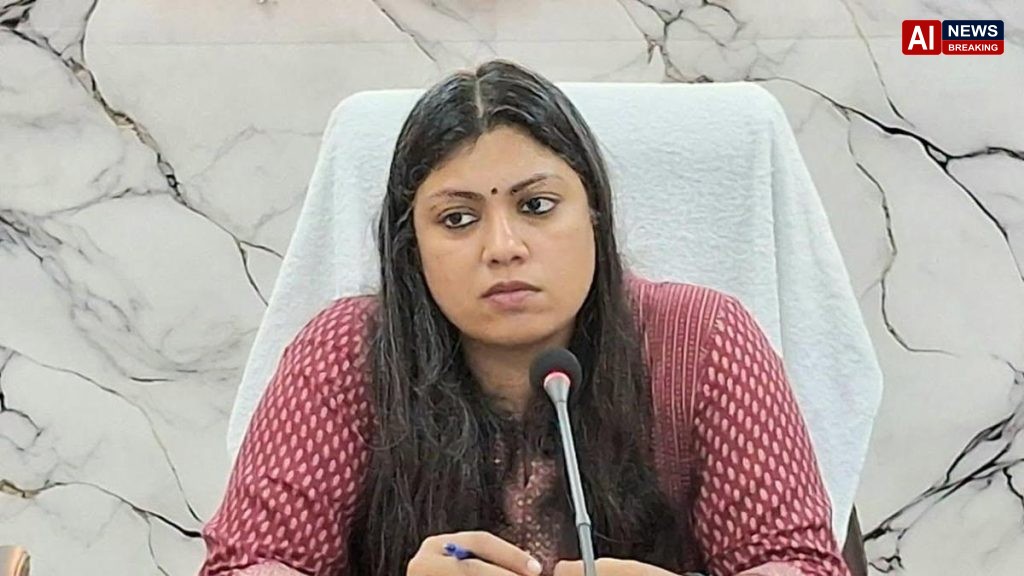
Greater Noida DM moves SC against HC order on student’s NSA detention - AI News Breaking
The District Magistrate of Greater Noida has filed a writ petition in the Supreme Court of India seeking review of an earlier order by the Allahabad High Court that had struck down the National Security Agency detention of a student activist. This legal escalation underscores a deepening constitutional friction between executive authorities and judicial oversight regarding preventive detention laws. The case centers on the detention of a young student, whose arrest sparked widespread debate about the limits of state power and the freedoms of expression guaranteed under the Indian Constitution..
The High Court’s recent judgment drew sharp criticism against the administrative procedures followed by the district administration, prompting the official to challenge the ruling at the nation’s highest judicial forum.The proceedings originated from the actions of Ms. Medha Roopam, the District Magistrate of Greater Noida, who ordered the detention of the student under stringent security provisions. The High Court bench, however, found significant lacunae in the decision-making process that led to the detention..
Justice Singh, presiding over the initial hearing, remarked that Magistrate Roopam had displayed a notable lack of application of mind when reviewing the police report submitted as the basis for the detention. The judicial observation suggested that the executive authority had failed to independently evaluate the necessity and proportionality of the preventive measure, instead relying mechanically on police inputs without sufficient scrutiny.In its piercing verdict, the High Court warned that the District Magistrate’s approach was setting a dangerous precedent for administrative conduct across the country. The judge stated that such passive acceptance of police recommendations without critical analysis could deter citizens from exercising their fundamental right to freedom of speech and expression in public spaces..
Specifically, the court noted that the student’s activities were in support of labourers and involved public advocacy, which are protected forms of expression under the democratic framework. The judgment emphasized that the state cannot use preventive detention as a tool to silence dissent or suppress lawful protests, thereby chilling the exercise of basic civil liberties.The student in question had been active in organizing rallies and discussions aimed at highlighting the grievances of migrant labourers in the rapidly developing National Capital Region. These activities, while peaceful, were deemed threatening to public order by local law enforcement agencies..
The police report cited potential disturbances to peace and harmony, but the High Court found these allegations vague and insufficient to justify the infringement of personal liberty. The bench argued that mere criticism of government policies or advocacy for workers’ rights does not constitute a threat to national security or public order unless there is concrete evidence of imminent violence or disruption.Reacting to the High Court’s observations, the Department of Home Administration in Uttar Pradesh decided to contest the ruling in the Supreme Court. The writ petition argues that the High Court interfered excessively with the executive’s discretion in matters of preventive detention..
The state’s legal representatives contend that the District Magistrate acted within her statutory powers and that the judiciary should not substitute its own judgment for that of the competent administrative authority. They maintain that the police report provided sufficient grounds for concern regarding public order, given the volatile nature of labour unrest in industrial corridors like Greater Noida.The Supreme Court petition also challenges the broader implications of the High Court’s remarks regarding the application of mind. The state argues that requiring magistrates to independently verify every detail in police reports would paralyze the administration’s ability to respond swiftly to emerging security threats..
The legal team asserts that preventive detention laws are designed to allow executive authorities to act proactively to prevent crimes, rather than reactively after harm has occurred. They claim that the High Court’s stance imposes an undue burden of proof on the state, effectively neutralizing a critical tool for maintaining public order in complex urban environments.Legal experts analyzing the case point out that this dispute touches upon the delicate balance between individual liberty and state security. The writ of habeas corpus, which the High Court utilized to release the student, is a fundamental remedy against unlawful detention..
However, the scope of judicial review in preventive detention cases has long been a subject of contention. Courts generally uphold detentions unless they are found to be mala fide, arbitrary, or based on irrelevant considerations. The High Court’s rigorous scrutiny in this instance marks a shift towards a more robust protection of civil liberties against administrative overreach.Human rights organizations have welcomed the High Court’s intervention, viewing it as a necessary check on the growing misuse of preventive detention laws..
Advocacy groups argue that the state often employs such laws to target journalists, activists, and students who question official narratives or highlight social injustices. The release of the student is seen as a victory for the rule of law, demonstrating that courts remain vigilant in protecting constitutional rights. These organizations urge the Supreme Court to uphold the High Court’s decision, reinforcing the principle that freedom of expression cannot be suspended merely due to administrative convenience or vague security concerns.Conversely, law enforcement agencies and security establishments warn that excessive judicial interference weakens the state’s capacity to manage internal security..
Officials argue that the modern threat landscape requires flexible and rapid administrative responses to prevent potential disruptions. They suggest that the High Court’s judgment may embolden those seeking to disrupt public order by exploiting legal protections. The government maintains that preserving public peace is paramount and that authorities must have the latitude to detain individuals who pose a credible, albeit non-immediate, threat to societal stability.The case has drawn significant attention from political quarters as well, with opposition parties criticizing the state government for attempting to silence dissent through legal harassment..
They describe the petition in the Supreme Court as an aggressive attempt to undermine judicial independence and rollback recent rulings that favor civil liberties. The opposition argues that the detention was politically motivated, aimed at intimidating a growing voice of labor activism in a region known for its industrial expansion and migration flows. They call for a comprehensive review of preventive detention laws to align them with contemporary democratic standards.As the matter awaits hearing in the Supreme Court, the legal community awaits a clarification on the standards of judicial review in preventive detention matters..
The outcome of this case could set a binding precedent for how lower courts and administrative authorities handle similar situations in the future. If the Supreme Court upholds the High Court’s decision, it will reinforce the requirement for magistrates to exercise independent judgment and ensure that detentions are not used as a blunt instrument for suppressing legitimate political or social activism. This could lead to stricter procedural safeguards and greater transparency in the executive’s use of detention powers.Conversely, if the Supreme Court rules in favor of the state, it may grant wider discretion to administrative authorities, potentially reducing the scope for judicial scrutiny in security-related matters..
Such a ruling could be interpreted as endorsing a more security-centric approach to governance, where the executive’s assessment of threats is given greater deference. This would likely face criticism from civil society groups arguing that it erodes the checks and balances essential to a functioning democracy. The final decision will thus not only resolve the fate of one student activist but also shape the broader discourse on civil liberties in India.
Updated: September 13, 2026
A Supreme Court tilt toward executive deference would weaponize preventive detention as a routine muzzle on dissent, eroding the judiciary’s role as a liberty guarantor; a reaffirmation of the High Court’s scrutiny could compel a constitutional recalibration that forces the state to justify security claims with concrete evidence, reshaping India’s balance between order and democratic expression.