 Swedes vote in pivotal election; centre-left leads early counts
  Along Himalayan Floods’ Path, Wiped Out Towns and Mounting Grief
  MP arrests key suspect in hooch deaths case
  Uttar Pradesh Shia leader urges stronger ties
  Trump calls united Ireland ‘fantastic’ during Dublin visit
 MP arrests key suspect in hooch deaths case
** Police in Madhya Pradesh’s Sagar district have captured 21‑year‑old Shivanjay Rajput, a key distributor in the illicit liquor network blamed for the recent methanol poisoning that claimed 24 lives. The suspect was wounded in a brief encounter during a raid on a makeshift distillery, prompting renewed calls for a statewide crackdown on spurious alcohol.
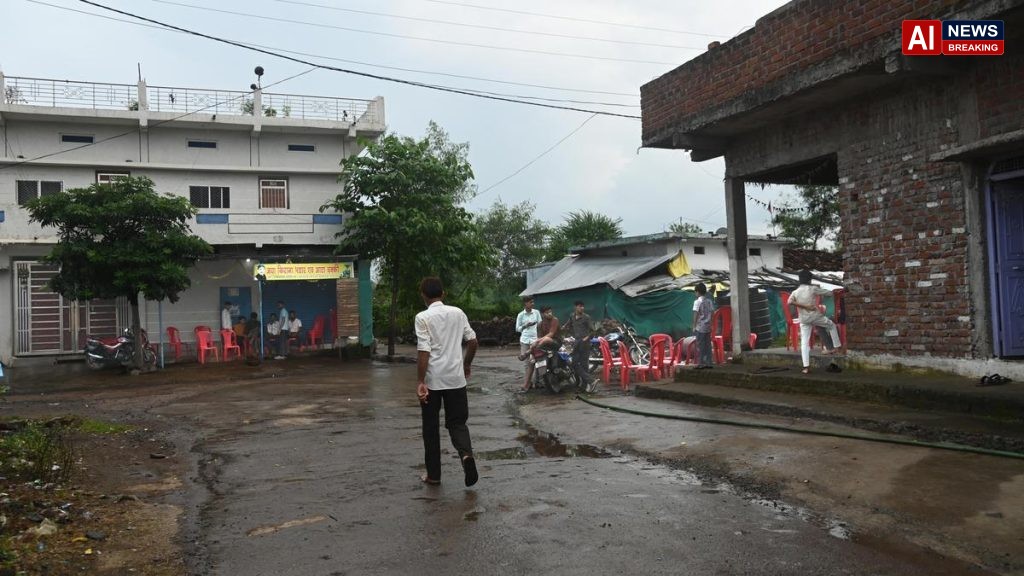
M.P. hooch tragedy: Wanted accused caught after brief encounter in Sagar - AI News Breaking
arrests suspect hooch deaths:
The tragic death of twenty‑four people in Madhya Pradesh after consuming illicit liquor has once again thrust the state’s illegal alcohol trade into the national spotlight. On Tuesday, police in the central district of Sagar announced the apprehension of a key suspect in the case, a twenty‑one‑year‑old named Shivanjay Rajput, who had been listed on a ₹30,000 bounty for his alleged role in manufacturing and distributing the spurious spirit. According to officials, the young man was arrested after a brief encounter with law‑enforcement teams that resulted in him sustaining a gunshot wound to his left leg..
The incident marks the latest development in an investigation that has, so far, seen a string of arrests, seizures and an escalating public outcry over the prevalence of “hooch” in the region.The hooch tragedy, which unfolded in the early hours of 23 May, claimed the lives of twenty‑four individuals, most of them labourers and daily‑wage earners who had gathered at a local gathering hall to celebrate a religious festival. Autopsies confirmed that the victims succumbed to acute methanol poisoning, a lethal by‑product that often contaminates illegally brewed liquor when manufacturers substitute methanol for ethanol to boost potency. The incident has prompted the Madhya Pradesh government to order a comprehensive probe, with the state’s Chief Minister promising swift justice and stricter enforcement against illicit distilleries.Investigators traced the origin of the contaminated batch to a makeshift distillation unit operating on the outskirts of Sagar city..
Preliminary forensic reports indicate that the operation used substandard equipment and unregulated chemicals, creating an environment where methanol could easily seep into the final product. The unit was reportedly run by a small network of individuals, each handling a specific stage of the production chain, from sourcing raw materials to packaging the final product for distribution. Shivanjay Rajput, according to police statements, was identified as one of the primary distributors, responsible for transporting the finished hooch to local vendors across several neighbourhoods.The pursuit of Rajput began after a series of intelligence tips from community members and informants familiar with the illicit trade..
Over a period of two weeks, a special task force comprising officers from the state police, the Anti‑Narcotics Squad and the Crime Branch coordinated surveillance of suspected routes and hideouts. On 31 May, the team received a credible lead that the accused was holed up in a dilapidated house on the outskirts of Sagar’s industrial belt. The operation, described in a press release as a “brief encounter,” involved a tactical raid that culminated in an exchange of fire..
Rajput was wounded in the leg but managed to surrender after being subdued by the officers.Medical officials at Sagar District Hospital confirmed that Rajput’s injury was non‑life‑threatening and that he was subsequently transferred to a secure police custody facility for interrogation. The police have said that the wound was inflicted when the suspect attempted to flee the scene, firing a pistol that was later recovered by the team. The weapon, a 9 mm handgun, is now part of the evidence dossier..
Investigators have not disclosed whether the firearm was linked to other crimes in the area, but they have indicated that forensic analysis is ongoing.The arrest has been hailed by local residents as a step towards accountability, yet many families of the victims remain dissatisfied with the speed of the investigation. “We lost our fathers, brothers and sons,” said Sunita Devi, a mother of two who attended the memorial service held at the municipal hall last week. “The police must bring everyone involved to justice, not just one person.” Community leaders have called for a broader crackdown on the clandestine networks that facilitate the production and sale of illegal liquor, warning that Rajput’s capture may be only a small part of a larger, more entrenched problem.State officials have announced additional measures aimed at curbing the trade in spurious liquor..
The Home Department has issued an advisory to all district administrations to intensify raids on suspected distilleries, increase surveillance of known trafficking corridors and improve coordination with the Central Bureau of Investigation, which has previously handled large‑scale hooch cases in other states. Moreover, the Madhya Pradesh Food and Drug Administration has been tasked with launching a public awareness campaign to educate consumers about the dangers of unregulated alcohol and the signs of methanol poisoning.Legal experts note that the case presents complex challenges for prosecutors. Under the Indian Penal Code, manufacturing and distributing adulterated alcohol that leads to death can attract the death penalty or life imprisonment, but securing a conviction requires establishing a clear chain of causation and proving the accused’s knowledge of the product’s toxicity..
The prosecution will likely rely on forensic evidence, testimony from co‑accused, and records of financial transactions to build its case. Defense counsel, however, may argue that the young suspect was a low‑level courier unaware of the methanol content, a claim that will be scrutinised during the trial.The broader societal impact of the tragedy continues to reverberate across Madhya Pradesh. Human rights organisations have raised concerns about the safety of informal workers who, lacking access to affordable licensed liquor, turn to cheaper alternatives that often turn out to be deadly..
They have urged the state to address the underlying economic drivers of the illicit market, including poverty, unemployment and the absence of regulated low‑cost alcohol outlets. In a statement, the National Human Rights Commission called for a “comprehensive policy response” that balances law enforcement with social welfare initiatives.As the investigation proceeds, authorities have pledged to keep the public informed of any further developments. The police department has set up a dedicated helpline for individuals with information about illegal liquor operations, promising anonymity and protection for whistle‑blowers..
Meanwhile, the families of the deceased continue to seek closure, hoping that the apprehension of Shivanjay Rajput will lead to a full reckoning with those responsible and prevent future tragedies of a similar nature. The incident serves as a stark reminder of the lethal consequences of unregulated alcohol and the urgent need for coordinated action across law‑enforcement, health and social sectors..
MP police have arrested a key hooch syndicate member in Sagar following a shoot-out, marking a significant step against the illegal alcohol trade responsible for 24 deaths. As investigators dismantle the local gang, authorities face mounting pressure to address the systemic failures that allow deadly illicit liquor to proliferate among vulnerable communities.
Apprehending a single distributor masks the systemic failure to regulate poverty-driven demand for illicit alcohol. Lasting safety requires dismantling the economic incentives that make methanol-laced hooch the only accessible option for marginalized laborers.