Europe warns of Russia’s hybrid attacks but struggles to counter them
  Former chief election commissioner calls SIR scheme illegal.
  A Corruption Scandal Is Reshaping Brazil’s Presidential Election
  US citizen injured in Illinois after ICE agents mistook him for fugitive, tried to arrest him
  At 10 years old, Smithsonian’s Black museum is undaunted amid pressure from Trump administration
 Rajya Sabha Elections 2026 Results: NDA Sweeps Bihar, Gains Ground in Odisha, Haryana Poll Hit by Controversy
The National Democratic Alliance (NDA) has made significant gains in the 2026 Rajya Sabha elections, winning all five seats in Bihar and making inroads in Odisha, while the election in Haryana was marred by controversy and procedural disputes, highlighting the growing polarization in state politics and concerns about electoral transparency.
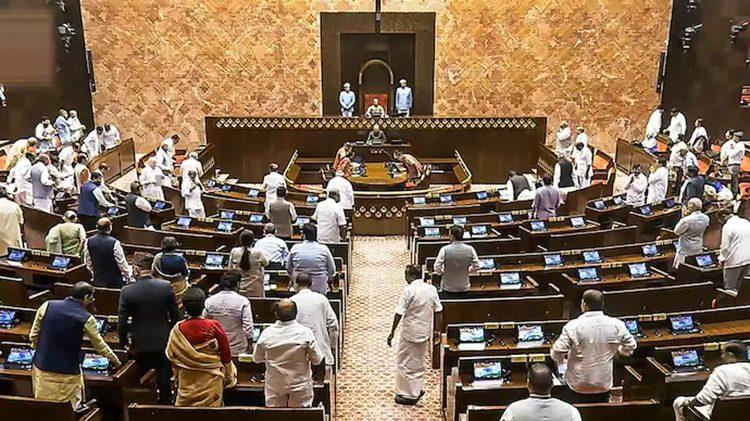
The 2026 Rajya Sabha elections have once again reshaped the political landscape of India’s Upper House, with the ruling National Democratic Alliance (NDA) consolidating its position through decisive victories in key states like Bihar and Odisha. However, the election process was not without drama, as Haryana witnessed controversy and procedural disputes that delayed clarity over results.
This detailed report breaks down the results, key winners, political implications, controversies, and what these outcomes mean for the future of Indian politics.
Overview of Rajya Sabha Elections 2026
The biennial Rajya Sabha elections held on March 16, 2026, were conducted to fill 37 seats across 10 states. A significant number of candidates—26 in total—were elected unopposed, leaving only a handful of states, including Bihar, Odisha, and Haryana, to witness actual voting.
These elections are part of the constitutional process to replenish one-third of the Rajya Sabha every two years, ensuring continuity in India’s legislative system.
The contests in Bihar, Odisha, and Haryana emerged as the most politically significant, with high-stakes battles, cross-voting allegations, and strategic maneuvering by parties.
Bihar: NDA Registers Clean Sweep
Key Results
In Bihar, the NDA delivered a dominant performance by winning all five Rajya Sabha seats. The alliance’s victory was widely anticipated but still politically significant due to the scale of its success.
Major Winners from Bihar
- Nitish Kumar (JD(U))
- Nitin Nabin (BJP)
- Upendra Kushwaha (RLM)
- Ram Nath Thakur (JD(U))
- BJP-backed candidate (Shivesh Ram / Shivam Kumar depending on reports)
The NDA’s triumph was aided by:
- Cross-voting by opposition MLAs
- Absenteeism among Congress and RJD legislators
- Internal divisions within the opposition alliance
Political Drama in Bihar
The election saw intense political tension, including reports of “missing” opposition MLAs and allegations of poaching.
Statements from political leaders further heated the atmosphere. Leaders accused rival parties of mismanagement and lack of internal cohesion, which ultimately played into the NDA’s hands.
What It Means
The clean sweep strengthens the NDA’s grip in Bihar and boosts its numbers in the Rajya Sabha, enhancing its legislative influence at the national level.
Odisha: BJP Makes Major Gains Amid Cross-Voting
Key Results
Odisha witnessed a competitive election, particularly for the fourth seat. While the Biju Janata Dal (BJD) and BJP were expected to split seats, the BJP managed to secure a stronger position than anticipated.
- BJP won 3 seats
- BJD secured fewer than expected
Notable Winner
- Dilip Ray (BJP) — His victory after 24 years marked a significant political comeback and dealt a blow to the BJD.
Controversies in Odisha
The election was marred by:
- Allegations of irregularities in ballot handling
- Disputes over issuance of a second ballot paper
- Objections raised by opposition leaders
Impact of Cross-Voting
Cross-voting by MLAs and divisions within opposition ranks played a crucial role in altering the expected outcome, allowing the BJP to gain additional seats.
Political Significance
This result signals:
- BJP’s growing footprint in eastern India
- Weakening dominance of regional parties like BJD
- Changing voter dynamics within state legislatures
Haryana: Election Marred by Controversy
Key Developments
Unlike Bihar and Odisha, Haryana’s Rajya Sabha election was overshadowed by controversy and procedural disputes.
- Voting results were reportedly put on hold
- Allegations of breach of vote secrecy emerged
- Complaints were filed with the Election Commission
Nature of Dispute
The controversy revolved around:
- Possible violation of secret ballot norms
- Questions over voting procedures
- Accusations from opposition parties
Political Reactions
Opposition leaders strongly criticized the process, raising concerns about electoral integrity. The issue escalated to the Election Commission, making Haryana the focal point of post-election disputes.
Implications
The uncertainty in Haryana highlights:
- Increasing polarization in state politics
- Growing concerns about electoral transparency
- The potential for legal or procedural intervention
Role of Cross-Voting and Absenteeism
One of the defining features of the 2026 Rajya Sabha elections was the role of cross-voting and absenteeism.
Key Observations
- Opposition MLAs in Bihar and Odisha either abstained or voted against party lines
- Internal dissent within opposition alliances weakened their chances
- NDA capitalized on this lack of unity
These factors significantly influenced outcomes, especially in closely contested seats.
NDA’s Expanding Strength in Rajya Sabha
The results of these elections have strengthened the NDA’s position in the Upper House.
- NDA’s tally has crossed the majority mark comfortably
- The alliance now holds a clear advantage in legislative decision-making
Why This Matters
A stronger presence in the Rajya Sabha allows the ruling alliance to:
Accelerate policy implementation
Pass key legislation more easily
Reduce dependence on opposition support