Europe warns of Russia’s hybrid attacks but struggles to counter them
  Former chief election commissioner calls SIR scheme illegal.
  A Corruption Scandal Is Reshaping Brazil’s Presidential Election
  US citizen injured in Illinois after ICE agents mistook him for fugitive, tried to arrest him
  At 10 years old, Smithsonian’s Black museum is undaunted amid pressure from Trump administration
 Behind the Uniform: Families of Injured Delhi Policemen Break Their Silence After CJP Protest Violence
** The families of injured Delhi police officers are breaking their silence after violent clashes during the July 20 CJP protest, sharing stories of brutal assaults and emotional trauma, and calling for a more nuanced approach to managing protests to prevent such violent clashes in the future.
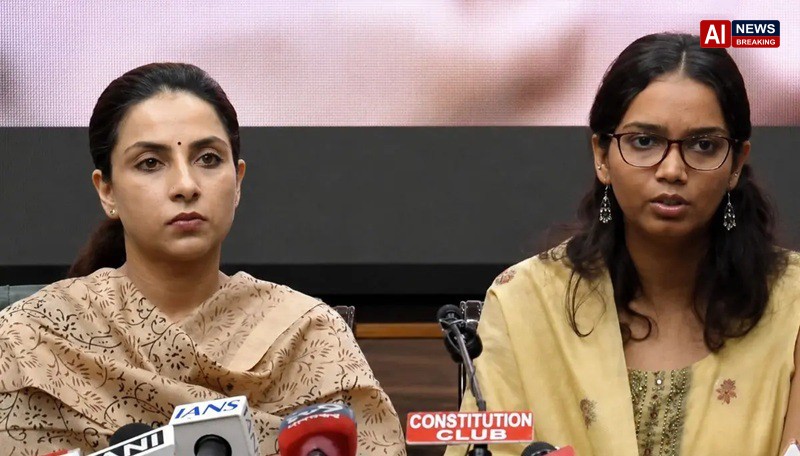
Behind the Uniform: Families of Injured Delhi Policemen Break Their Silence After CJP Protest Violence - AI News Breaking
behind uniform families injured:
Days after violent clashes during the July 20 CJP protest in Delhi left several police personnel injured, their families have stepped forward with emotional testimonies detailing the aftermath. Their accounts have reignited a broader national conversation about protest culture, police safety and the human cost of public unrest.
Key Highlights
- Multiple police personnel were injured during the July 20 CJP protest clashes in Delhi.
- Family members alleged that officers were dragged and assaulted while on duty.
- Relatives described scenes of severe injuries and emotional trauma.
- Investigations into the circumstances surrounding the violence are ongoing.
- The incident has intensified debates over protest management and public safety.
When large-scale protests turn violent, public attention often focuses on the political implications, the slogans raised, and the competing narratives that emerge in the days that follow. Lost amid the headlines are the individuals who return home carrying the physical and emotional scars of those confrontations.
That reality came into sharp focus this week as family members of police personnel injured during the July 20 clashes in Delhi addressed the media, sharing deeply personal accounts of what they say their loved ones endured while performing their duties.
The testimonies were emotional, at times difficult to hear. Parents spoke of seeing their children in hospital beds. Spouses described waiting anxiously for phone calls that never came. Some recalled bloodstained uniforms, while others spoke of the lasting trauma that follows an encounter with violence.
The incident has added a new dimension to an already contentious public debate. While discussions surrounding the protest have largely centered on politics and policing, the statements from these families have reminded the public of a fundamental truth: every person in uniform is also someone’s parent, child, sibling or spouse.
The Day Violence Erupted
Delhi witnessed intense confrontations on July 20 as tensions escalated between protesters and law enforcement personnel deployed to maintain order.
According to officials, multiple police personnel sustained injuries during the clashes. Images and videos circulating on social media showed chaotic scenes as demonstrators and security personnel struggled for control amid rapidly deteriorating conditions.
As is often the case following such incidents, competing narratives quickly emerged.
Some accounts focused on the conduct of security forces, while others highlighted the dangers faced by officers tasked with maintaining public order in highly volatile situations. Investigations into the precise sequence of events remain ongoing, and authorities are expected to review witness statements, video evidence and medical records.
Yet for the families of those injured, the broader political debate has become secondary.
Their concerns are more immediate: recovery, rehabilitation and ensuring that those who were hurt receive appropriate support.
“His Uniform Was Soaked in Blood”
Perhaps the most striking moment of the press conference came when relatives described seeing their loved ones after the violence.
One family member recounted the shock of seeing a police officer return home with visible injuries.
“His uniform was soaked in blood. We couldn’t believe what we were seeing. He had left home that morning like every other day. By evening, we were rushing to the hospital.”
Another relative described receiving a phone call informing them that an officer had suffered head injuries.
“When you receive a call saying your family member has been injured on duty, your world stops. You don’t think about politics or protests. You only think about whether they will survive.”
Such testimonies have resonated widely on social media, where many users expressed sympathy for the families while calling for a thorough investigation into the incident.
The emotional impact of these accounts has also prompted renewed discussion about the risks faced by law enforcement personnel during public demonstrations.
The Human Side of Policing
Police officers occupy a unique and often difficult position in democratic societies.
They are expected to:
- Maintain public order.
- Protect lives and property.
- Facilitate peaceful assembly.
- Enforce the law impartially.
- Respond effectively during emergencies.
At the same time, they frequently become the most visible representatives of the state during periods of public anger and political tension.
This dual role places officers in situations where they may face hostility from multiple directions.
Security experts note that policing large gatherings has become increasingly challenging in the digital age. Social media can rapidly amplify tensions, misinformation can spread within minutes and crowd dynamics can shift unexpectedly.
For officers on the ground, split-second decisions can carry significant consequences.
What is sometimes overlooked, however, is that the risks associated with these responsibilities extend beyond the officers themselves.
Every deployment affects families waiting at home.
A Family’s Perspective
The statements delivered at the press conference offered a rare glimpse into that reality.
One father spoke emotionally about his daughter, a policewoman who was allegedly attacked during the unrest.
“She joined the police because she wanted to serve society. She never imagined she would become a victim of violence while doing her job.”
Parents described sleepless nights spent in hospital waiting rooms. Spouses discussed explaining injuries to young children. Siblings recalled the anxiety of repeatedly calling mobile phones that went unanswered.
These experiences are not unique to Delhi.
Around the world, families of emergency responders often carry invisible burdens. They accept that their loved ones work in demanding professions but live with the constant possibility that an ordinary shift could become a life-altering event.
The Delhi incident has brought those realities into public view.
Protests and Democratic Rights
India’s democratic framework guarantees citizens the right to peaceful assembly and expression.
Public demonstrations have played a significant role throughout the nation’s history, shaping policies and influencing public discourse. From the freedom movement to contemporary social campaigns, protests have remained an essential component of democratic participation.
However, experts consistently emphasize an important distinction: the right to protest does not include the right to engage in violence.
When demonstrations escalate into physical confrontations, the consequences can affect everyone involved:
- Protesters.
- Police personnel.
- Journalists.
- Bystanders.
- Local businesses.
- Emergency responders.
Maintaining the delicate balance between protecting democratic freedoms and preserving public safety remains one of the most complex challenges facing modern governments.
The July 20 incident serves as another reminder of how quickly that balance can be disrupted.
Challenges Facing Modern Law Enforcement
Law enforcement agencies across the world increasingly operate in highly scrutinized environments.
Every interaction may be recorded. Every decision may be analyzed. Every incident can become the subject of intense public debate.
This scrutiny is both inevitable and necessary in democratic societies. Transparency and accountability remain essential components of public trust.
At the same time, experts argue that discussions surrounding policing should also acknowledge the operational challenges officers face.
These include:
- Long working hours.
- Exposure to traumatic events.
- Physical risks during deployments.
- Psychological stress.
- Public criticism from multiple perspectives.
Studies conducted internationally have consistently shown elevated rates of stress-related conditions among first responders, including police officers.
For injured personnel recovering from violent incidents, these challenges can persist long after physical wounds have healed.
Calls for Accountability
The families who addressed the media emphasized that they are not seeking political attention.
Instead, they called for:
- A transparent investigation.
- Accountability for any unlawful acts.
- Adequate medical support.
- Recognition of officers’ sacrifices.
- Measures to prevent similar incidents in the future.
Their demands have been echoed by several organizations representing law enforcement personnel, which have urged authorities to ensure that investigations are conducted fairly and comprehensively.
Public confidence in such investigations, experts say, depends largely on transparency.
Whether responsibility ultimately lies with individuals, organizational failures or broader circumstances, establishing an accurate record of events will be essential.
Social Media’s Role
The incident has also highlighted the growing influence of social media in shaping public perception.
Within hours of the clashes, videos, photographs and personal accounts began circulating online. Some posts generated sympathy for injured officers, while others focused on allegations regarding the conduct of authorities.
This rapid dissemination of information presents both opportunities and challenges.
On one hand, digital platforms provide greater visibility and can help bring attention to important issues. On the other, incomplete or misleading information can contribute to polarization.
Media experts have repeatedly urged the public to rely on verified information and await official findings before drawing conclusions.
In emotionally charged situations, patience is often in short supply.
Beyond Politics
Perhaps the most powerful aspect of the families’ testimonies was their insistence that the conversation move beyond politics.
One relative summarized the sentiment shared by many in attendance:
“People see a uniform. We see a son, a daughter, a husband and a father.”
That statement has struck a chord across the country.
Regardless of one’s views on the underlying issues surrounding the protest, there is broad agreement that violence carries human consequences.
For the injured officers, recovery may take weeks or months. For their families, the emotional impact could last considerably longer.
Looking Ahead
As investigations continue, several questions remain unanswered.
- What exactly led to the escalation?
- Could the violence have been prevented?
- Were adequate precautions in place?
- What lessons can authorities and organizers learn?
- How can similar incidents be avoided in the future?
These are questions that policymakers, law enforcement agencies and civil society organizations will likely continue to examine in the weeks ahead.
For now, however, the focus remains on those directly affected.
Hospitals continue treating injured personnel. Families continue waiting for answers. And the broader public continues to debate what the events of July 20 reveal about protest culture, public safety and democratic accountability in contemporary India.
The Delhi clashes have once again demonstrated that moments of public unrest rarely produce simple narratives.
There are legal questions, political questions and policy questions that will undoubtedly be debated for months. Yet behind all of those discussions are individuals whose lives have been permanently affected.
The emotional testimonies delivered by the families of injured police personnel serve as an important reminder that institutions are ultimately made up of people.
In every major incident, there are stories that statistics cannot fully capture—stories of fear, resilience, sacrifice and recovery.
As Delhi reflects on the events of July 20, those stories deserve to be heard alongside every other perspective.
Families of injured police officers have spoken out about the violent clashes with protesters in Delhi, describing how their loved ones were dragged, beaten and injured during the chaos. The victims, who were simply trying to do their job, are now left with physical and emotional trauma, with the families demanding justice and an end to the violence in the city.
Insight: The emotional toll on the families of injured policemen highlights the human cost of violent protests and the need for authorities to balance the right to protest with the duty to protect law enforcement. As the city struggles to heal, it’s clear that addressing the root causes of these clashes is crucial to preventing similar incidents in the future.