 Australia probes AI‑driven breach of My Health Record portal
  Engineering student’s ‘suicide’ turns out to be murder; two arrested
  Canada’s Capital Bids Good Riddance to Trump Avenue as Tensions With U.S. Rise
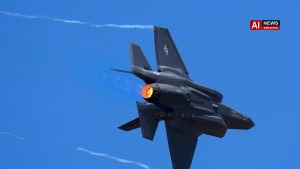
  Pentagon investigates after China obtains parts from F-35 stealth fighter jet
 Global fuel price rise sparks protests worldwide
**

Global fuel price rise sparks protests worldwide - AI News Breaking
Rising Fuel Prices Set Off Anger and Protests Around the World The surge in global fuel prices has ignited a wave of unrest across continents, with citizens in Indonesia, Guatemala, Syria and several other nations taking to the streets to demand relief. Analysts trace the price hikes to a combination of post‑pandemic demand recovery, supply chain disruptions, and geopolitical tensions that have constrained oil output. While governments in wealthier economies have begun to ease the burden through subsidies and tax adjustments, many developing countries lack the fiscal space to intervene, leaving ordinary people to shoulder the brunt of soaring transport and electricity costs..
In Jakarta, the capital of Indonesia, daily gasoline prices have climbed by more than 30 per cent since the start of the year, prompting a series of demonstrations in front of the presidential palace. Protesters, many of them small‑business owners and public‑transport drivers, waved placards demanding a rollback of the recent tax increase on fuel and an expansion of the government’s “fuel assistance” program. Police responded with dispersal tactics, including water cannons and tear‑gas, while officials warned that any further escalation could threaten public order and the nation’s fragile economic recovery..
Further south, Guatemala’s capital, Guatemala City, has become a flashpoint for discontent as the country grapples with both fuel scarcity and steep price rises. The government’s limited strategic reserves have been depleted, leading to long queues at petrol stations and frequent “fuel blackouts” in rural regions. Trade unions representing bus drivers and truckers have organized a nationwide strike, halting the movement of goods and amplifying concerns over food inflation..
President Alejandro Giammattei has called for a dialogue with union leaders, but negotiations have stalled amid accusations of political interference and inadequate compensation. Syria, already strained by years of civil conflict, is experiencing a new crisis as fuel imports have been curtailed by sanctions and the devaluation of the Syrian pound. Power cuts now affect major cities for up to twelve hours a day, and the cost of diesel, essential for generators, has more than doubled..
In the southern city of Daraa, residents gathered in public squares, chanting slogans that linked fuel shortages to the broader economic mismanagement of the Assad regime. Security forces quickly moved in, arresting several demonstrators and imposing curfews, further inflaming public resentment. In Europe, the situation is not as volatile, but rising fuel costs are still reshaping daily life..
Spain’s government announced a temporary reduction of the value‑added tax on gasoline, a measure that analysts say will only provide short‑term relief before the underlying supply constraints reassert themselves. Meanwhile, in Germany, motorists are facing the prospect of higher road‑tax fees as the federal budget seeks to offset the loss of revenue from reduced fuel taxes. Consumer groups warn that these fiscal adjustments could erode the modest gains made by recent wage increases..
Across the United States, the price of gasoline has hovered near historic highs, prompting a resurgence of “fuel‑saver” campaigns and a renewed interest in electric vehicles. While the Federal Reserve has signaled a willingness to intervene if inflation spirals, many policymakers argue that the root of the problem lies abroad, citing the ongoing conflict in Ukraine and the strategic decisions of OPEC+. The debate in Congress has become increasingly partisan, with some legislators urging a reduction in the federal gasoline tax, while others caution that such a move could undermine climate‑change initiatives..
In Africa, nations such as Nigeria and South Africa are confronting similar challenges but with distinct local dynamics. Nigeria’s government, heavily reliant on oil revenues, has opted to subsidise fuel for the first time in a decade, a decision that has sparked criticism from opposition parties who claim the move is fiscally irresponsible. South Africa, meanwhile, has witnessed a surge in illegal fuel imports from neighboring countries, as traders attempt to bypass the soaring domestic prices..
Law enforcement agencies have launched raids on suspected smuggling networks, yet the demand continues to outpace legitimate supply. The Middle East, traditionally a net exporter of oil, is not immune to the ripple effects of price volatility. Iran, under heavy sanctions, has seen its domestic fuel prices increase despite attempts to maintain low rates for the populace..
In Tehran, small protests have erupted near government ministries, with participants demanding greater transparency in the allocation of fuel subsidies. Authorities responded by detaining several organizers, raising concerns among human‑rights groups about the shrinking space for peaceful dissent. International organisations are urging coordinated action to stabilise markets and protect vulnerable populations..
The International Energy Agency (IEA) released a report last week highlighting the need for diversified energy sources and the acceleration of renewable‑energy projects to mitigate future price shocks. Meanwhile, the World Bank has pledged additional funding for emergency assistance in low‑income countries, earmarking resources to support transport subsidies and to bolster strategic petroleum reserves. Economists warn that unless governments implement comprehensive measures, the current unrest could evolve into broader socio‑political instability..
A study by the Institute for Global Economic Studies projects that continued fuel price inflation could push an additional 150 million people into extreme poverty by 2028, particularly in regions where energy costs constitute a large share of household expenses. The analysis underscores the importance of policy tools such as targeted cash transfers, progressive taxation on high‑consumption fuel users, and investment in public‑transport infrastructure. In response to mounting pressure, some nations are exploring alternative approaches to reduce reliance on imported fuel..
Thailand has announced a pilot program to convert a portion of its public‑bus fleet to hydrogen fuel cells, while Colombia is expediting the construction of new bio‑fuel refineries in its Caribbean region. These initiatives, though in early stages, signal a shift toward diversifying energy portfolios as.
Updated: September 16, 2026
Insight: The fuel‑price shock is turning energy scarcity into a political flashpoint, exposing how fragile growth is when ordinary commuters become the first line of protest.
Unless governments shift from short‑term subsidies to systemic diversification—public‑transport upgrades, renewables, and smarter reserves—the unrest will cascade into broader social