Europe warns of Russia’s hybrid attacks but struggles to counter them
  Former chief election commissioner calls SIR scheme illegal.
  A Corruption Scandal Is Reshaping Brazil’s Presidential Election
  US citizen injured in Illinois after ICE agents mistook him for fugitive, tried to arrest him
  At 10 years old, Smithsonian’s Black museum is undaunted amid pressure from Trump administration
 After Iranian ‘Revenge’ Strikes, Destruction Near Tel Aviv Leaves Two Dead and Deepens Fears of Wider War
The aftermath of Iran’s overnight missile barrage on central Israel has left a trail of destruction, killing 2 people and causing widespread damage near Tel Aviv, amid rising fears of a wider war in the Middle East.
iranian revenge strikes destruction:
The aftermath of Iran’s overnight missile barrage on central Israel left behind a grim landscape of shattered homes, mangled streets and rising public anxiety, as authorities confirmed that two people were killed in the attack and several areas near Tel Aviv suffered extensive damage. The strikes, described by Iranian state-linked outlets as retaliation for the killing of senior Iranian security official Ali Larijani, marked another dangerous turn in the rapidly escalating confrontation between Iran and Israel.
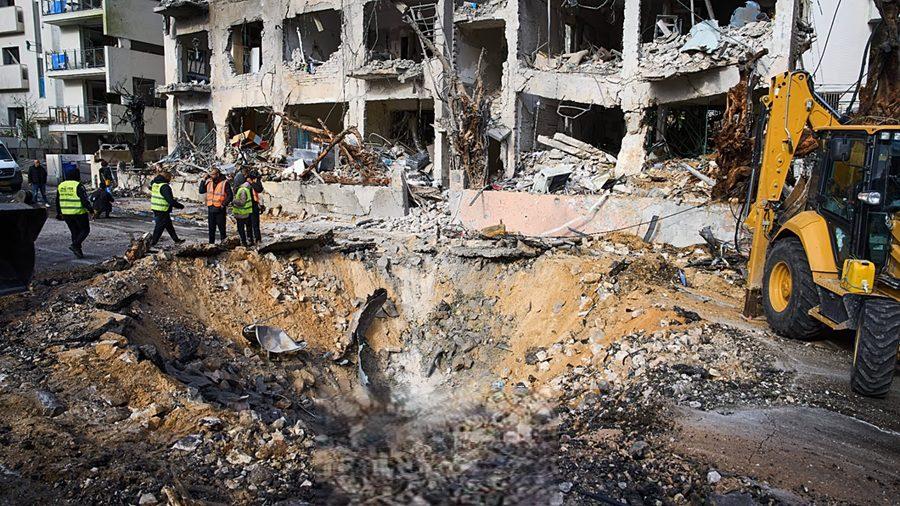
By Wednesday morning, emergency crews were still moving through damaged neighborhoods in and around the Tel Aviv metropolitan area, inspecting wrecked apartment blocks, clearing debris and searching impacted sites for survivors or unexploded fragments. Photographs from the scene showed facades ripped open, windows blasted out, and ground floors littered with glass and concrete. Public transport was also hit by the disruption, with train services affected after shrapnel damaged infrastructure in central Israel.
The two people killed were reported in Ramat Gan, a densely populated city east of Tel Aviv that has repeatedly found itself within range of missile fire during regional escalations. Though Israel’s air defense systems intercepted many incoming projectiles, some missiles penetrated the shield or sent debris into urban areas, underlining the limits of even sophisticated defensive networks when barrages are large and sustained. The result was not only loss of life, but a new round of civilian trauma in neighborhoods already accustomed to sirens, shelter runs and the constant uncertainty of war.
The attack came hours after Israel said it had killed Ali Larijani, one of Iran’s most senior security figures, in a strike in Tehran. Associated Press and Reuters reported that Larijani’s death represented a major blow to the Iranian leadership, especially at a moment when the country’s top command structure had already been under severe pressure from successive Israeli attacks. Iran later confirmed his death, and the retaliation that followed appeared intended not only as revenge, but also as a signal that despite the loss of high-ranking officials, Tehran remained capable of striking back across the region.
Iran’s response was not limited to Israel. Reports from multiple outlets said missiles and drones were also launched toward several Gulf states, broadening fears that the conflict was no longer a contained bilateral confrontation but a regional war in motion. Explosions were reported in countries including the UAE and Qatar, while Saudi Arabia intercepted drones over Riyadh. The wider barrage reinforced growing international alarm that the battle between Israel and Iran is now spilling into major civilian and strategic zones far beyond the immediate battlefield.
For residents near Tel Aviv, however, the international dimension of the crisis was overshadowed by the immediate devastation around them. The latest strike left visible scars on ordinary urban life. Residential blocks bore the marks of blast waves. Parked vehicles were twisted or crushed by falling debris. Sidewalks were strewn with shards of glass. In some areas, emergency personnel erected cordons as structural engineers assessed whether damaged buildings remained safe to enter. Families who had rushed to shelters in the night emerged to scenes of destruction that, by dawn, had transformed familiar streets into disaster zones.
The images from central Israel were powerful precisely because they highlighted the increasingly civilian character of the fallout. Even when military planners speak in terms of deterrence, retaliation and strategic signaling, the lived reality of missile warfare is measured in broken apartments, interrupted routines, funerals and fear. Israel has repeatedly argued that it is defending itself against existential threats from Iran and its allies, while Iran has framed its retaliatory strikes as a direct answer to assassinations and attacks on its leadership. Yet in central Israel, as in parts of Lebanon, Iran and elsewhere in the region, civilians continue to absorb the cost.
The latest deaths also sharpened concerns about the ability of this conflict to intensify quickly with little warning. Air defense systems can reduce casualties, but they cannot fully remove the risk posed by ballistic missiles, multiple-warhead projectiles or falling intercept debris over crowded urban centers. The strike that killed two in Ramat Gan served as a harsh reminder that every new round of escalation carries the possibility of mass casualties, even when warning sirens function and interception rates remain high. That vulnerability is now shaping public mood in Israel as much as official military calculations.
In strategic terms, the exchange reflected a broader and more dangerous pattern. Israeli strikes have increasingly focused on senior Iranian figures, part of what analysts have described as a decapitation strategy aimed at disrupting command structures and weakening Tehran’s capacity to coordinate military and political responses. The killings of Larijani and Basij commander Gholam Reza Soleimani fit that pattern. But such operations also carry obvious risks: they can provoke retaliation not just in kind, but across multiple theaters, especially when they target individuals central to regime continuity and wartime decision-making.
That is precisely what appears to have happened. Rather than deterring Iran into silence, the assassination of Larijani was followed by a new barrage aimed at central Israel and other regional targets. The symbolism was unmistakable. Iran wanted to show that leadership losses would not paralyze its military response. The missile strikes carried tactical consequences on the ground, but they also served a political purpose: projecting resilience, preserving deterrence and reassuring domestic audiences that the state could still answer Israeli action with force. That message, however, came at the cost of further civilian bloodshed and a sharper descent into regional instability.
The broader conflict has already unsettled global markets and maritime security, especially with tensions centered on the Strait of Hormuz. Reports cited emergency concern over shipping disruption and the vulnerability of strategic routes through which major volumes of oil and gas move. Although the devastation near Tel Aviv was local and immediate, it formed part of a crisis whose consequences now stretch into diplomacy, trade, energy and military planning across the Middle East and beyond. Every missile fired at a city or base is now also a signal to global capitals that the war is no longer a contained confrontation.
On the ground in Israel, the social and psychological toll is mounting. In each new attack, civilians are forced to compress the chaos of war into minutes: sirens sound, people run for shelter, families account for each other by phone, and then the waiting begins. The silence after impact often brings its own dread, broken only by emergency vehicles and the first reports of casualties. By sunrise, neighborhoods begin the ritual of damage assessment, cleanup and mourning. That cycle has become grimly familiar in parts of Israel over years of conflict, but the scale and symbolism of direct Iranian retaliation give this moment a different and more dangerous weight.
There is also a political dimension inside Israel. Each successful Iranian strike, however limited compared with the overall size of the barrage, raises questions about readiness, deterrence and the sustainability of a prolonged regional war. Israeli leaders have emphasized offensive momentum and precision targeting of enemy leadership, but the public judges security through outcomes closer to home: whether missiles are getting through, whether civilians are dying, and whether the state can prevent another night of devastation. The deaths in Ramat Gan and the destruction near Tel Aviv will inevitably intensify that scrutiny.
For Iran, meanwhile, the retaliation was likely meant to operate on several levels at once. It answered a high-profile assassination, demonstrated continued military reach, and reinforced a narrative of resistance at a moment when Israeli operations have visibly penetrated the upper levels of Iran’s security system. Yet the strike also exposed Tehran to further international criticism, especially because it resulted in civilian deaths and urban destruction. Whatever the domestic political logic, missile fire into central Israel all but guarantees a new cycle of response from Israel, making de-escalation still harder to imagine.
That cycle now threatens to become self-sustaining. Israel targets senior Iranian figures. Iran retaliates with missiles. Israel responds with more strikes. Each side claims necessity, deterrence or revenge, and each round leaves civilians dead, displaced or traumatized. The political threshold for restraint shrinks with every funeral and every televised image of destruction. In that sense, the rubble near Tel Aviv is not only evidence of one night’s attack. It is a visible marker of how far the conflict has already expanded and how difficult it may be to pull it back.
The damage near Tel Aviv also matters because of what it communicates to the Israeli public and to the region. Tel Aviv and its surrounding cities are not only population centers but symbols of national confidence, economic life and urban normality. Strikes that reach these areas carry outsized psychological impact, even when casualty figures are lower than in other war zones. They bring the war closer to the national center of gravity and visually puncture any illusion that distance or air defenses alone can keep the heart of the country untouched.
Images of rescue workers inspecting damaged buildings in central Israel circulated widely, reinforcing the human reality behind the headlines. The scenes were less about abstract geopolitics than about ordinary people confronting the remains of homes and neighborhoods altered in seconds. A doorway blown inward, a room exposed to the street, a child’s belongings amid dust and glass: these are the details that make missile strikes politically resonant and morally stark. They collapse strategic narratives into visible human cost.
As Wednesday progressed, attention remained fixed on both the local aftermath and the regional next steps. Would Israel respond immediately with another major strike? Would Iran widen its attacks further? Would outside actors intensify involvement to protect shipping lanes or allied assets? Those questions hovered over the cleanup effort in central Israel, where the work of rescuers and municipal crews unfolded under the shadow of a far larger uncertainty.
For now, the facts on the ground were stark enough. Two people were dead. Neighborhoods near Tel Aviv had been scarred by missile impacts and debris. Train services were disrupted. Emergency teams were combing damaged sites. And the conflict between Iran and Israel, already among the most volatile confrontations in the world, had entered yet another darker phase. The overnight barrage was called revenge by those who launched it. In the streets of central Israel, it looked like ruin.