 France deploys patrol fleet to curb Channel migrant crossings
  From a Nepal in Pain, a Young Leader Makes a Case for Climate Reparations
  Ukraine transfers two North Korean POWs to South Korea.
  Australia probes AI‑driven breach of My Health Record portal
  Engineering student’s ‘suicide’ turns out to be murder two arrested
 Dramatic gannet dive wins Bird Photographer of the Year competition
**
Dramatic gannet dive wins Bird Photographer of the Year competition - AI News Breaking
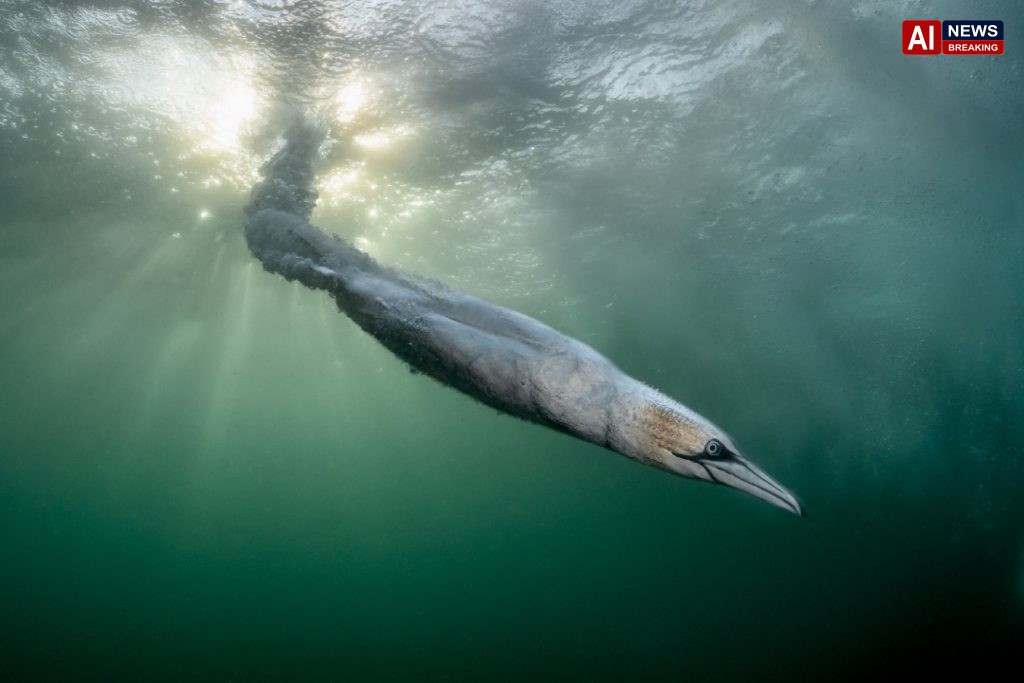
A dramatic photograph of a northern gannet in mid‑dive has been crowned the overall winner of the Bird Photographer of the Year competition for 2026, beating more than 24,000 entries from around the globe. The image, titled “Sunball Rocket”, was captured by Henley Spiers off the coast of Shetland, United Kingdom, as the seabird plunged into the sea in pursuit of fish for its chicks. The photograph, judged as “the most compelling depiction of avian behaviour under pressure”, will be featured in the competition’s final exhibition and will appear in a forthcoming coffee‑table book celebrating the year’s best wildlife images.Spiders, a veteran wildlife photographer, explained the moment that produced the winning shot..
“I was on a small boat with a local guide, watching a pair of gannets circle above the water. When one spotted a school of herring, it turned sharply into the wind, spread its wings to brake and then dove head‑first at a remarkable speed,” he said in a press release. “I timed the shutter just as the bird’s wings were tucked and the water spray was beginning to rise..
The result is a crisp, almost surreal image of a creature caught in a perfect instant of action.”Northern gannets (Morus bassanus) are among the most specialised plunge‑divers in the bird world. When a fish is located, the bird adopts a distinctive flight pattern: it turns into the wind, spreads its wings to reduce forward momentum, and then plunges into the sea at speeds that can exceed 86 kilometres per hour. Their bodies are adapted for the impact; vertebrae lock into place to form a rigid spine, air‑filled sacs in the face and chest act as shock absorbers, and a unique set of nostrils closes to keep water from entering the airway..
These adaptations allow the birds to hit the water with minimal injury and retrieve prey with a rapid snap of the beak.The Bird Photographer of the Year competition, now in its ninth year, is organised by the Natural History Museum in London and receives entries from professional and amateur photographers alike. This year’s judging panel, comprising senior curators, conservation scientists and veteran nature photographers, evaluated submissions on criteria that included technical skill, originality, emotional impact and relevance to conservation themes. “The winning image stood out for its technical excellence and the way it conveys the raw intensity of a feeding event that is crucial to the species’ survival,” said judging panel chair Dr Emma Wallace, senior curator of zoology..
“It reminds viewers of the delicate balance between predator and prey in marine ecosystems.”Spiders’ photograph not only showcases the gannet’s hunting prowess but also highlights the broader environmental context of the Shetland waters. The region, known for its rich biodiversity, supports large colonies of gannets that breed on cliffs and islands such as the famed Sula Sgeir. However, recent studies have raised concerns about the impact of over‑fishing and climate‑driven changes in sea temperature on the availability of fish that gannets rely upon..
“Capturing this moment underscores the importance of protecting the marine habitats that sustain these birds,” Dr Wallace added.The competition’s public vote, which runs alongside the expert jury’s decision, saw the image garner more than 150,000 online views and a strong response on social media platforms. Many commentators praised the composition, noting how the bird’s dark silhouette contrasts with the bright, sun‑lit surface of the water, while the spray creates a halo of droplets that adds a sense of motion. “It’s a perfect example of how wildlife photography can bridge art and science,” wrote environmental blogger Maya Patel, who featured the picture on her site..
“The viewer feels both the tension of the hunt and the beauty of the moment.”Henley Spiers, who has been photographing seabirds for over a decade, said the win is a personal milestone and a tribute to the crews who help him access remote locations. “I owe a great deal to the local Shetland fishermen and the marine conservation volunteers who guided me to the right spot at the right time,” he said. “Without their knowledge of the birds’ behaviour and the currents, this image would not exist.” He also noted that the photograph will be used to raise awareness of gannet conservation projects, with a portion of the competition’s proceeds earmarked for charities working to monitor seabird populations across the North Atlantic.The Bird Photographer of the Year competition continues to serve as a platform for highlighting both the splendor and the vulnerability of avian life..
Organisers hope that the public’s fascination with images such as “Sunball Rocket” will translate into increased support for policies aimed at sustainable fisheries and marine protected areas. “When people see the extraordinary skill and physical adaptation of a bird in action, they are more likely to understand why preserving its habitat matters,” said Dr Wallace. “Photography can be a powerful catalyst for change.”The winning photograph will be displayed at the Natural History Museum’s main gallery from October through December, accompanied by an audio‑visual presentation that details the gannet’s hunting technique and the challenges it faces in a changing ocean..
A limited edition print of the image will also be made available for purchase, with proceeds supporting the British Trust for Ornithology’s long‑term monitoring programmes. As the competition looks ahead to its next edition, organisers reaffirm their commitment to celebrating the artistry of wildlife photography while amplifying the urgent conservation messages that accompany each frame..
Updated: September 21, 2026
The photo’s razor‑sharp instant of the gannet’s plunge turns a hunting act into a visceral reminder that even the most graceful predators depend on fragile ocean food webs. It shows how a single, perfectly timed image can spotlight the urgent need for sustainable fishing and marine protection.