 Australia probes AI‑driven breach of My Health Record portal
  Engineering student’s ‘suicide’ turns out to be murder; two arrested
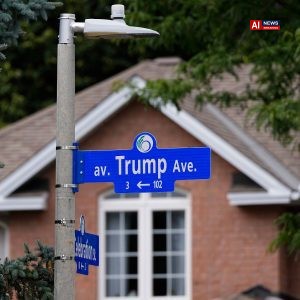
  Canada’s Capital Bids Good Riddance to Trump Avenue as Tensions With U.S. Rise
  Pentagon investigates after China obtains parts from F-35 stealth fighter jet
 British Columbia Sues OpenAI Over Tumbler Ridge Shooting
**

British Columbia Sues OpenAI Over Tumbler Ridge Shooting - AI News Breaking
British Columbia Sues OpenAI Over Tumbler Ridge Shooting The province of British Columbia has launched a unprecedented legal action against artificial‑intelligence giant OpenAI, alleging that the company’s failure to disclose internal concerns contributed to the deadly shooting at Tumbler Ridge Secondary School last month. In a 38‑page filing submitted to the Supreme Court of British Columbia, officials claim that OpenAI’s internal monitoring systems flagged a series of alarming online posts linked to the perpetrator, but that the firm did not alert law‑enforcement agencies in a timely manner. The lawsuit seeks $250 million in damages and an injunction requiring OpenAI to hand over its AI‑generated threat‑analysis data..
The Tumbler Ridge incident, which left three teachers dead and several students injured, has already sparked a national conversation about the responsibilities of technology platforms in preventing violent extremism. Police investigators say the shooter, a 19‑year‑old local resident, had repeatedly searched for “how to build a rifle” and “school attack tactics” on a range of forums. OpenAI’s own internal audit, disclosed during pre‑trial discovery, shows that its language‑model monitoring flagged the same search patterns as high‑risk, triggering an internal alert that was never escalated beyond the company’s ethics team..
Legal experts note that the case marks the first time a provincial government has sued a private AI developer for alleged negligence in threat detection. Professor Elaine McCarthy of the University of Victoria’s Faculty of Law explains that the crux of the argument hinges on whether OpenAI’s contractual obligations under the “Safe Deployment Charter” – a voluntary framework signed by several tech firms – extend to mandatory reporting to police. “If the court finds that the Charter creates a de‑facto duty of care, this could reshape the liability landscape for AI companies worldwide,” she said..
OpenAI, for its part, has issued a brief statement defending its practices. The company’s spokesperson, Priya Nanda, emphasized that its moderation tools are designed to respect user privacy while flagging content that violates policy. “We take threats of violence seriously,” Nanda said, “but we also operate under strict legal constraints that prevent us from sharing user data without a warrant or a clear legal mandate.” The firm insists that it acted in good faith and that any internal alerts were meant to be handled internally, not passed on to external authorities without due process..
The provincial government’s lawsuit alleges that OpenAI’s internal risk‑assessment protocol, known as “Project Sentinel,” was operational at the time of the Tumbler Ridge events and that senior engineers raised concerns about a specific user account exhibiting “escalating violent ideation.” According to the court documents, those concerns were documented in internal Slack messages dated three weeks before the attack. The filing argues that the failure to involve the Royal Canadian Mounted Police (RCMP) breached a moral and legal duty to protect public safety. RCMP officials, who have been tight‑lipped about the ongoing investigation, confirmed that they received a tip about the shooter’s online activity from a separate source only hours before the attack..
“We are reviewing all intelligence, including any potential contributions from private sector partners,” a senior officer said in a closed‑door briefing. The officer declined to comment on the specifics of OpenAI’s involvement, citing the sensitivity of the case and ongoing legal proceedings. Public reaction to the lawsuit has been swift and polarized..
Advocacy groups for gun‑control reform have hailed the move as a necessary step toward holding tech companies accountable for the content they host. “When algorithms amplify extremist narratives, the onus is on the creators to intervene,” said Maya Patel, director of the Canadian Coalition for Safer Communities. Conversely, civil‑liberties organisations warn that the case could set a dangerous precedent for governmental overreach into digital privacy..
In Parliament, the issue has become a flashpoint in debates over AI regulation. Minister of Public Safety and Emergency Preparedness, James Hargreaves, announced plans to introduce legislation that would compel AI firms to report “high‑risk threat indicators” to law enforcement within a specified timeframe. Critics argue that such measures could undermine encryption and user confidentiality, potentially chilling free speech online..
The government, however, maintains that the balance between safety and privacy must evolve with emerging technologies. OpenAI’s legal team, led by veteran tech litigator Sarah Liu, has filed a motion to strike several of the province’s claims, arguing that the allegations are speculative and that the company cannot be held responsible for the independent actions of a private citizen. Liu contended that the monitoring system flagged millions of users daily, and that “isolating a single case after the fact does not constitute negligence.” The motion also seeks to keep certain internal documents sealed, citing trade‑ protections..
The lawsuit arrives at a time when OpenAI is under intense scrutiny from regulators worldwide. The European Union’s Digital Services Act, which came into force earlier this year, imposes strict duties on platforms to mitigate systemic risks, including disinformation and extremist content. In the United States, Congress is considering a series of bills that would grant the Department of Justice broader powers to subpoena AI‑generated data..
Observers say the British Columbia case could influence how courts in other jurisdictions interpret corporate duty in the context of AI‑mediated threat detection. Rahul Singh of the University of Toronto warned that the outcome could have “far‑reaching implications for the entire tech ecosystem.” If the court rules in favour of the province, AI firms may be forced to redesign their moderation pipelines to incorporate mandatory reporting triggers, potentially increasing the volume of data handed over to police. Singh noted that such a shift could overwhelm law‑en.
Updated: September 21, 2026
British Columbia has sued OpenAI, alleging the AI firm ignored internal alerts about the Tumbler Ridge shooter and failed to notify police, seeking $250 million in damages and an injunction for threat‑analysis data. The case could set a precedent on AI companies’ duty to report extremist behavior, sparking debate over safety versus digital privacy.