 France deploys patrol fleet to curb Channel migrant crossings
  From a Nepal in Pain, a Young Leader Makes a Case for Climate Reparations
 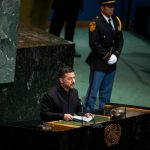 Ukraine transfers two North Korean POWs to South Korea.
  Australia probes AI‑driven breach of My Health Record portal
  Engineering student’s ‘suicide’ turns out to be murder two arrested
 Iraq PM vows rapid disarmament of Iran‑backed militias.
**

Iraq PM vows rapid disarmament of Iran‑backed militias. - AI News Breaking
iraq vows rapid disarmament:
Ali al‑Zaidi, a newcomer to Iraq’s political scene, announced on Tuesday that his administration would move swiftly to curb the influence of Iran‑backed militias that have long operated with impunity across the country. In a televised interview with the state broadcaster, the 46‑year‑old prime minister outlined a series of steps aimed at dismantling the paramilitary networks, integrating fighters into the national army, and restoring state authority over contested zones. Al‑Zaidi, who rose to prominence after a brief stint as deputy minister of interior, said the plan would be “unprecedented in its speed and resolve,” signalling a shift from the tentative approaches of his predecessors.The prime minister’s roadmap, presented as a five‑stage programme, begins with an immediate audit of militia holdings, weapons caches and financial channels..
Within the first thirty days, a joint task force comprising members of the Ministry of Defence, the Interior Ministry and the anti‑corruption commission will compile a comprehensive register of armed groups operating outside the official security apparatus. Al‑Zaidi emphasized that the audit would be “transparent and inclusive,” inviting UN observers and representatives from civil‑society NGOs to monitor the process and verify the accuracy of the data collected.Following the audit, the second phase calls for the gradual absorption of eligible militia members into the Iraqi Armed Forces and the Federal Police. The prime minister pledged to allocate additional resources for training, salaries and equipment, aiming to transform former combatants into regular soldiers loyal to the constitutional order..
Critics, however, warn that the vetting criteria remain vague and that the risk of politicising the armed forces could deepen sectarian divides. Al‑Zaidi responded that an independent panel, chaired by a senior judge and supported by international advisors, would oversee the selection, ensuring that only those without a record of human‑rights violations would be admitted.The third stage focuses on the disarmament of weapons that exceed the limits set by the 2018 security agreement between Baghdad and Tehran. Al‑Zaidi announced plans to seize stockpiles of rockets, mortars and small arms, with the assistance of the United Nations Assistance Mission for Iraq (UNAMI)..
He also signalled the intent to impose sanctions on individuals and entities that obstruct the disarmament process, citing recent intelligence that suggests some militia leaders continue to profit from illicit trade in arms and commodities. The prime minister’s statement referenced a forthcoming decree that would criminalise the possession of unauthorized weaponry, a measure that has yet to be drafted.In parallel with the security initiatives, the fourth phase addresses the socioeconomic roots that have allowed militias to flourish. Al‑Zaidi pledged a series of public‑works projects, targeted job‑creation schemes and expanded social‑welfare programmes in provinces where militia influence is strongest, notably in the volatile Anbar and Nineveh governorates..
He argued that “security without development is a hollow promise,” insisting that the government would allocate an additional $2 billion from the national budget and seek donor support to fund infrastructure, education and health‑care facilities. Observers note that Iraq’s fiscal constraints and dependence on volatile oil revenues could hamper the scale of these investments.The final stage of the plan involves a diplomatic outreach to Iran, the United States and regional partners to secure guarantees that external actors will respect Iraq’s sovereign decisions on security matters. Al‑Zaidi indicated that Baghdad would convene a summit in the capital within the next three months, inviting Tehran and Washington to discuss a “new security architecture” that would replace the current proxy‑laden framework..
He underscored that the initiative aims to prevent any resurgence of foreign‑backed armed groups while preserving Iraq’s strategic relationships, a balancing act that has historically proved delicate.Reactions to the prime minister’s pledge have been mixed across Iraq’s political spectrum. Parties aligned with the militias, such as the Sadrist Movement, have dismissed the proposal as “political theater” and warned that any attempt to curtail their influence would be met with “firm resistance.” Conversely, secular and nationalist factions, including the Iraqi National Congress, welcomed the announcement, describing it as a “long‑overdue step toward restoring the rule of law.” International actors have also weighed in; the United Nations ary‑General’s office released a brief statement urging Baghdad to pursue its disarmament agenda “with credibility and inclusivity,” while the U.S. Department of State expressed “support for Iraq’s efforts to reinforce state authority and protect its citizens.”Human‑rights organisations cautioned that the process must be accompanied by accountability measures to avoid impunity for past atrocities..
Amnesty International called for an independent commission to investigate alleged war crimes committed by militia groups during the fight against the Islamic State, warning that “justice cannot be postponed in the name of expediency.” The Iraqi High Commission for Human Rights echoed similar concerns, stressing the need for transparent documentation of any violations uncovered during the audit and for victims to receive reparations.Analysts note that the success of al‑Zaidi’s plan will hinge on several volatile variables. First, the willingness of militia commanders to surrender weapons and integrate into formal structures is uncertain, given their entrenched power bases and financial networks. Second, Iran’s reaction will be crucial; while Tehran has signalled openness to dialogue in recent months, it has also warned against actions that threaten its strategic depth in Iraq..
Finally, Iraq’s fragile economy and the lingering effects of the COVID‑19 pandemic could limit the government’s capacity to fund the ambitious development component of the programme.Despite these challenges, al‑Zaidi’s bold declaration marks a departure from the incremental, often‑stalling approaches of previous administrations. By setting a clear timetable and inviting international oversight, the prime minister seeks to convey both domestic resolve and external credibility. Whether the initiative will translate into tangible disarmament and lasting stability remains to be seen, but the window for decisive action appears to be narrowing as Iraq’s populace grows increasingly restless with the status quo..
Al‑Zaidi’s timetable suggests a calculated gamble: by front‑loading audits and international oversight, he aims to pre‑empt militia backlash and buy trust from the West, while hoping to sidestep Iran’s leverage. Yet the very speed that could shock the status quo may also expose