 Canada’s Capital Bids Good Riddance to Trump Avenue as Tensions With U.S. Rise
  Pentagon investigates after China obtains parts from F-35 stealth fighter jet
  Trump Aides Seek to Jump Start Diplomacy With Iran as Crisis Widens
  Carney Says Risk of an A.I. Catastrophe Is ‘Above Zero’
 US diplomats told to use term ‘super intelligence’ not ‘artificial intelligence’ after Trump’s call
**

US diplomats told to use term ‘super intelligence’ not ‘artificial intelligence’ after Trump's call - AI News Breaking
diplomats told term super:
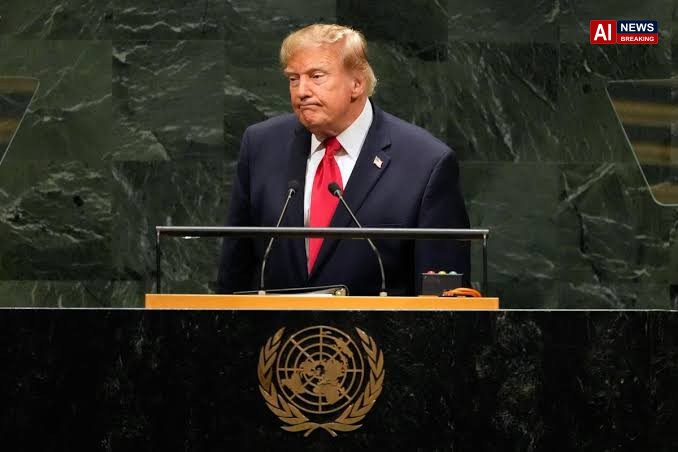
The State Department has issued a directive to its diplomats in the International Organizations Bureau, instructing them to replace the term “artificial intelligence” with “super intelligence” in all official communications. The change follows a recent public remark by President Donald Trump, who suggested that the United States should adopt a new label for the rapidly evolving technology, arguing that the phrase “artificial intelligence” no longer captured the capabilities of the systems now being deployed across the globe.The instruction, which was circulated internally on Tuesday, applies to all written and oral briefings, press releases, and diplomatic correspondence relating to the technology. A senior official, speaking on condition of anonymity, said the department’s language team had been tasked with drafting a set of guidelines to ensure consistency across all channels..
“We are aligning our terminology with the President’s vision,” the official said, adding that the shift was intended to “reflect the advanced nature of the systems we are discussing and to avoid any perception that they are merely ‘artificial’ or limited.”The move has sparked a flurry of reactions among tech experts, academic scholars, and industry leaders, many of whom view the rebranding as an attempt to reshape public perception rather than a substantive policy change. Evelyn Hart, a professor of computer science at the Massachusetts Institute of Technology, warned that the term “super intelligence” carries connotations that may be misleading. “Super intelligence implies a level of autonomy and capability that current systems simply do not possess,” she said..
“It risks inflating expectations and could obscure the very real ethical and safety challenges that we face with today’s AI technologies.”Within the diplomatic community, the directive has raised practical concerns about clarity and coordination. The United Nations, which hosts a number of multilateral forums on AI and emerging technologies, has not yet responded to the change. ambassadors expressed uncertainty about how the new terminology will be received by foreign counterparts accustomed to the standard “AI” nomenclature..
“Our partners have built extensive vocabularies around AI, from policy frameworks to technical standards,” said an ambassador from the United States Mission to the United Nations in Geneva. “A sudden shift could cause confusion, especially in negotiations where precise language is crucial.”The State Department’s International Organizations Bureau, which oversees U.S. engagement with bodies such as the UN, the World Bank, and the International Telecommunication Union, has historically been a key conduit for shaping global norms on technology..
diplomats have played a central role in drafting principles on the responsible development and use of AI, emphasizing transparency, accountability, and respect for human rights. Critics argue that the new terminology could undermine those efforts by framing the technology in a more sensationalist light.White House officials, however, defended the President’s suggestion as part of a broader strategy to maintain American leadership in the field. A senior adviser to the National Security Council told reporters that “the term ‘super intelligence’ better captures the transformative impact of these systems on national security, the economy, and everyday life.” The adviser added that the administration plans to convene a series of high‑level meetings with allied nations to discuss a coordinated approach to the technology’s development and governance.Industry reaction has been mixed..
Representatives from leading tech firms, including those that develop machine‑learning platforms and autonomous systems, said they would monitor the language shift but did not anticipate immediate operational changes. “Our internal terminology remains rooted in the technical definitions that guide our research and development,” said a spokesperson for a major Silicon Valley company. “We will adapt our public messaging as needed, but the underlying technology and its capabilities stay the same.”Some observers note that the terminology debate reflects a deeper tension within U.S..
policy circles over how to balance innovation with regulation. Over the past two years, Congress has introduced multiple bills aimed at increasing oversight of AI, ranging from export controls to the establishment of a federal AI safety board. Proponents of stricter regulation argue that rebranding the technology as “super intelligence” could be an attempt to sidestep existing legislative scrutiny..
“Changing the label does not change the substance of the technology or the need for robust governance,” said a senior policy analyst at a think‑tank focused on technology policy.Internationally, the United States is not alone in grappling with the semantics of emerging technologies. The European Union has adopted the term “artificial intelligence” but has introduced a risk‑based regulatory framework, while China frequently refers to “intelligent technology” in its official documents. Analysts suggest that the U.S..
decision may complicate efforts to achieve a common international lexicon, a goal that many diplomats see as essential for effective multilateral cooperation.As the State Department rolls out the new guidance, it remains to be seen how quickly the terminology will be adopted in practice and what impact it may have on ongoing negotiations. For now, diplomats are being briefed on the change and instructed to use “super intelligence” consistently in upcoming briefings to the United Nations and other multilateral fora. Whether the shift will translate into a substantive re‑orientation of U.S..
policy on the technology, or simply serve as a rhetorical flourish, will likely be judged in the months ahead as the United States navigates a rapidly evolving technological landscape while seeking to maintain its strategic advantage on the world stage..
Updated: September 23, 2026