 Australia probes AI‑driven breach of My Health Record portal
  Engineering student’s ‘suicide’ turns out to be murder; two arrested
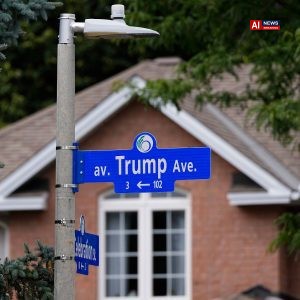
  Canada’s Capital Bids Good Riddance to Trump Avenue as Tensions With U.S. Rise
  Pentagon investigates after China obtains parts from F-35 stealth fighter jet
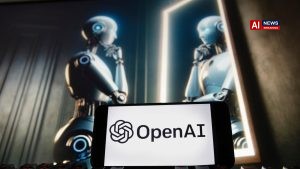
 OpenAI hires three former Patreon executives
**
OpenAI hires three former Patreon executives - AI News Breaking
OpenAI has announced the recruitment of three senior executives from the subscription‑based creator platform Patreon, signalling a strategic push into tools and services aimed at independent content producers. The move comes as the artificial‑intelligence firm prepares to unveil a suite of products designed to help creators generate, distribute and monetise their work using generative models. Among those joining OpenAI is Sam Yam, a co‑founder of Patreon who served as the company’s chief technology officer for more than a decade..
In a post on the social network X, Yam said he will head a new “Creator Product” division, tasked with building “early‑access tools that will be critically valuable to creators and their communities”.Alongside Yam, OpenAI has also hired Drew Rowny, who previously led product development at Patreon, and Shannon Ma, the former head of engineering for the platform. Both Rowny and Ma stepped down from their roles at Patreon in recent weeks, reportedly to focus on the transition to OpenAI. Their combined experience covers the full spectrum of creator‑centric technology, from user‑interface design and product road‑mapping to the scaling of large‑scale engineering teams..
By bringing together this trio, OpenAI appears to be consolidating expertise that it believes will accelerate the rollout of AI‑driven solutions tailored to the unique needs of digital creators.The recruitment follows a broader pattern of AI companies courting talent from the creator economy, an industry that has grown substantially since the early 2010s. Patreon, founded in 2013, pioneered the subscription model that allows artists, podcasters, writers and other independent creators to receive recurring support from their audiences. Over the past ten years the platform expanded to host millions of users and processed billions of dollars in payments..
Its growth was underpinned by a focus on community tools, analytics and flexible monetisation options – capabilities that OpenAI now hopes to embed within its own product ecosystem.OpenAI’s interest in creators is not new, but the scale of its new effort suggests a more concerted approach. In recent months the company has released a series of APIs that enable text, image and audio generation, and has begun to license these models to third‑party platforms. However, the integration of AI into the creative workflow remains nascent, with many creators still navigating technical hurdles and uncertain revenue models..
By establishing a dedicated division, OpenAI hopes to bridge that gap, offering plug‑and‑play solutions that can be deployed without deep technical expertise.Industry analysts see the move as part of a competitive response to rival AI firms that have already launched creator‑focused products. For instance, Microsoft’s integration of AI tools into its suite of Office applications and Adobe’s AI‑enhanced Creative Cloud features have given creators access to generative capabilities within familiar environments. OpenAI’s strategy appears to be to differentiate itself by offering a more open, API‑centric platform that can be customised across a range of third‑party services, from video‑editing software to livestreaming platforms.The timing of the hires also aligns with speculation that OpenAI will announce a major new offering for creators in the coming weeks..
While the company has remained tight‑lipped about specifics, insiders suggest that the forthcoming announcement could include a bundled package of APIs, user‑friendly interfaces and revenue‑sharing mechanisms. Such a package would aim to lower the barrier to entry for creators wishing to experiment with AI‑generated content, while also providing OpenAI with a more direct channel to monetize its models beyond enterprise licences.Critics have warned that the integration of AI into creator workflows could raise concerns around authenticity, copyright and the potential for deep‑fake misuse. Patreon, during Yam’s tenure, grappled with similar issues as it introduced tools for creators to manage patron interactions and protect intellectual property..
By drawing on that experience, OpenAI’s new division may be better equipped to embed safeguards and transparent attribution mechanisms into its tools. Nonetheless, regulators and advocacy groups are likely to monitor how AI‑enhanced content is disclosed to audiences, especially on platforms where the line between human‑made and machine‑generated work can blur.From a financial perspective, the recruitment of high‑profile talent could also be interpreted as a signal to investors that OpenAI is diversifying its revenue streams. The company, which has secured billions of dollars in funding from venture capital firms and corporate partners, has traditionally generated income through API usage fees and licensing deals with large enterprises..
A robust creator‑focused product line could open up a new market segment, tapping into the estimated $100‑billion global creator economy. Analysts at several investment banks have revised their forecasts for OpenAI’s annual revenue upwards, citing the potential for subscription‑based services that cater directly to individual creators.Patreon’s board has not commented publicly on the departures, but a spokesperson noted that the company remains committed to its mission of empowering creators through sustainable income models. The organization has indicated that it will continue to develop its own suite of tools, even as it loses key members of its leadership team..
In the broader context, the talent shift underscores the fluid nature of the tech talent market, where expertise in building platforms for creators is increasingly in demand across the AI sector.Overall, the arrival of Sam Yam, Drew Rowny and Shannon Ma at OpenAI marks a notable convergence of two rapidly evolving domains: artificial intelligence and the creator economy. Their combined track record suggests that OpenAI intends to move beyond providing raw model capabilities toward delivering end‑to‑end solutions that can be adopted by creators with minimal technical friction. Whether this ambition will translate into widely adopted products remains to be seen, but the forthcoming announcements are likely to shed light on how the company plans to balance innovation, creator empowerment and the ethical considerations that accompany AI‑driven content creation..
OpenAI’s talent raid on Patreon signals a pivot from pure AI infrastructure to owning the creator pipeline, turning the $100 billion creator economy into a direct revenue engine rather than a downstream market.
If the new division can blend OpenAI’s generative muscle with Patreon‑grade community safeguards, it could force the industry into a race where platform loyalty hinges on AI‑augmented monetisation, not just tool availability.